Description
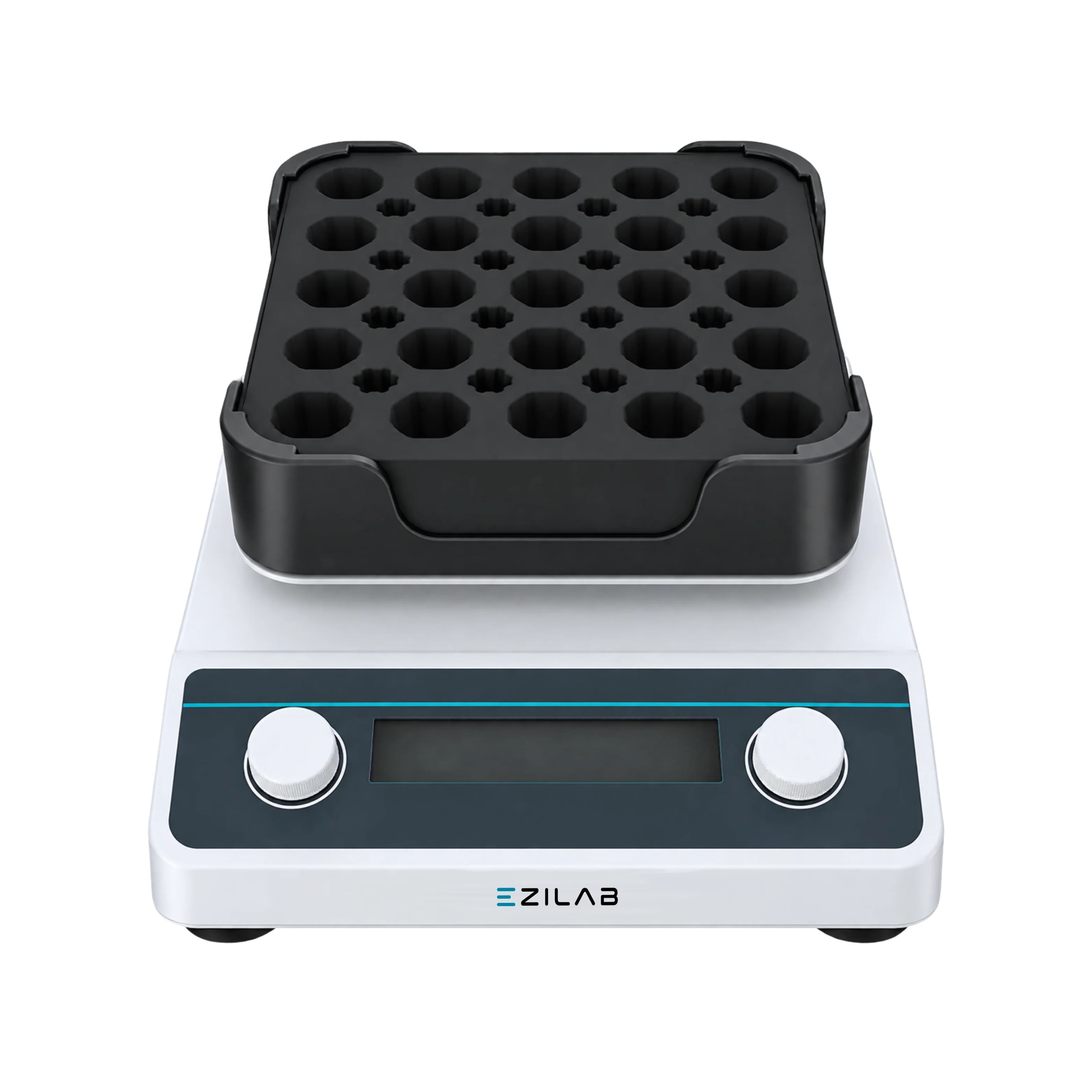
EziLab offers the Multi Tube Vortex Mixer EZL-MTV102, a 25-tube lab vortex mixer driven by a brushless motor at 1500 to 3000 rpm in 10 rpm steps with a 4 mm amplitude. The standard rack holds twenty-five 50 ml and sixteen 15 ml centrifuge tubes together, and the timer runs from 1 minute to 8 hours. Corrosion-resistant construction, simple controls, quiet low-vibration running, and a 30 W draw round out the unit. Optional racks swap in for forty-nine 15 ml tubes or 10 ml blood tubes, forty-nine 2 or 5 ml blood tubes, or eighty-one 1.5 and 2 ml microtubes, so one vortexer covers tube formats. It mixes reagents, solutions, and cell suspensions and speeds DNA and RNA extraction steps and protein sample prep. High-speed vortexing across a full batch replaces tube-by-tube work on a single vortex shaker. Clinical and hospital labs process blood tubes in batches before analysis, while pharmaceutical teams mix samples for drug development and formulation screening. Research institutes and university core facilities use this multi tube vortexer to prep extraction batches for molecular assays. As a lab mixer, it suits high-volume benches. See the Multi Tube Vortex Mixers and Multi Tube Vortex Mixer pages for full specifications.
Specifications
| Motor | Brushless Motor |
|---|---|
| Amplitude | 4mm |
| RPM | 1500 to 3000rpm |
| RPM increment | 10rpm |
| Timing Range | 1min to 8h |
| Dandling Range Centrifuge Tube | 50ml × 25 + 15ml × 16 |
| Power Consumption | 30 W |
| Dimension | 355 × 260 × 145 |
Features
Optional Accessories
Applications