Description
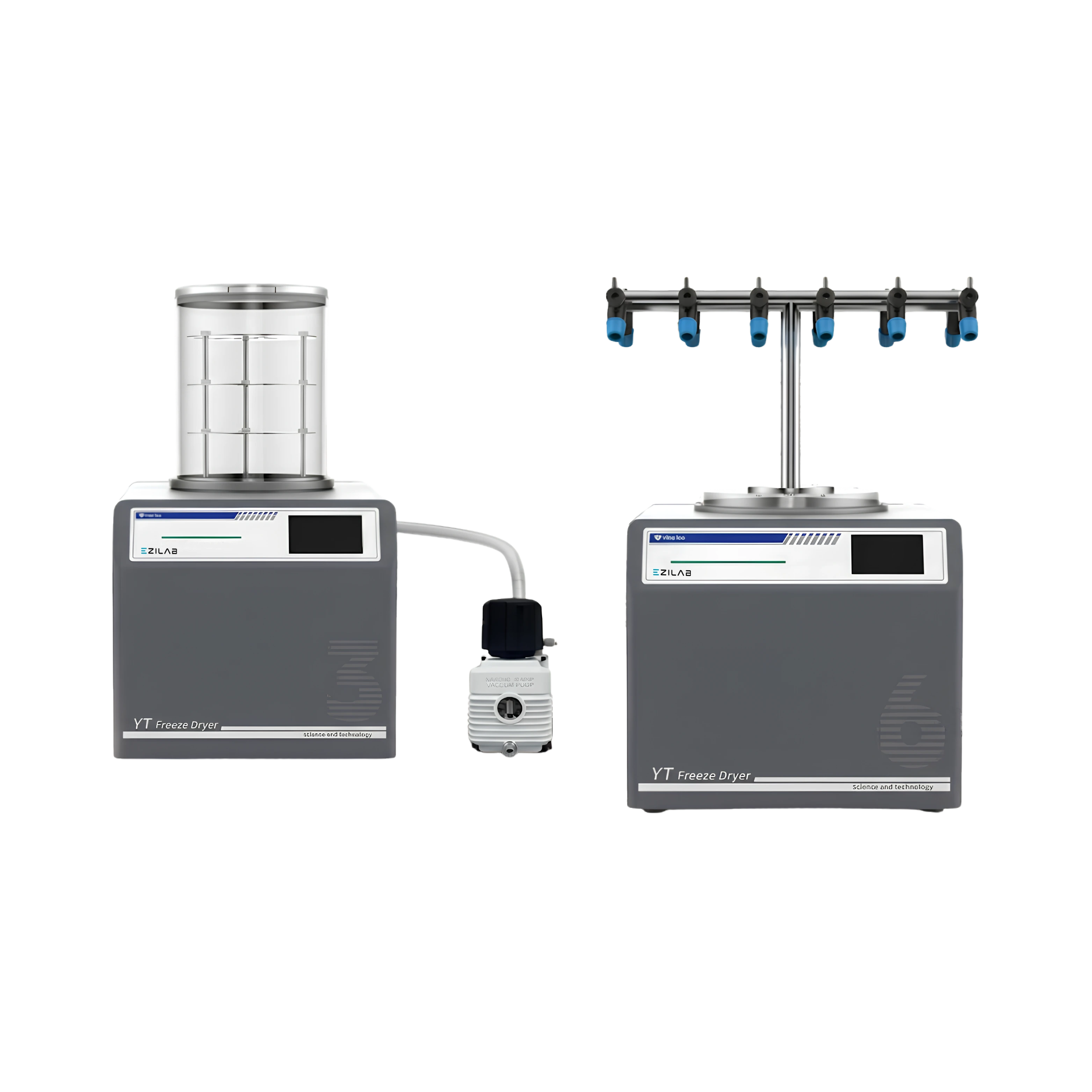
EziLab Standard Freeze Dryer EZL-SFD102 removes water from frozen material without melting it. Under vacuum, the ice turns directly into vapor, and a cold trap running at -70 °C captures it. This vacuum freeze dryer, also called a laboratory lyophilizer, leaves a dry, porous cake that keeps its original structure and rehydrates quickly. With 6 kg of water capture per 24 hours, this standard freeze dryer takes a typical batch in one run. If your load carries more water, split it across two runs or choose a larger model from the Freeze Dryer category or the Standard Freeze Dryer range.
Specifications
| Cold Trap Temperature | -70 °C |
|---|---|
| Cold Trap Volume | 10 L |
| Chamber Type | Bell shape (standard) / Multi manifold / T-shaped frame |
| 24 h Water Capture Capacity | 6 kg |
| Manifold Ports | 1-48 valves, optional (12-position rack) |
| Sample Shelf | Φ260 mm / 485 mm |
| Single Layer Area | 0.055 m² / 0.185 m² |
| Shelf Layers | 3-10, optional |
| Shelf Options | Electric heating / manual capping, optional |
| Shelf Temperature Tolerance | ±1.0 °C |
| Ultimate Vacuum | 5×10⁻³ mbar |
| Vacuum Pump | Rotary vane, 8 m³/h, pump type optional |
| Vacuum Connection Pipe | Stainless steel flexible, DN16 ISO-KF, 1.2 m |
| Hose to Pump | Neoprene |
| Anti-Corrosion Treatment | PTFE-treated cold trap and condensing coil |
| Control Panel | Touchscreen, status messages at process intervals |
| Compressor | 1 |
| Refrigerant | R507, CFC-free |
| Exterior | Brushed stainless steel and powder-coated steel |
| Power | 1.1 kW |
| Supplied With | Sample holders, trolley |
| Flasks with Rubber Stoppers | 24 × 100 mL, 12 × 250 mL, 12 × 500 mL |
| Consumables | 15 L pump oil; 1,000 filter papers (28 mm, 17 µm) |
| Condensation/collector temperature | Down to -50 °C |
| Product Dimensions | 510 × 570 × 500 mm |
| Net Weight | 49 kg |
| Grossed Weight | 55kg |
Features
| Feature Area | Description |
| Setup | Programmable method creation |
| Display | Real-time curve monitoring |
| Records | Process data recording |
| Control | Process interrupt control |
| Safety | Over-current protection |
Standard Accessories
Applications