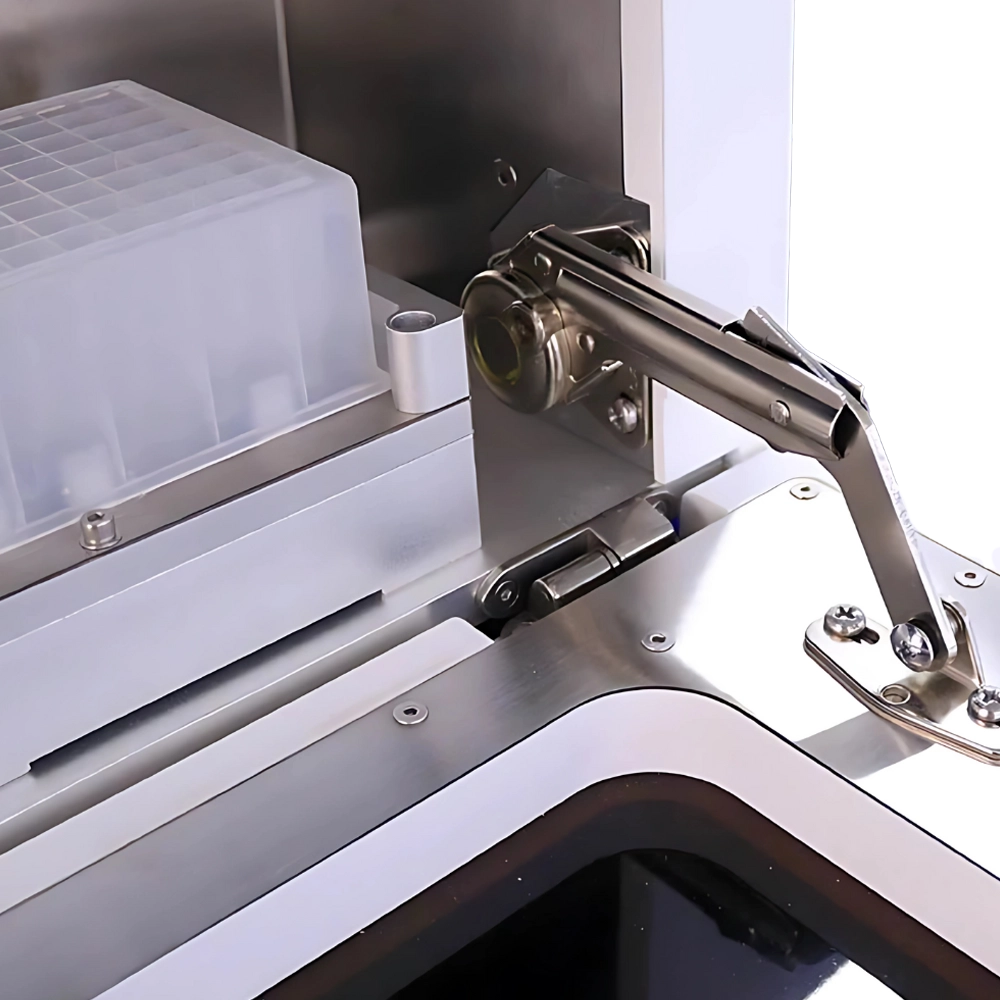
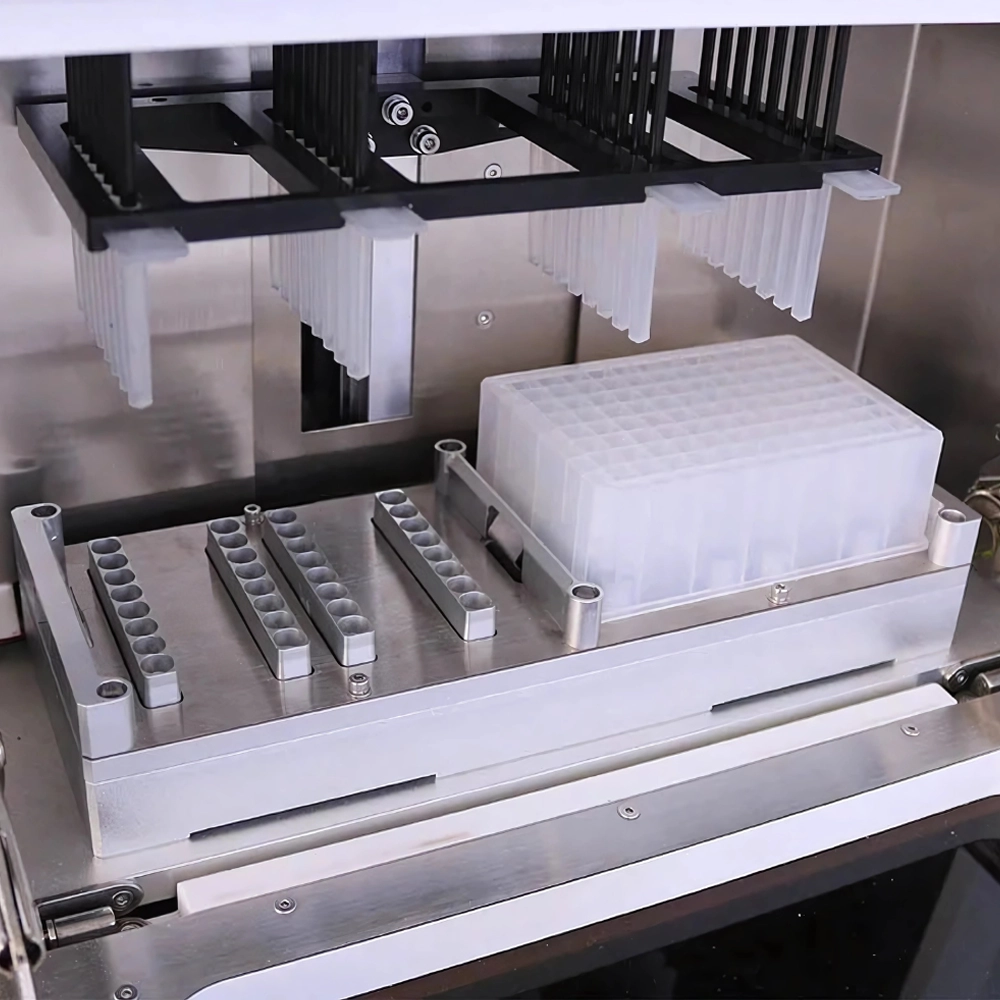
EziLab Nucleic Acid Extraction System EZL-NS102 processes up to 32 samples per run for PCR diagnostics, forensic testing, sequencing, cloning, microbiology analysis, genetic screening, and plant molecular biology applications. Sample volumes range from 20 to 500 uL with working volumes up to 1000 uL, while extraction cycles complete within 15 to 40 minutes with recovery rates above 98 percent. Independent heating modules allow adjustable lysis and elution temperatures, and oscillating mixing levels can be matched to reagent volumes for consistent processing. Program storage accommodates over 100 protocols for flexible extraction machine workflows. EziLab's Lab Equipment and nucleic acid extraction systems support the full automated extraction range.
| Sample Capacity | 32 samples |
|---|---|
| Sample Volume | 20 to 500 µl |
| Working Volume | 20 µl to 1000 µl |
| Sample Throughput | 1 to 32 |
| Extraction Time | 15 to 40 min/round |
| Extraction Method | Magnetic Bead Recovery |
| Magnetic Bead Recovery | > 98% |
| Extracting the difference between holes | CV ≤ 3% |
| Heating Temperature | 8 independent heating modules, customize lysis and elution temperature |
| Oscillating Mixing | Low, medium and high 3 gears are adjustable and fluctuation range can be adjusted with the reagent volume |
| Reagent Type | Magnetic bead open platform |
| Internal Program | Can store up to > 100 groups of programs |
| Built-in Air Duct | No |
| UV Radiation | Yes |
| Package Size (W×D×H) | 580×510×700 mm |
| Gross Weight | 51 kg |
Convenient throughput up to 32 samples in 15 – 40 mints
7-inch touch screen, easy to use console
UV dis-infection function
Archival quality DNA or RNA
Automatic control system
User defined cracking and elution temperature
Fast purification process
Reproducibility with magnetic rods
Plate re-orientation
Lidding and de-lidding
Graphical process editor
Free programming to meet the different needs of the reagent
This device is compatible with PCR diagnostics kits and also has requirement in several fields such as Forensic Samples, Sequencing, Cloning, Routine sample preparation, Genetic screening, Microbiology testing and Plant molecular biology research.