Description
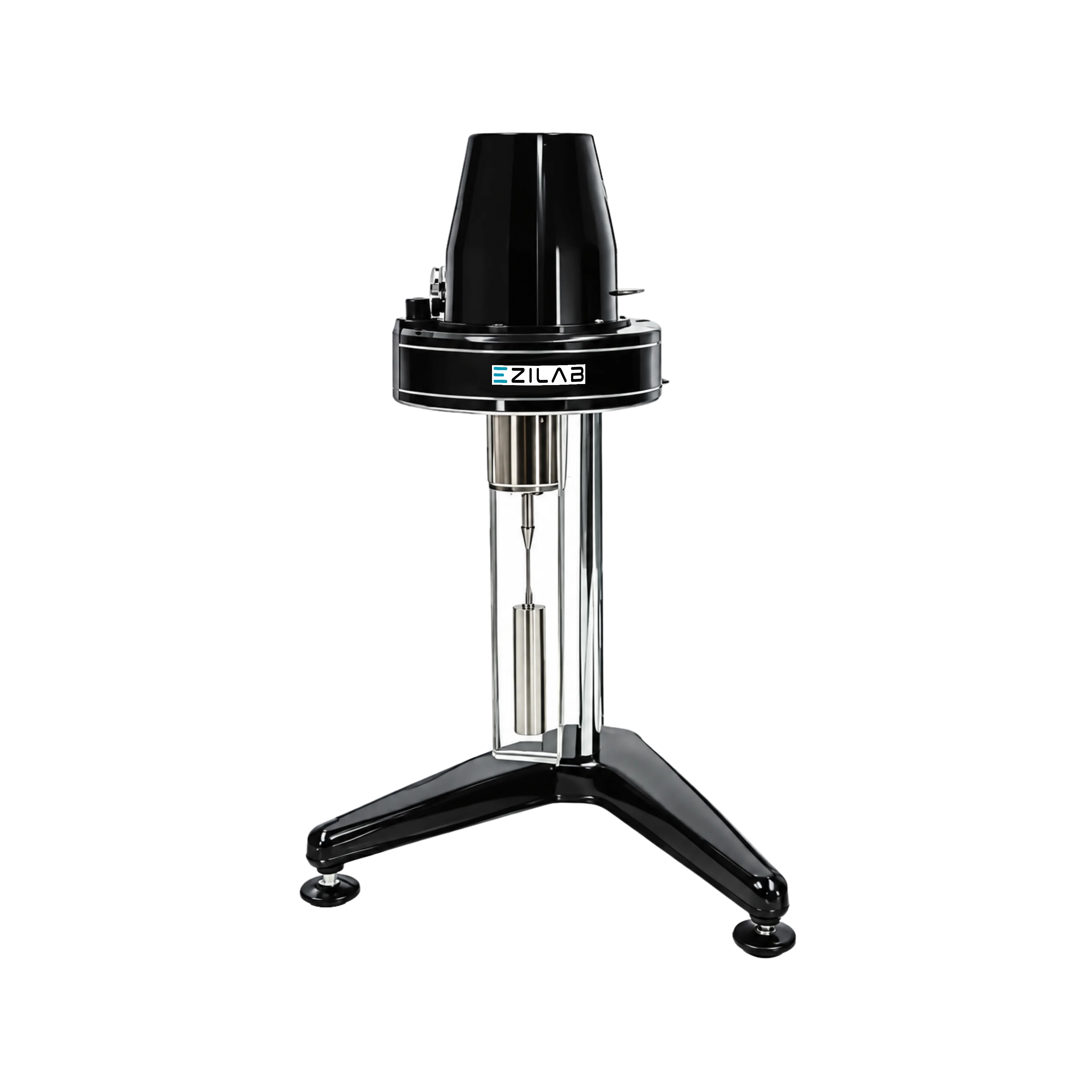
EziLab offers the Rotational Viscometer EZL-RV311, a benchtop digital viscosity meter that spins a spindle in the sample and converts the torque needed to turn it into a viscosity reading. Four rotors and speeds from 6 to 60 rpm cover 1 to 100,000 mPa·s, with ±5% tolerance on Newtonian fluids, so thin solvents and thick gels both fall within range. A built-in temperature sensor logs sample temperature from 5 to 35 °C alongside each result, since viscosity shifts with heat. The compact 280 mm wide base weighs 2 kg, carries a bubble level with adjustable feet for quick alignment, and uses a plain interface that new operators learn within minutes. Coatings makers, ink and adhesive producers, cosmetics formulators, food and beverage plants, chemical companies and pharmaceutical QC labs use this rotational viscometer to confirm flow behavior before product release. Typical checks include paint and lacquer consistency, ink tack, glue pot life, grease grade, lotion and shampoo body, syrup and sauce thickness, and polymer melt grades. Choose it over flow cups or capillary tubes when results must be repeatable across shifts and operators. More spindle ranges appear under Rotational Viscometers, while the Rotational Viscometer page holds its dimension and packing figures.
Specifications
| Temperature Range | 5°C to 35°C |
|---|---|
| Measurement Range | 1-1×10(5)mpa.s |
| Measurement Tolerance | ±5% (Newtonian liquid) |
| Rotating Speed Of Rotor | 6 to 60 circle/m |
| Outline Dimension (W×D×H) | 280×290×450 mm |
| Out Package Dimension (W×D×H) | 470×297×420 mm |
| Net Weight | 2 kg |
Features
Applications