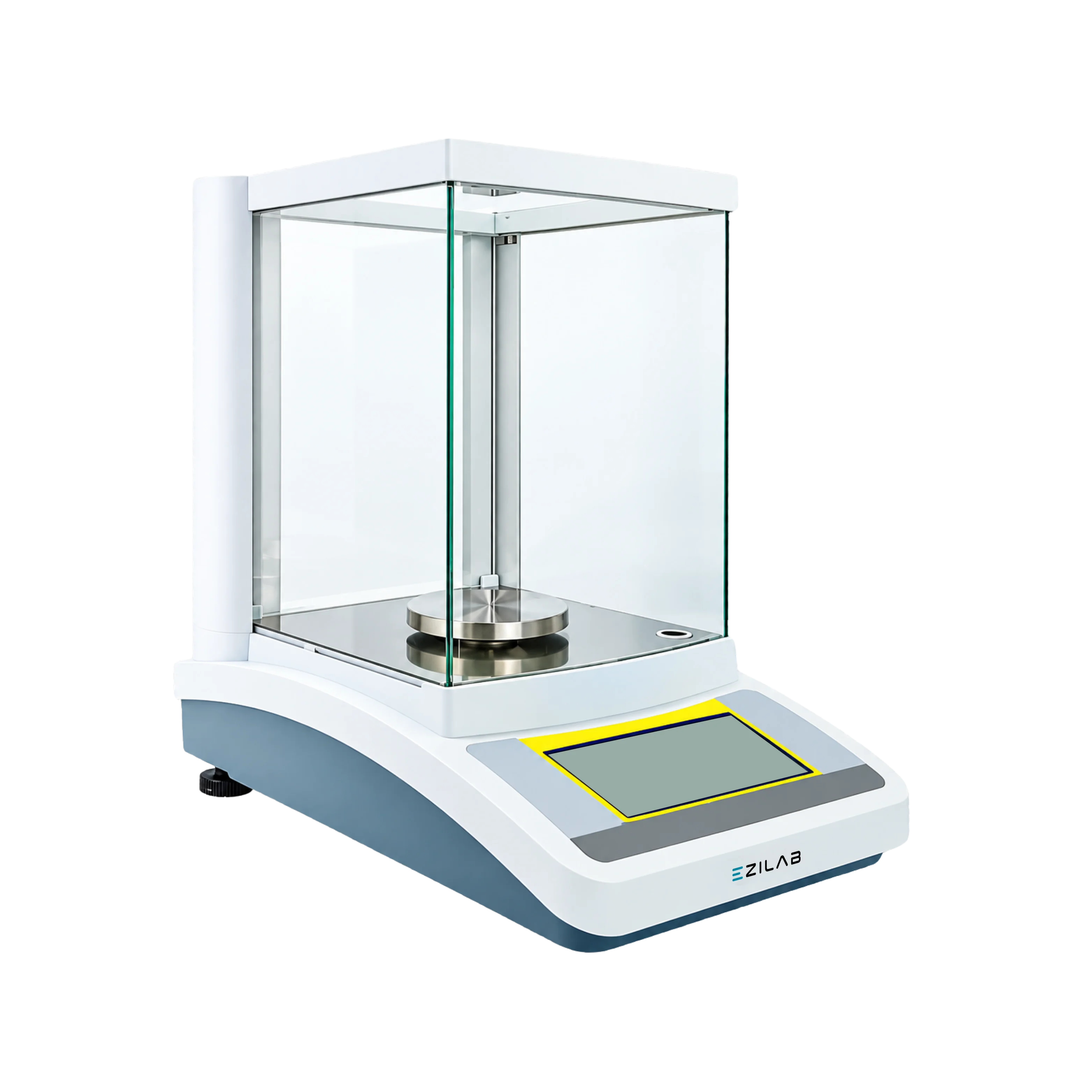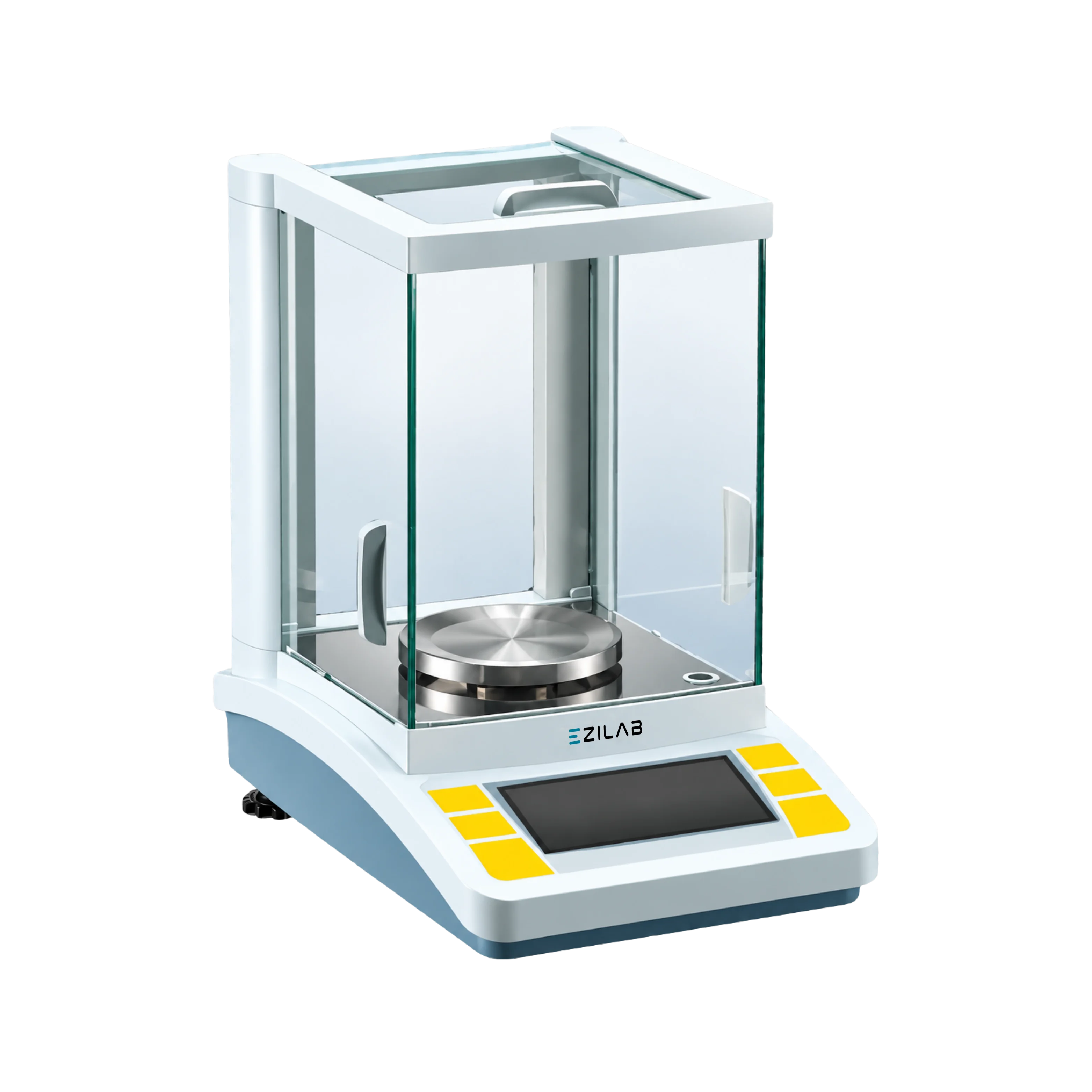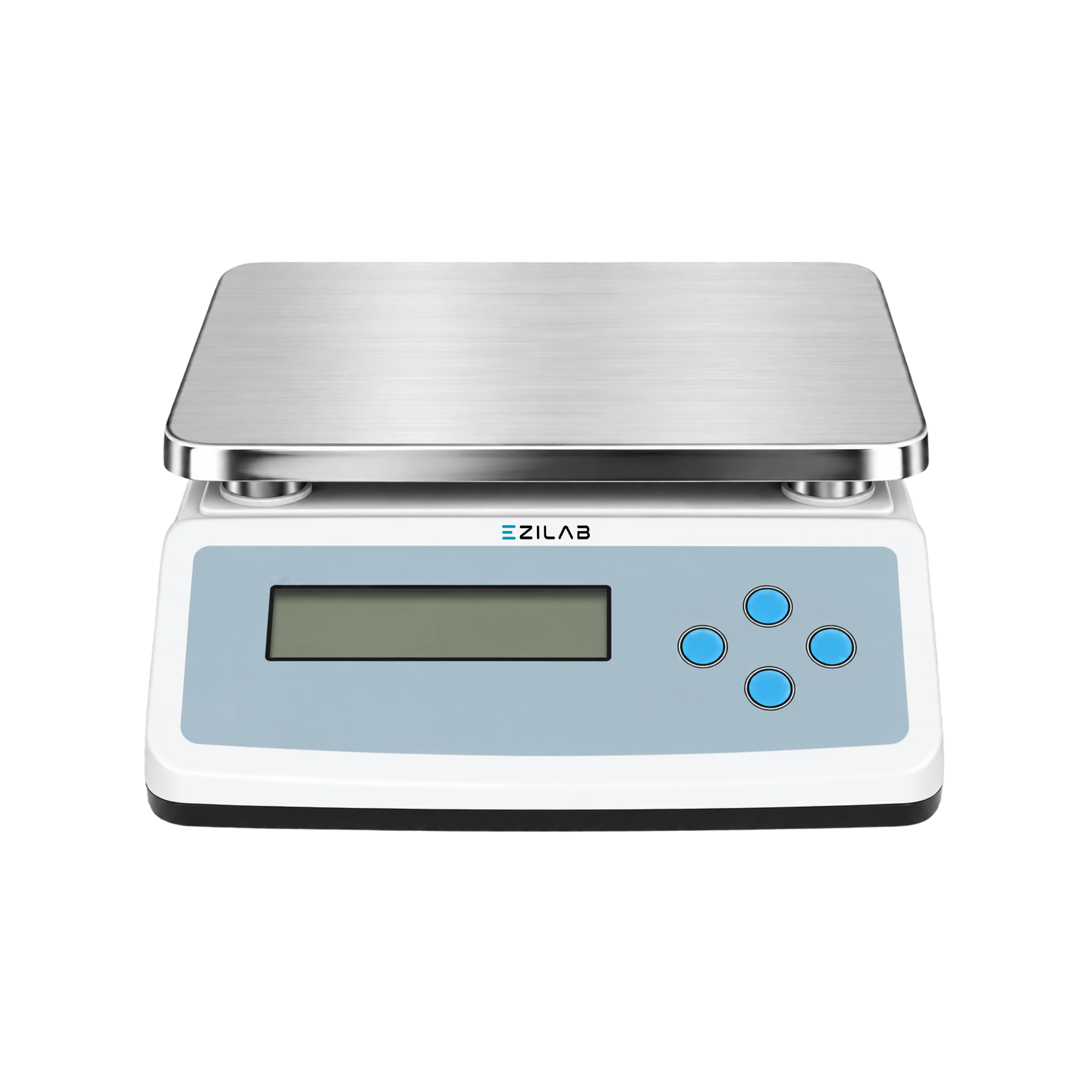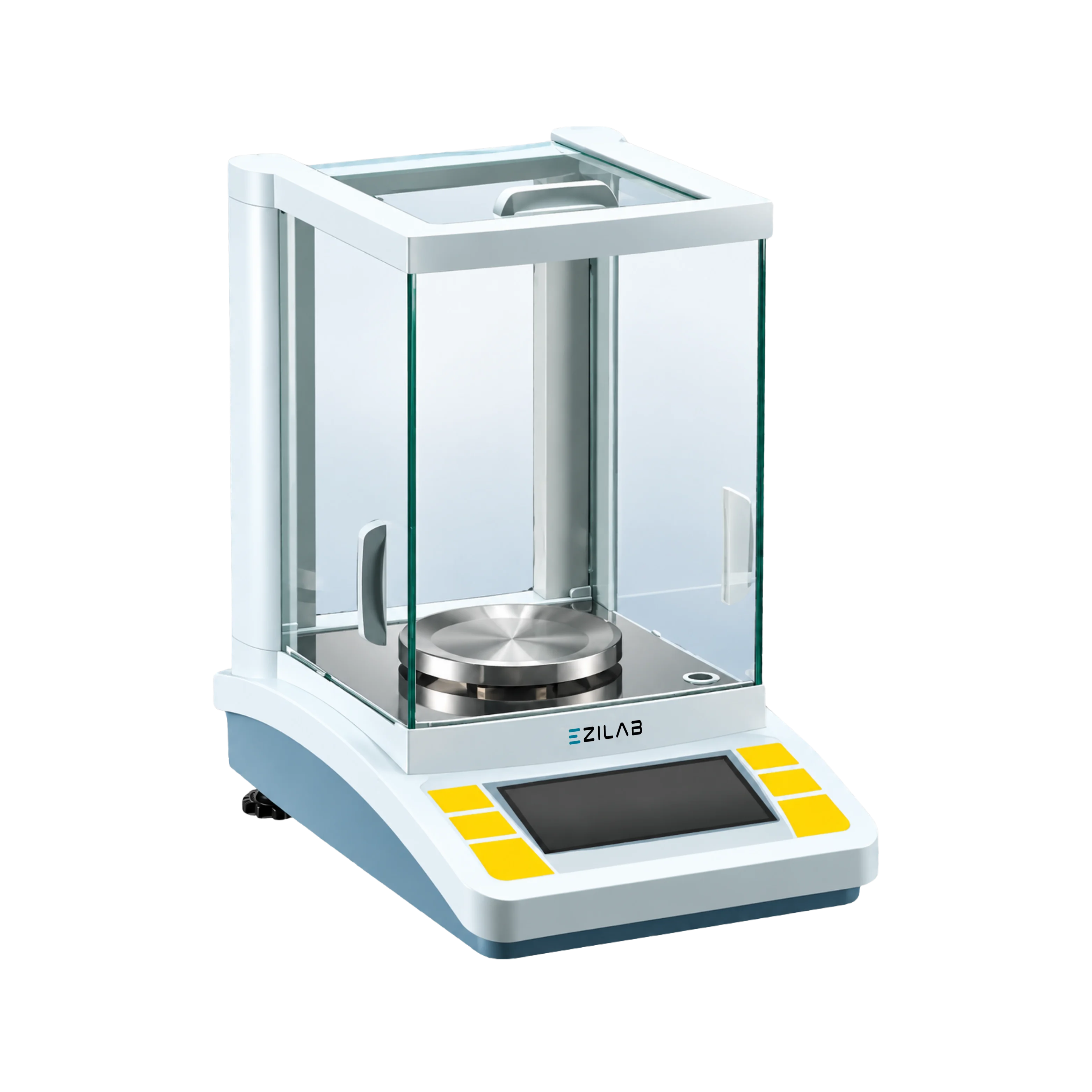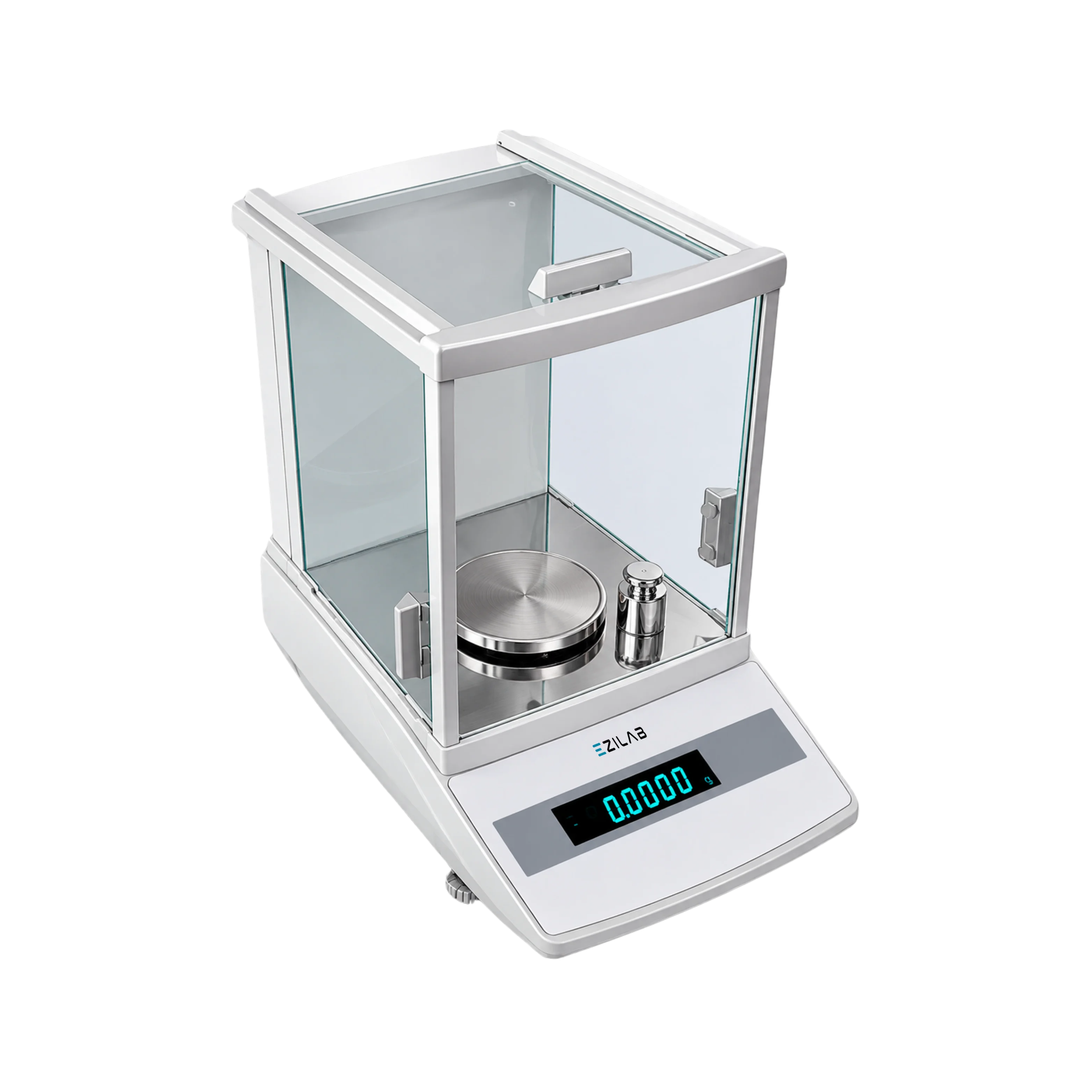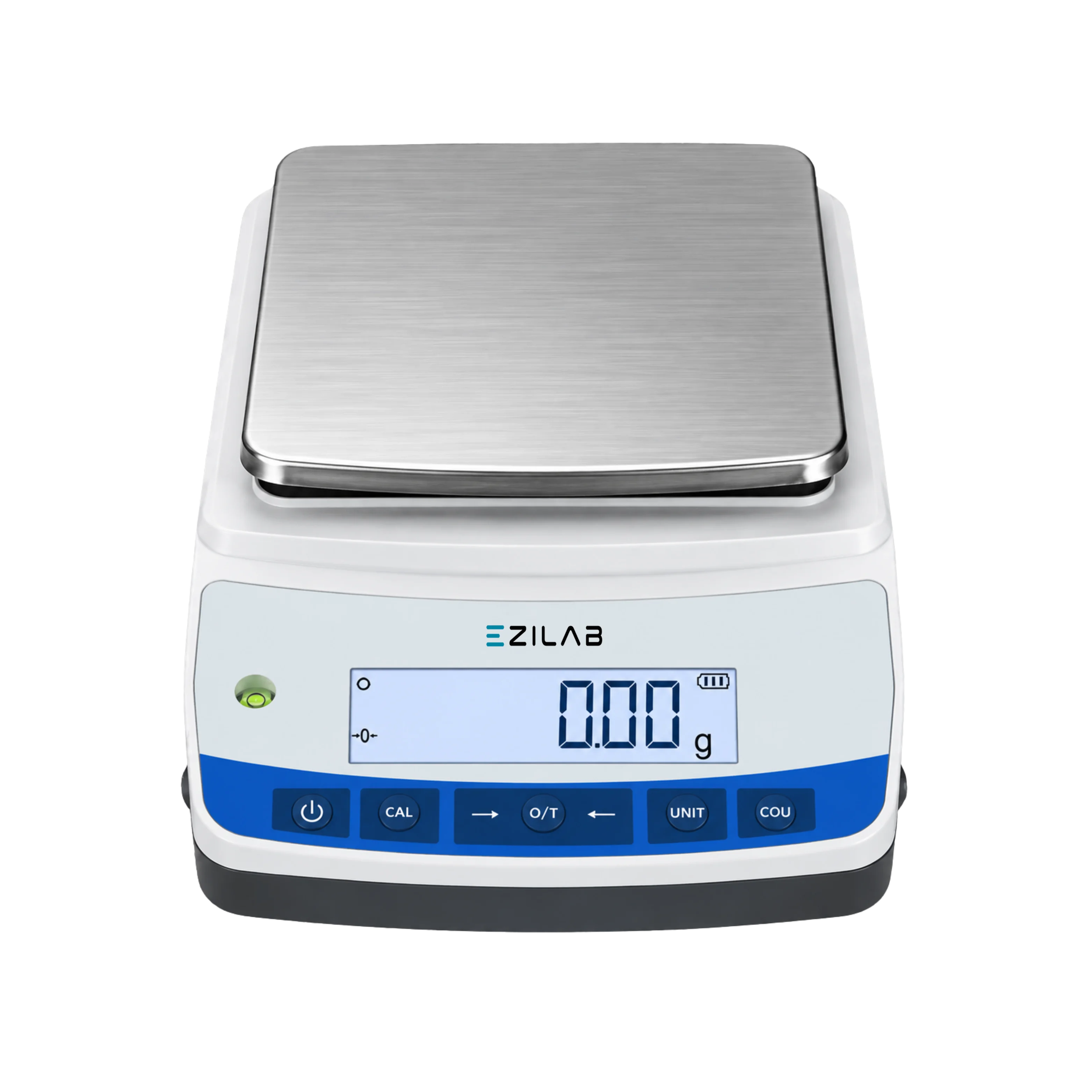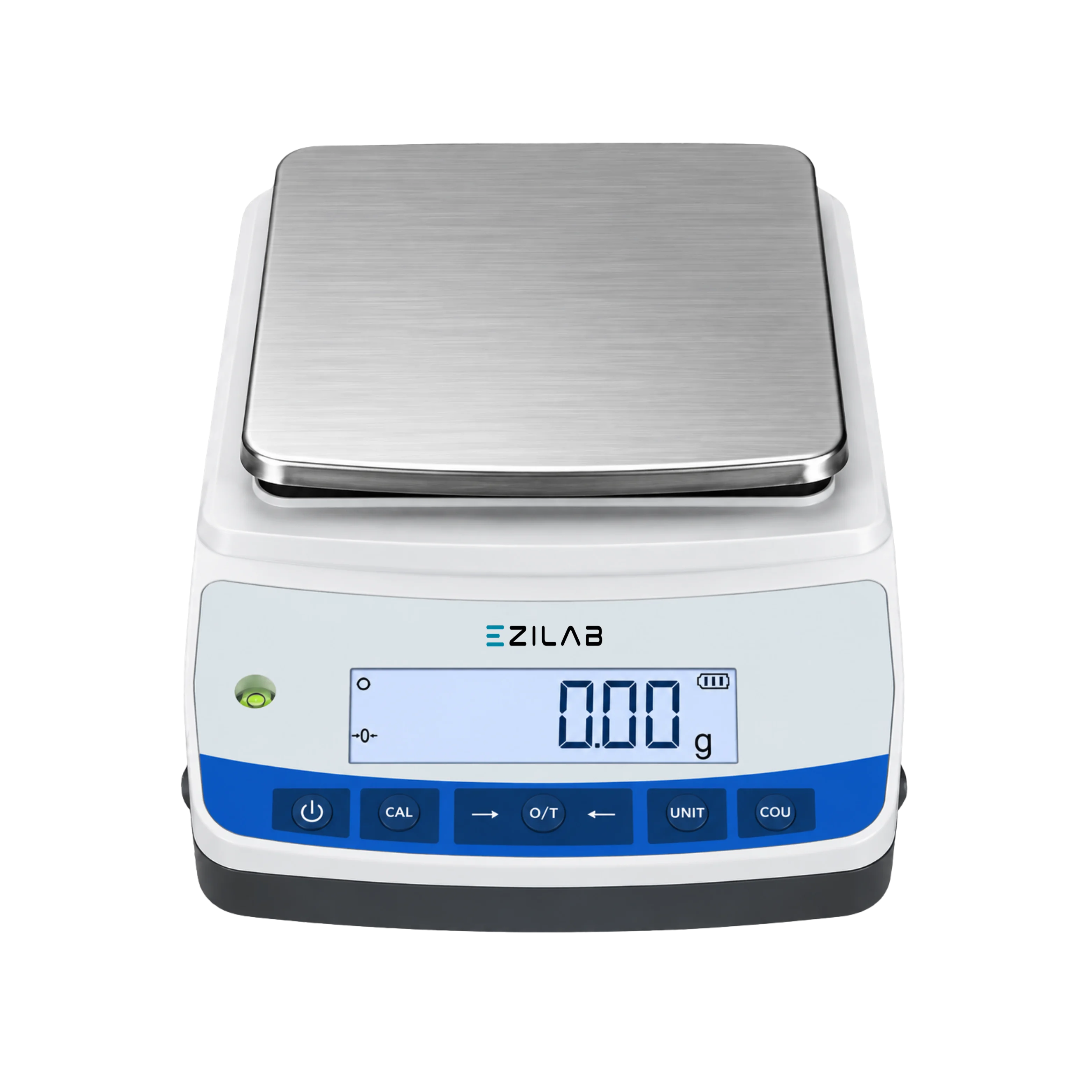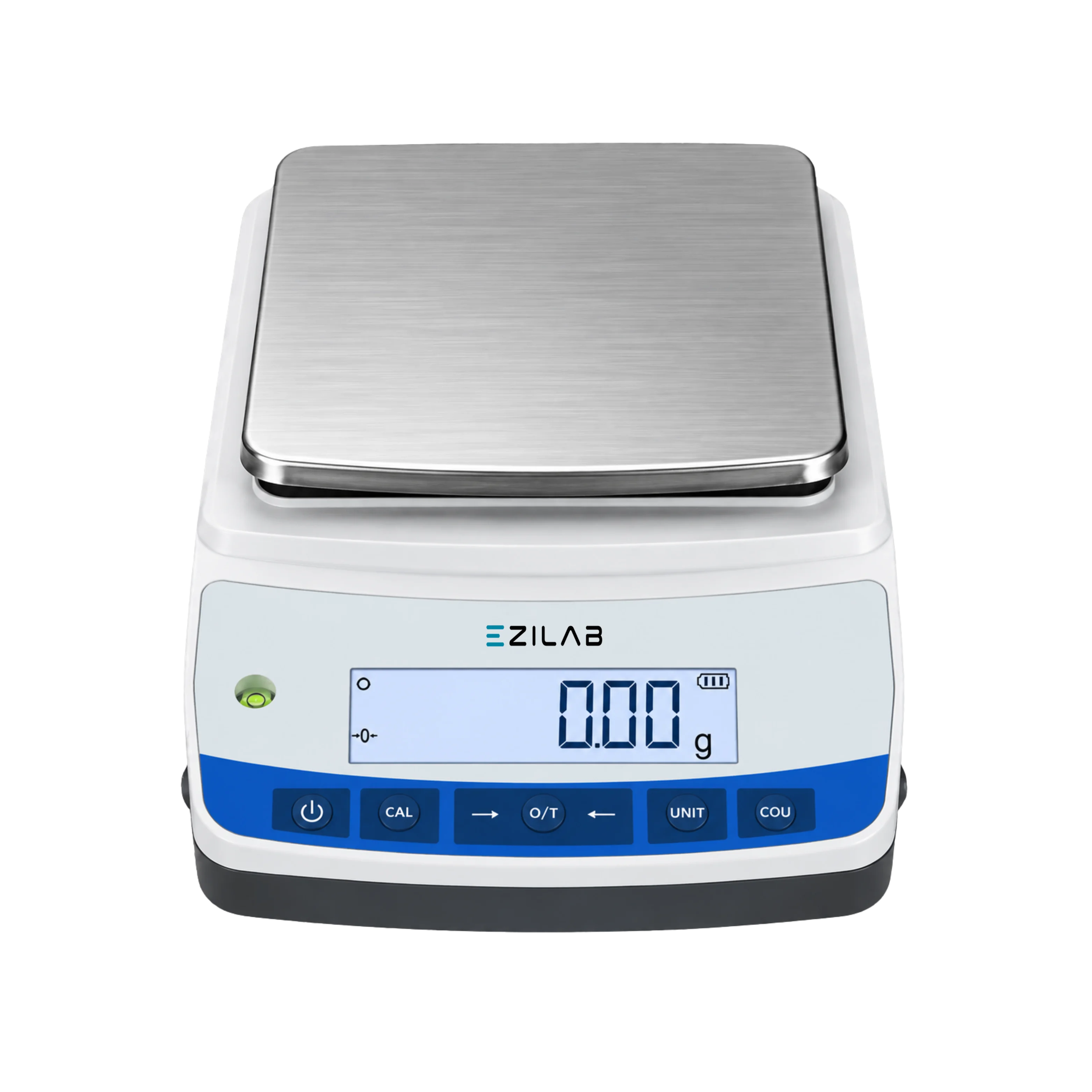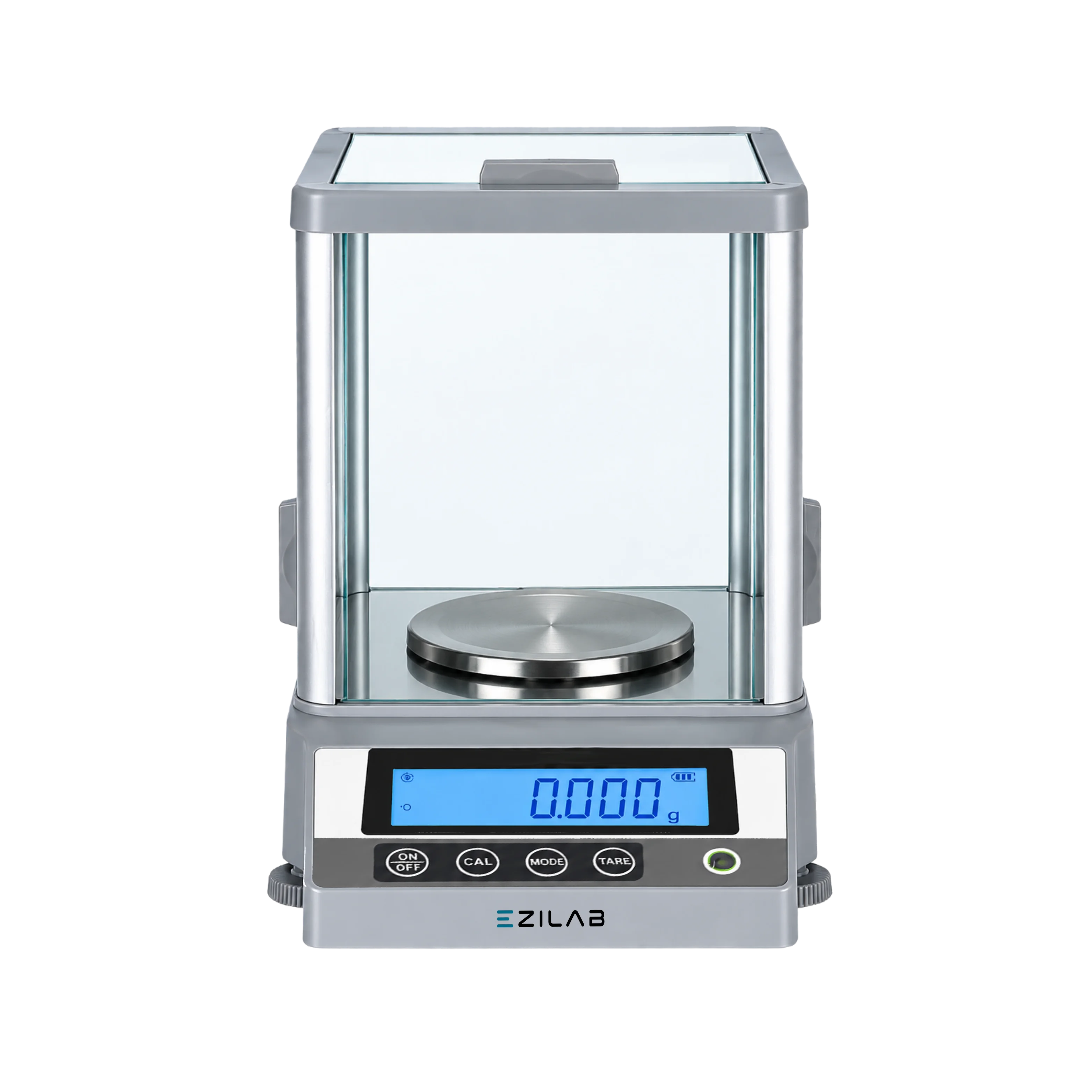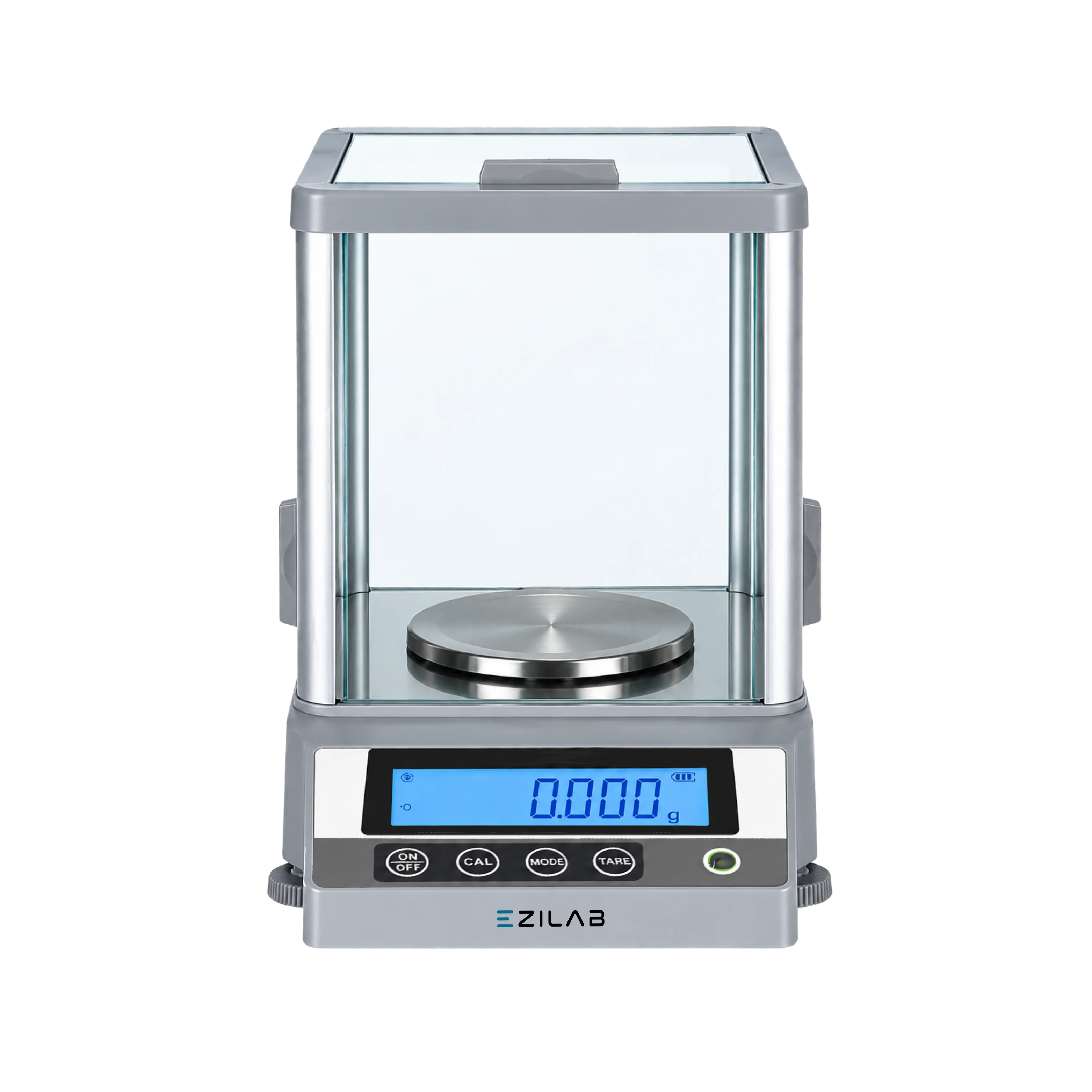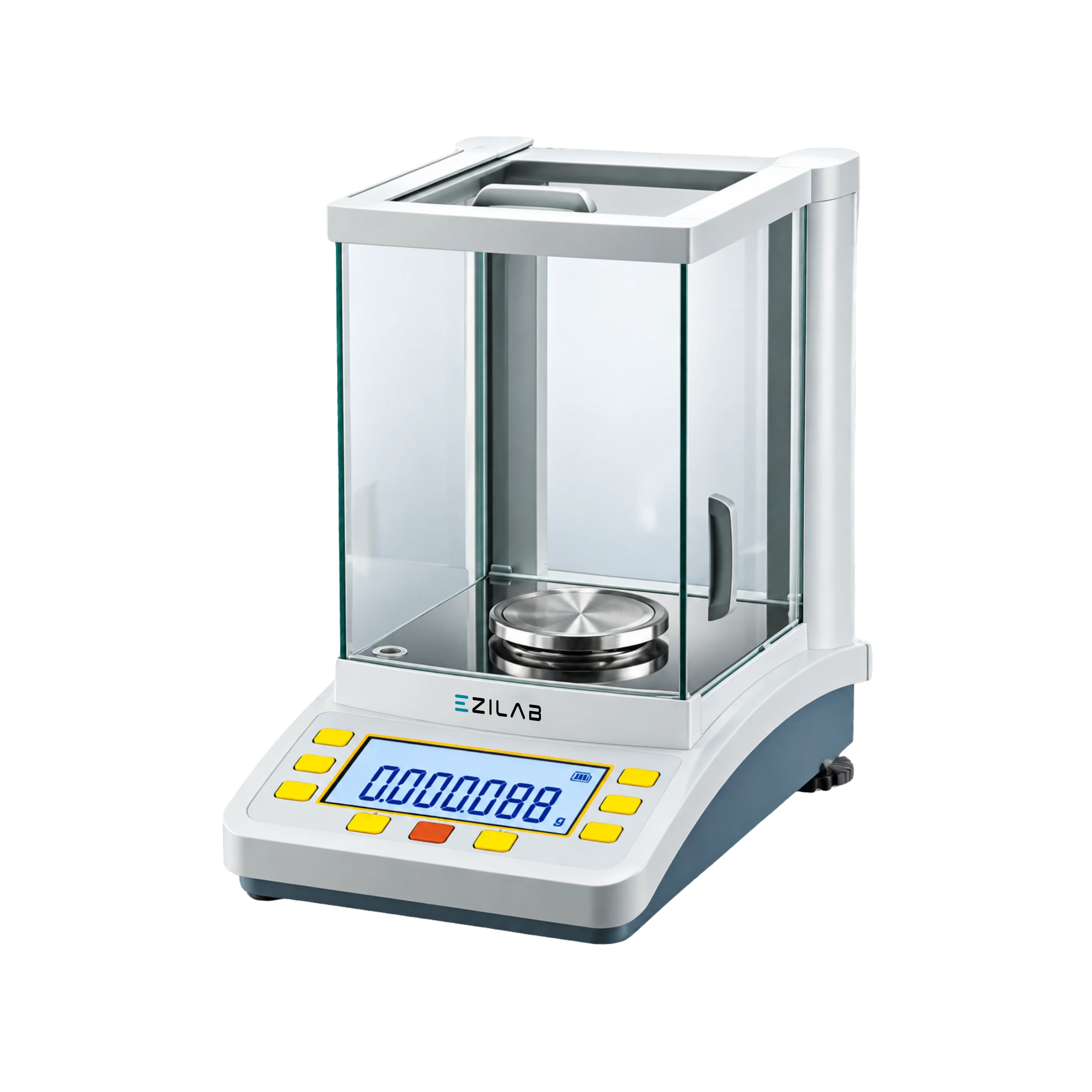
EziLab offers the Electronic Balance EZL-EB55, a formulation analytical balance that carries 220 g at 0.1 mg readability, the largest capacity in this family at that readability. A new-generation electromagnetic sensor feeds an oversized circuit board, and a twin-cam mechanism drives internal calibration on demand so drift from temperature or relocation is corrected without external weights. The Φ90 mm pan sits in a 244 mm working space that clears volumetric flasks, the backlit graphic LCD stays readable under bench lighting, an RS-232 port sends results to printers and PCs, and a lower hook allows below-balance density work from the 6.8 kg bench unit. Pharmaceutical formulation groups, QC and QA departments, contract manufacturers, cosmetics laboratories, chemical research teams and university analytical labs use this electronic balance where larger samples must still be weighed to the tenth of a milligram. Typical tasks include weighing excipient and API blends, preparing standards and samples, assay by mass, loss-on-drying checks, pipette calibration and reference mass comparison. Choose it over the 100 g model when batch sizes exceed its ceiling. The 100 g and 220 g versions sit side by side under Electronic Balance; this unit's pan and clearance figures live on the Electronic Balance page.
| Weighing Range | 0-220 g |
|---|---|
| Readable Precision | 0.1 mg |
| Scale Size | ɸ90 mm |
| Height Of Working Space | 244 mm |
| Calibration | Internal |
| Outline Dimension (W×D×H) | 350×215×340 mm |
| Out Packing Dimension (W×D×H) | 480×375×515 mm |
| Net Weight | 6.8 Kg |
| Feature Area | Description |
| Display | A large backlit LCD shows readings in a graphic display sized for easy viewing. |
| Calibration | Built-in internal calibration runs on demand without loose weights. |
| Sensor | An electromagnetic balance weighing sensor reads the load. |
| Serial Interface | A serial interface connects quickly to computers and printers. |
| Weighing Hook | A built-in lower weighing hook supports density work. |