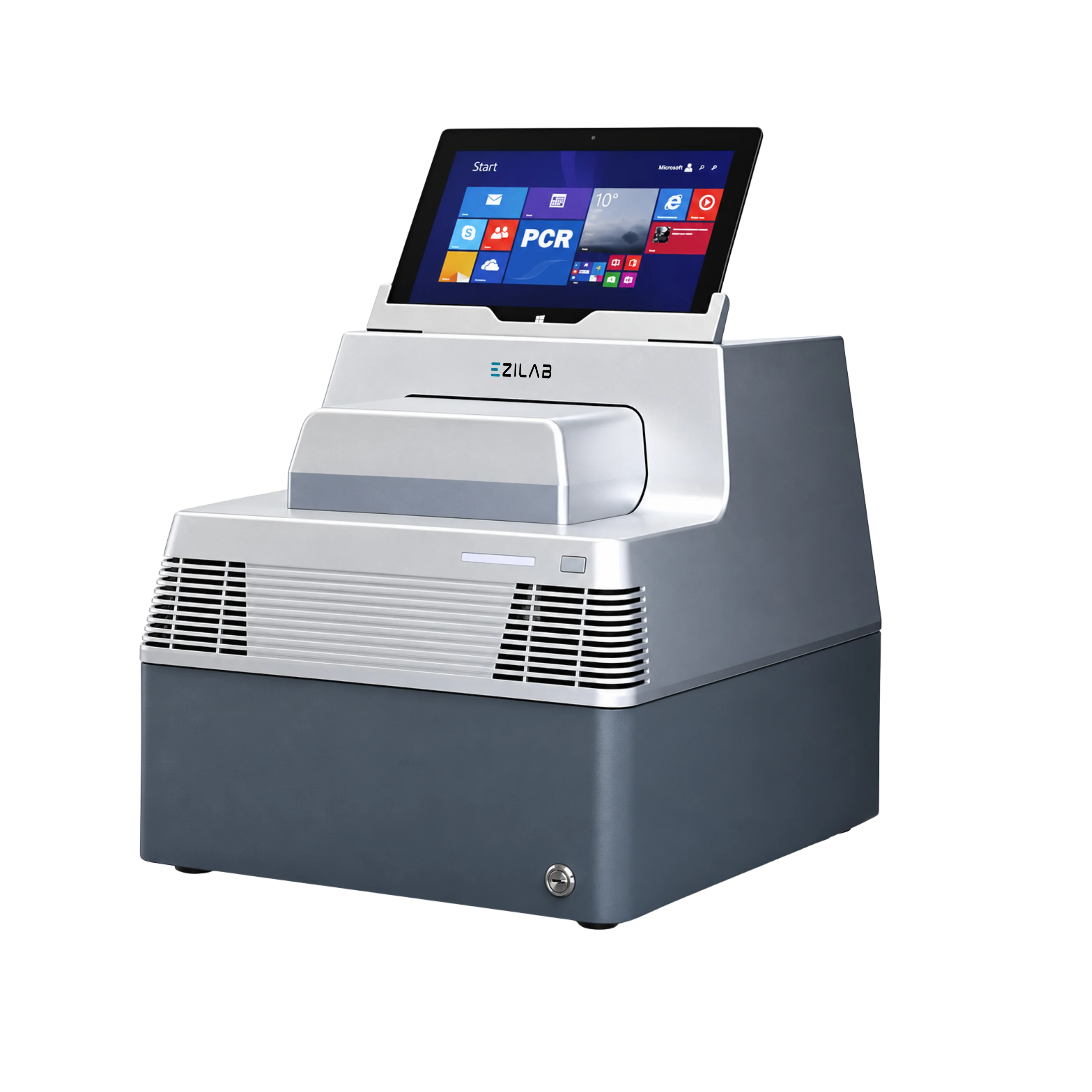
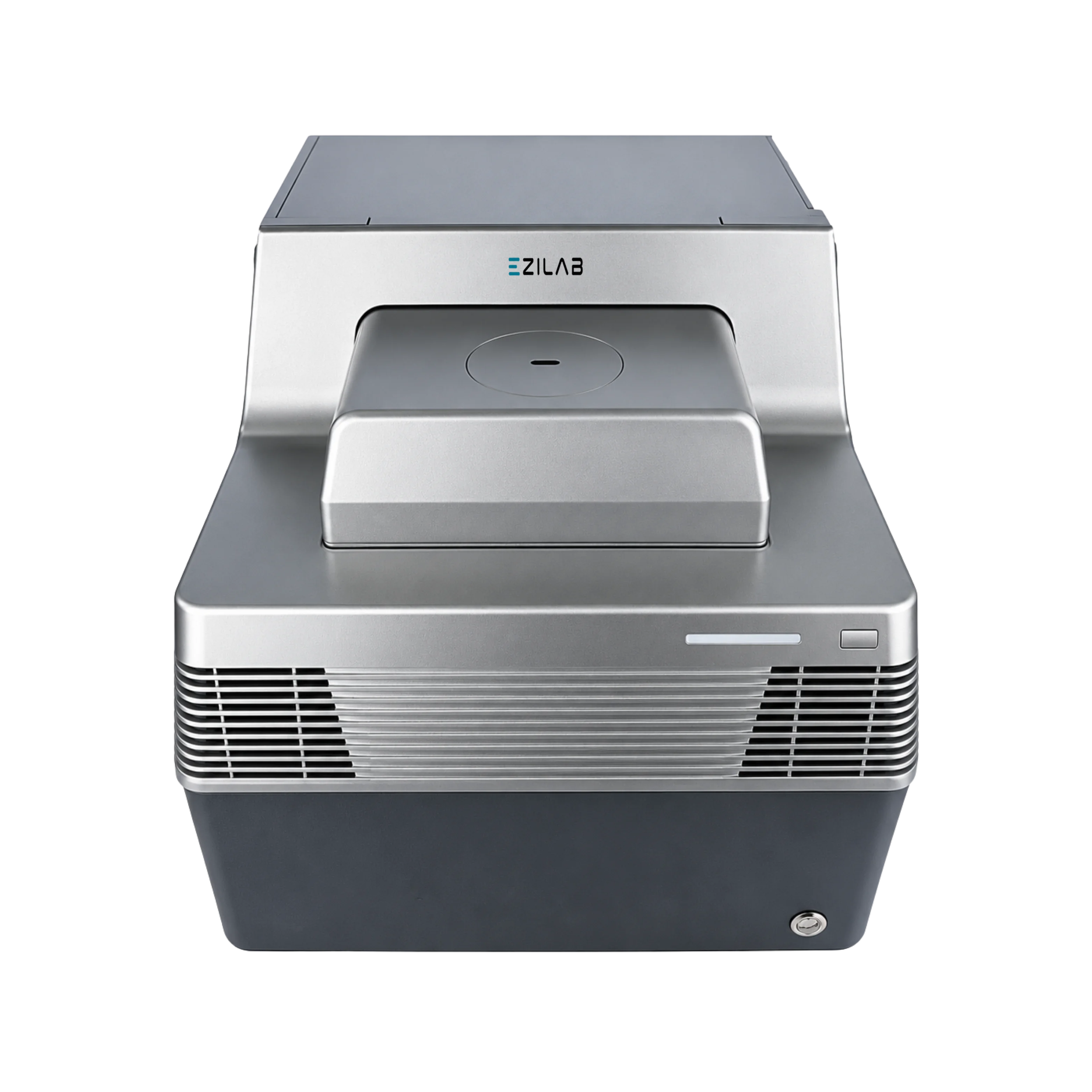
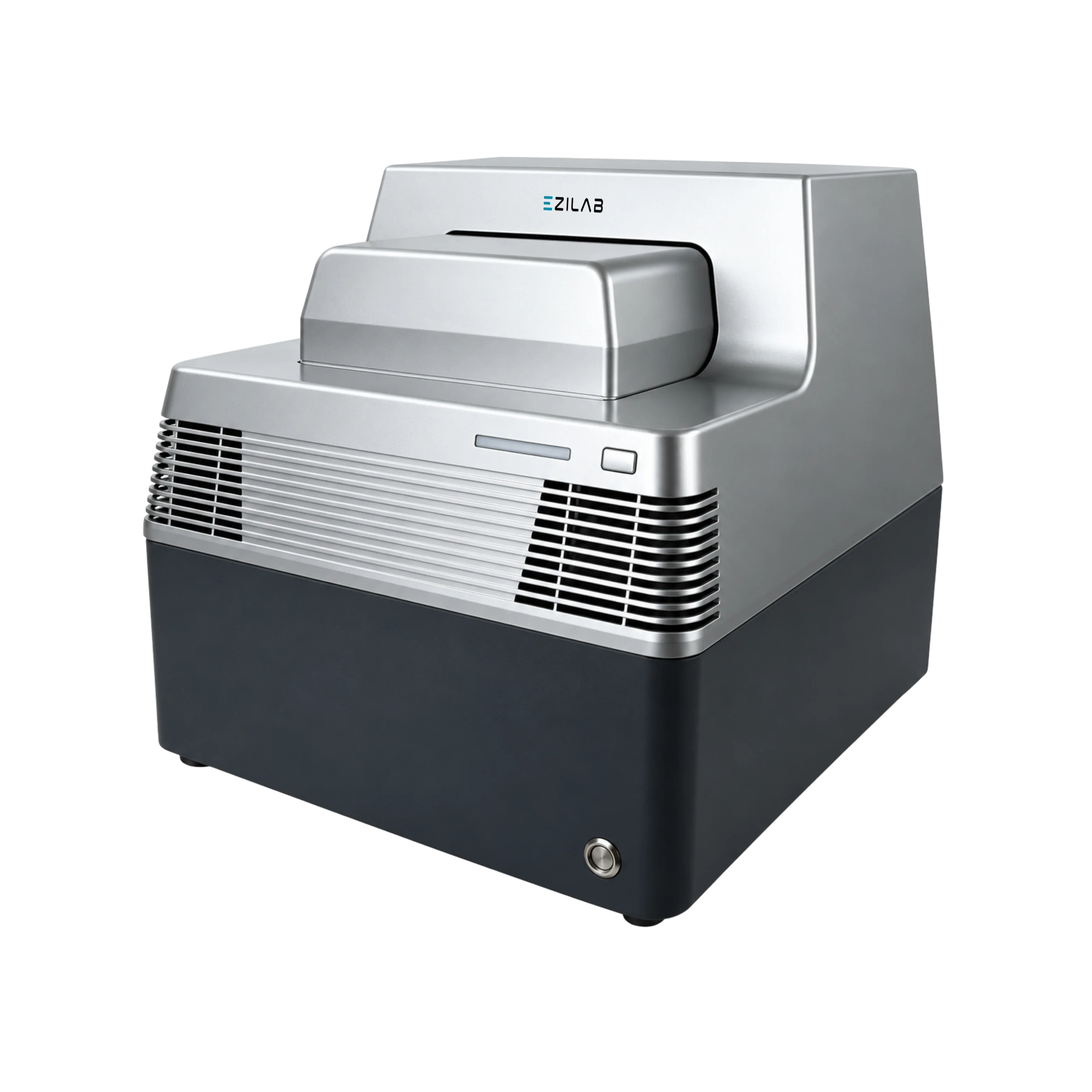
EziLab offers the Quantitative PCR Detection System EZL-PC171, a 96-well qPCR system that measures nucleic acid amplification cycle by cycle through four fluorescence channels. Long-life LED excitation spans 300–800 nm, and a bottom-reading optical path captures 500–800 nm emission, letting reaction runs as small as 5 µL produce usable Ct values. Block temperature moves between 4 and 105 °C at 4 °C/s with ±0.1 °C control and ≤±0.3 °C uniformity, while a 1–36 °C gradient across six zones speeds annealing optimization. Full plate reads finish in 5.5 seconds, the auto-closing heated lid at 30–110 °C limits evaporation, and cross-talk calibration keeps multiplex signals apart. Built-in software runs absolute quantification and melting curve checks, storing programs of 20 segments and 99 cycles. Hospitals, diagnostic centers, pharmaceutical companies, biotech firms, food inspection bodies and environmental agencies adopt this qPCR system for fast, sensitive molecular testing. Typical assays cover viral load monitoring, bacterial identification, gene expression studies, GMO checks and DNA or RNA recovery from cell cultures and raw materials. Choose it over endpoint PCR when real-time quantification matters most. Compare sibling models in the Fluorescence Quantitative PCR Detection System range, or open the Quantitative PCR Detection System page for complete technical data.
| Sample Capacity |
96×0.2ml PCR tube 12×8 strip tubes 96×0.2ml single tube |
|---|---|
| Reaction Volume | 5 – 100µl |
| Channel | 4 |
| Detection Wavelength | 500 – 800nm |
| Excitation Wavelength | 300 – 800nm |
| Module Temperature Range | 4 – 105°C |
| Ramp Rate | 4°C/s |
| Temperature Control Accuracy | ± 0.1°C |
| Temperature Uniformity | ≤ ±0.3°C |
| Temperature Control Mode | Block and tube mode |
| Gradient Temperature Range | 1 – 36°C |
| Hot Liquid Temperature Range | 30 – 110°C |
| Fluorescence Detection Repeatability | 0.05 |
| Scanning Time | 5.5s |
| Scanning Mode | Full plate scanning and line scanning |
| Dynamics Range | 1 – 1010 copies |
| Operation Mode | Continuous |
| Programming | 20 segments for each program, max 99 cycles |
| Power | 600 W |
| Dimension (L×W×H) | 410×386×352 mm |
| Packing Size (L×W×H) | 720×680×640 mm |
| Gross Weight | 55 Kg |
Full plate scanning and designated line scanning
Absolute quantitative automatic analysis
Melting curve analysis
6 independent temperature zones
Unique bottom detection, compatible to reaction volume down to 5µl
LED excitation light source long service life
Multi-channel cross talk calibration
Automatic open and close and lid prevents T reagent evaporation
Easy and convenient operation
High application versatility
Sensitive data analysis
Automatic control based on liquid level
Adjustable temperature range
| • | Monitors viral load in hospitals and diagnostic centers through four fluorescence channels, with Ct values from reactions as small as 5 µL. |
| • | Identifies bacteria by melting curve analysis on a 96-well block with six independent temperature zones. |
| • | Quantifies gene expression in pharmaceutical and biotech firms, with absolute quantification analysis and a 1 to 36 °C gradient range. |
| • | Screens GMO content for food inspection bodies, using full-plate or designated line scanning across 96 × 0.2 mL tubes. |
| • | Checks DNA and RNA recovered from cell cultures and raw materials, with a 4 °C/s ramp rate, automatic lid opening and closing, and programs of 20 segments up to 99 cycles. |