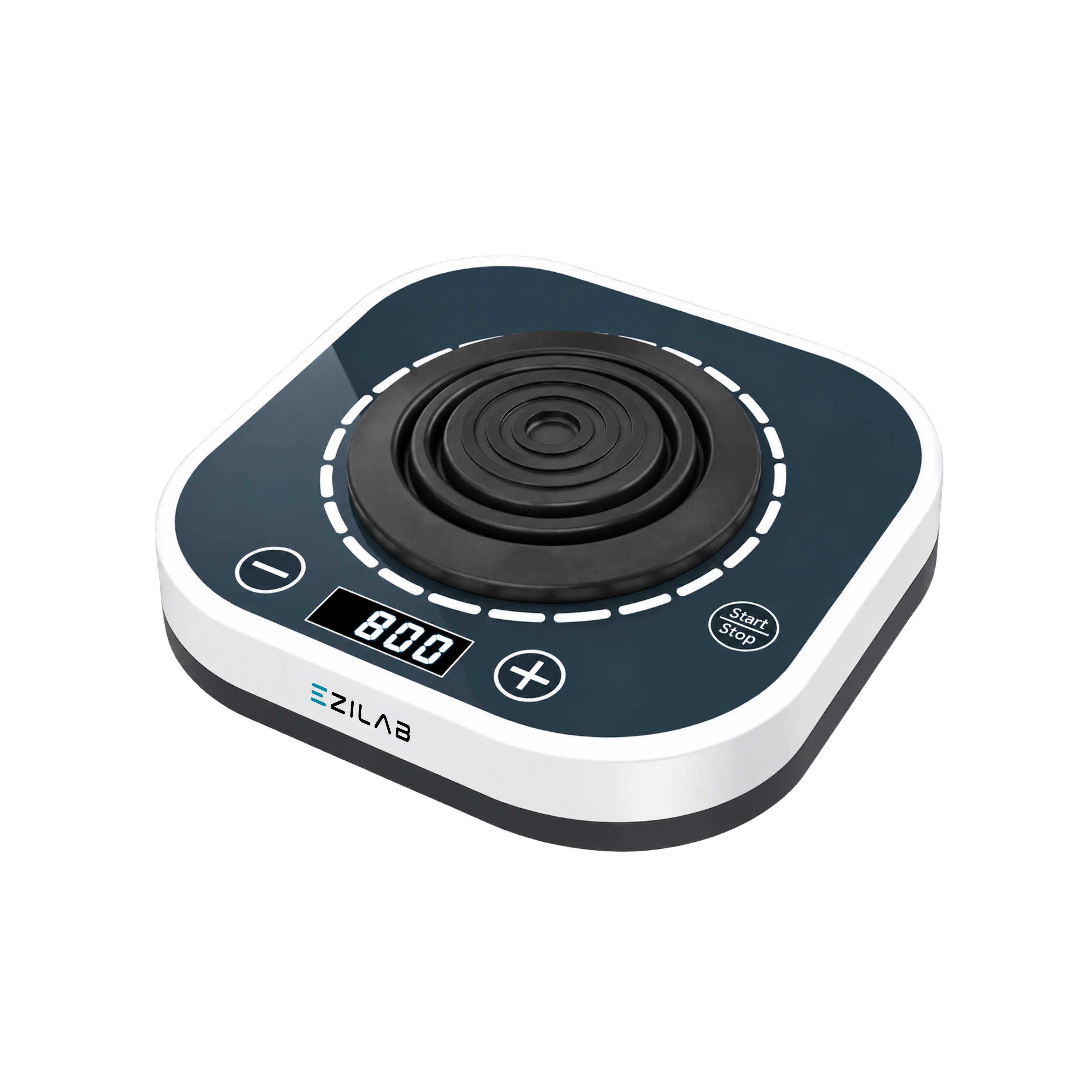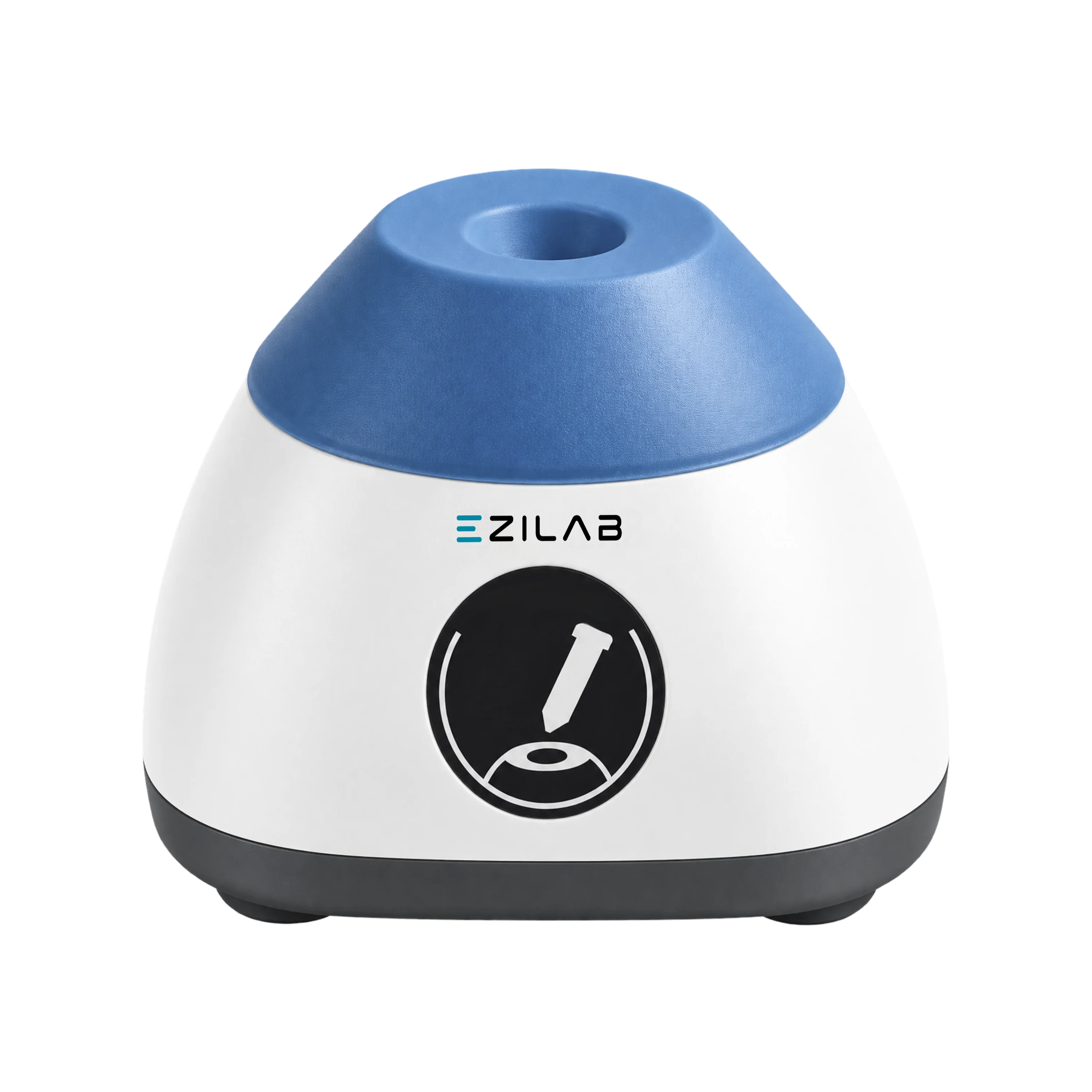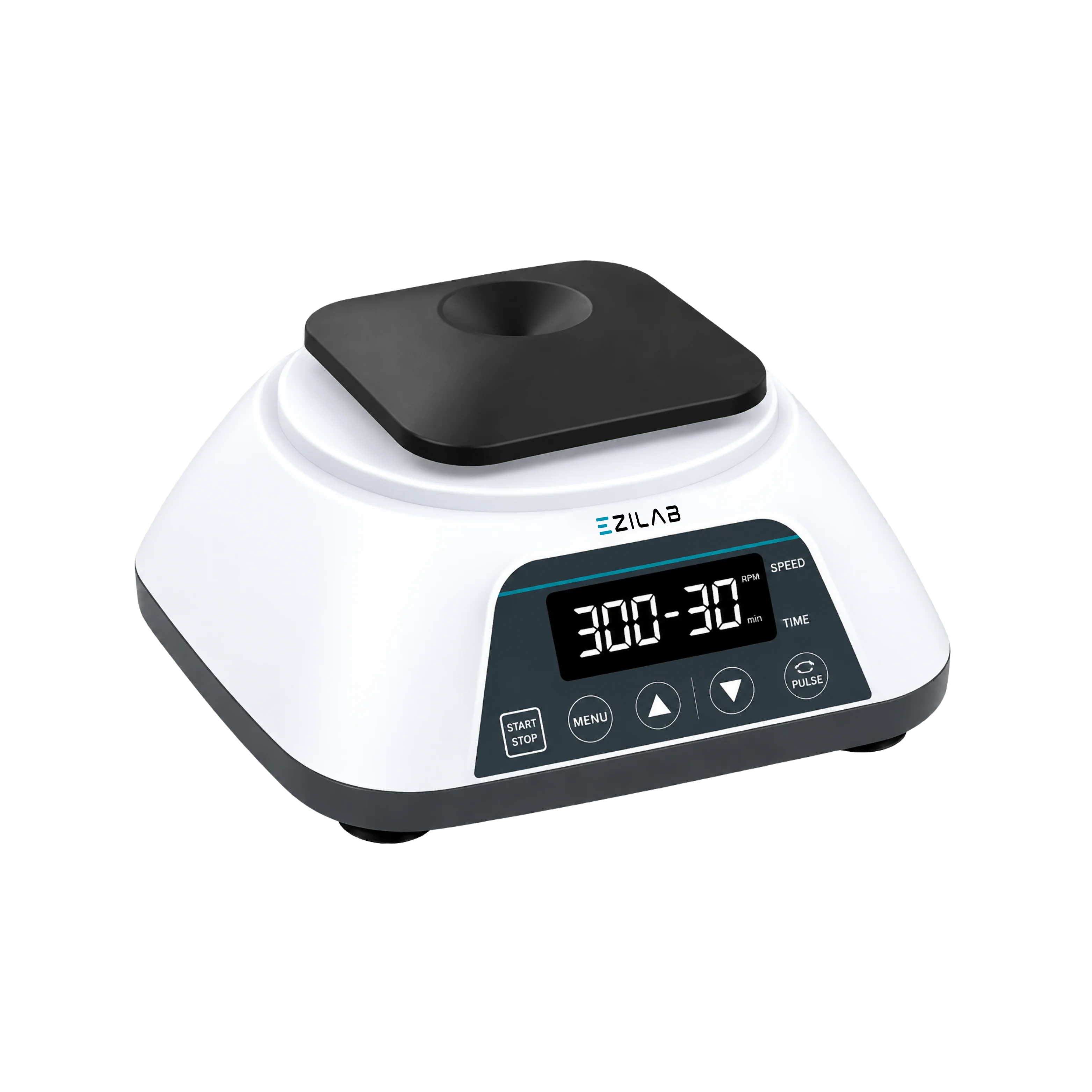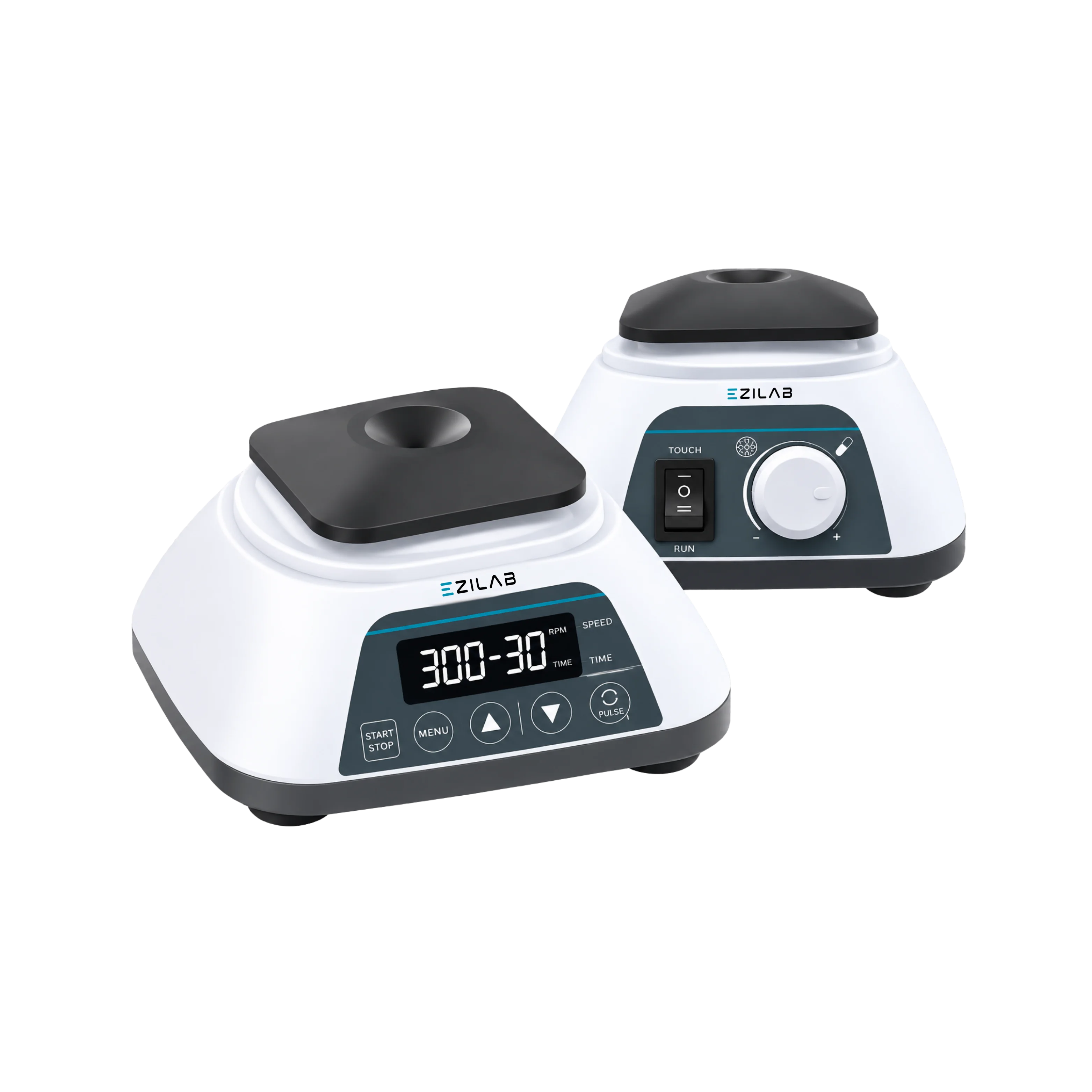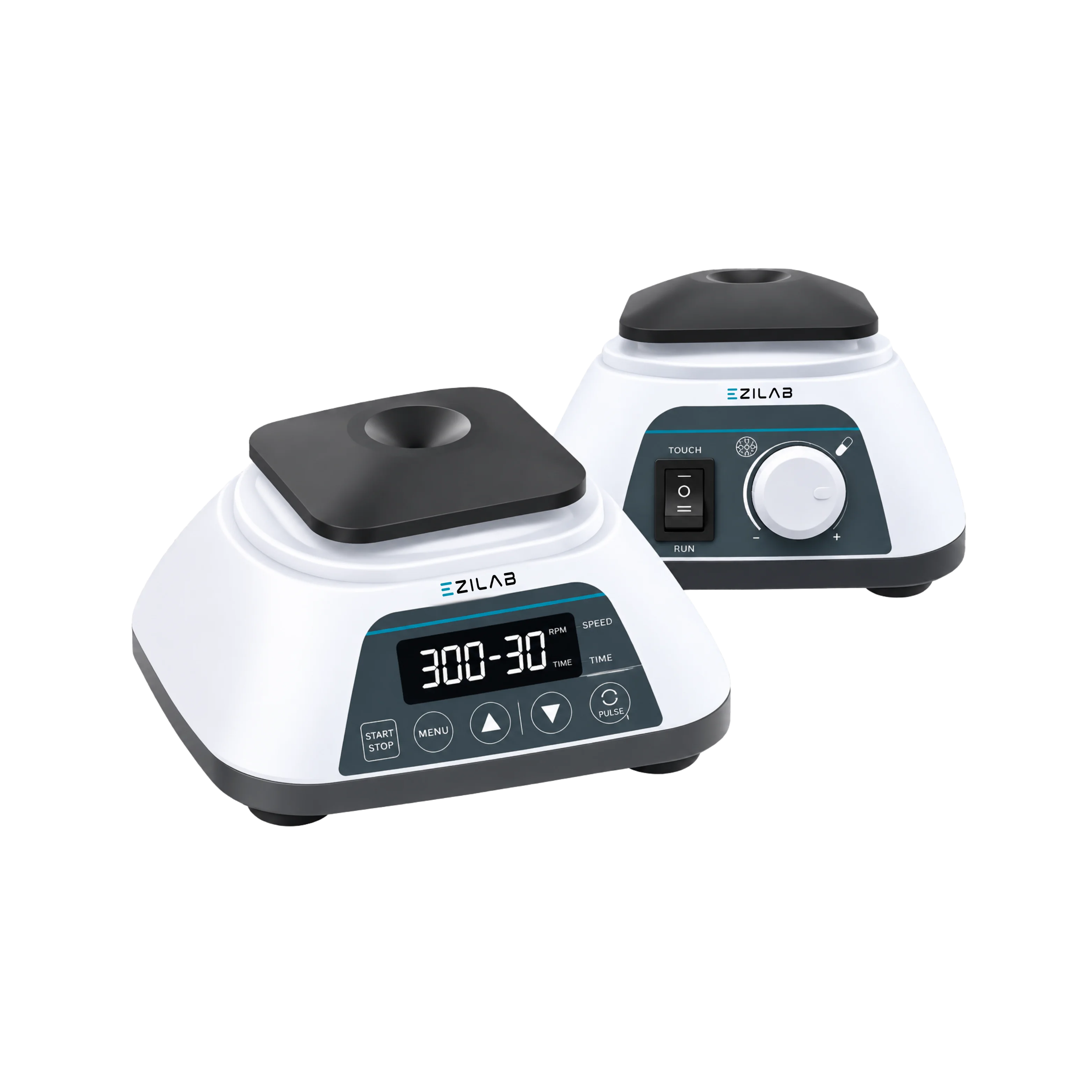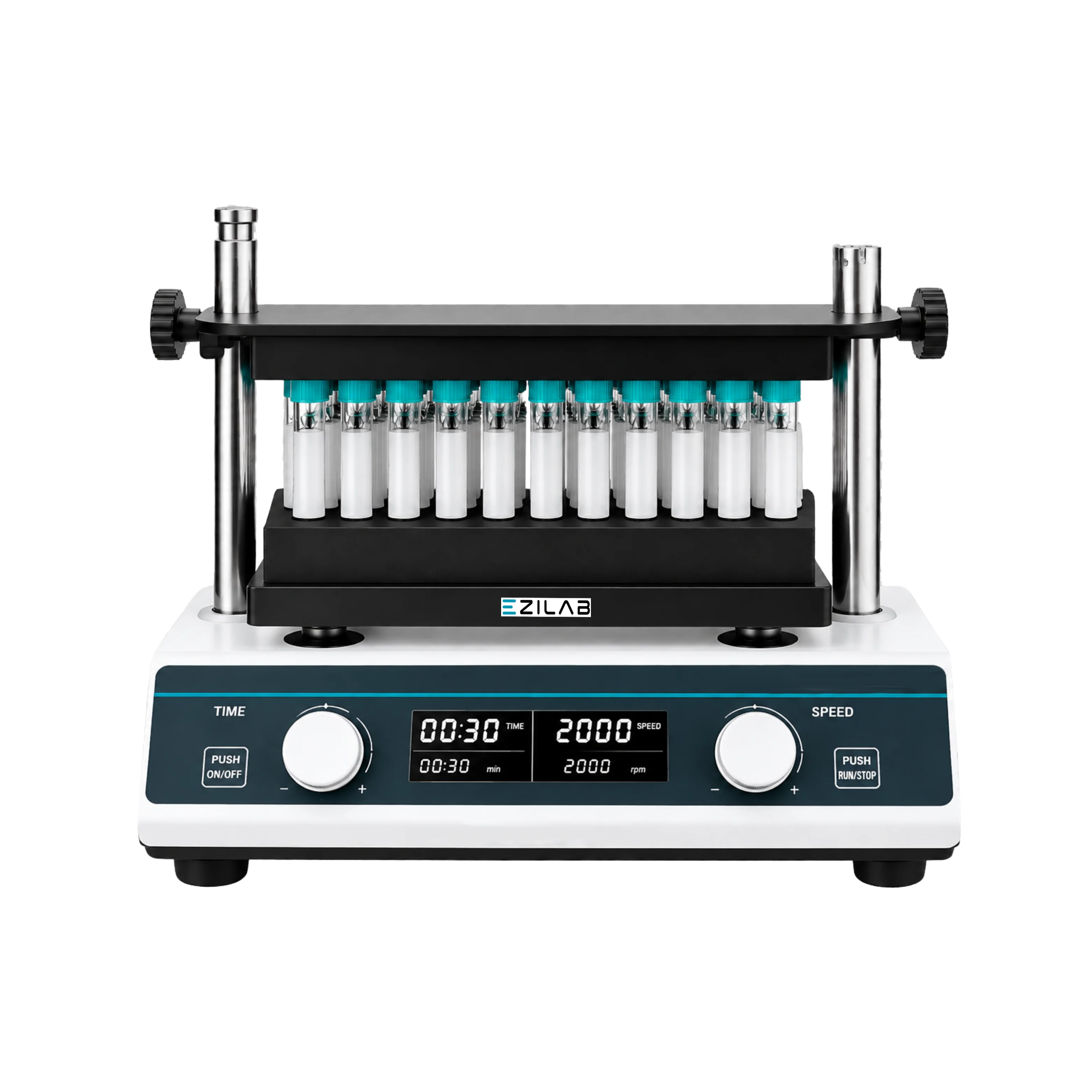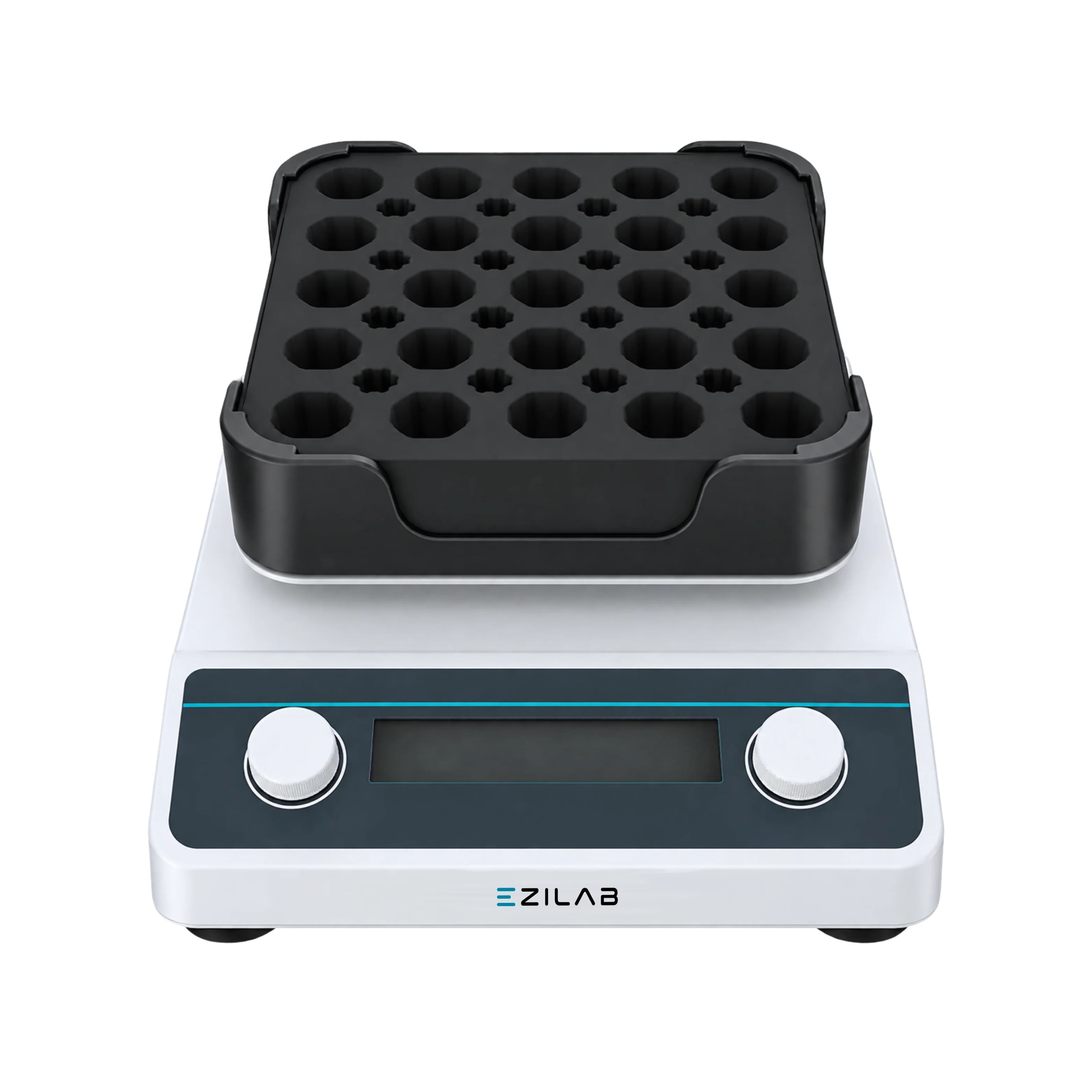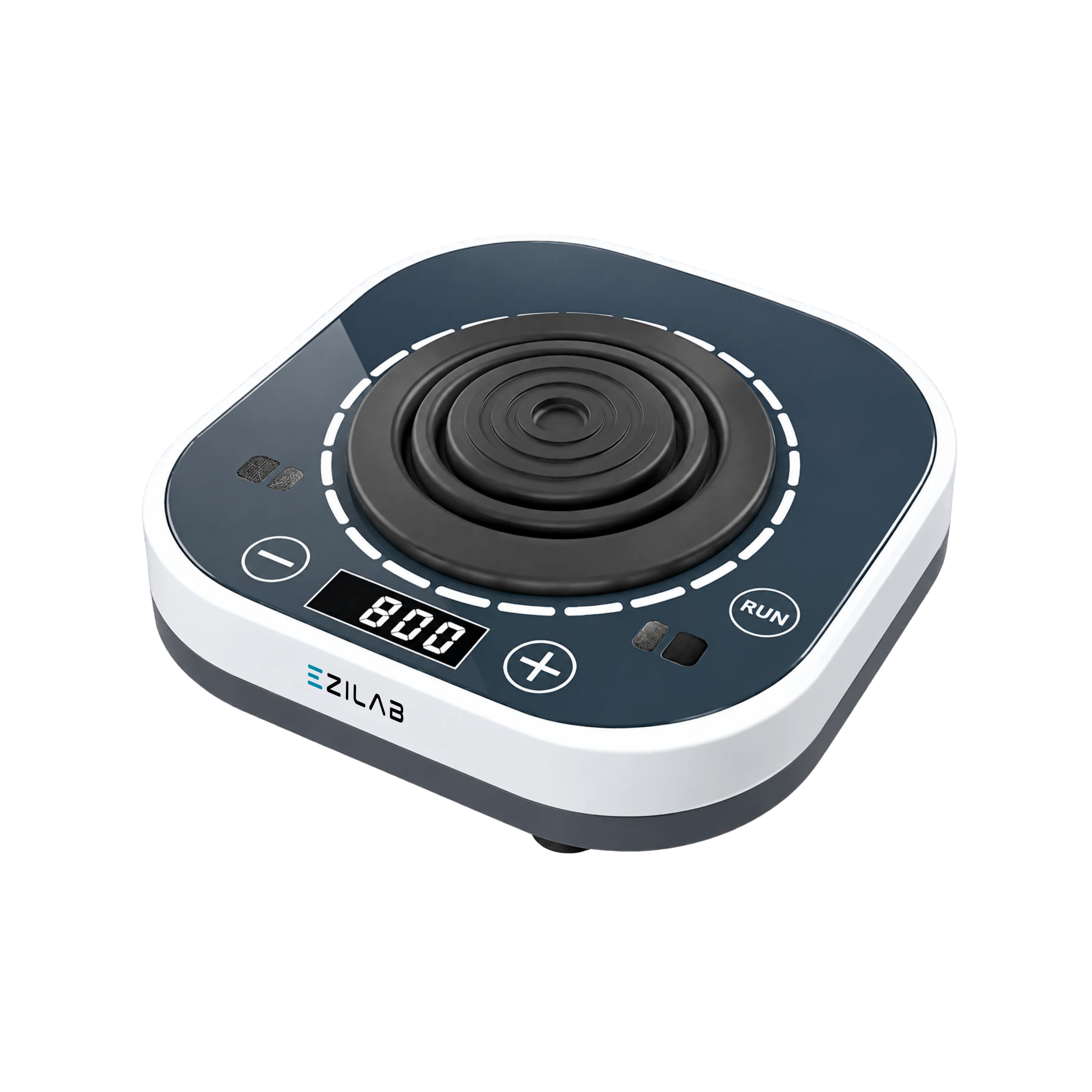
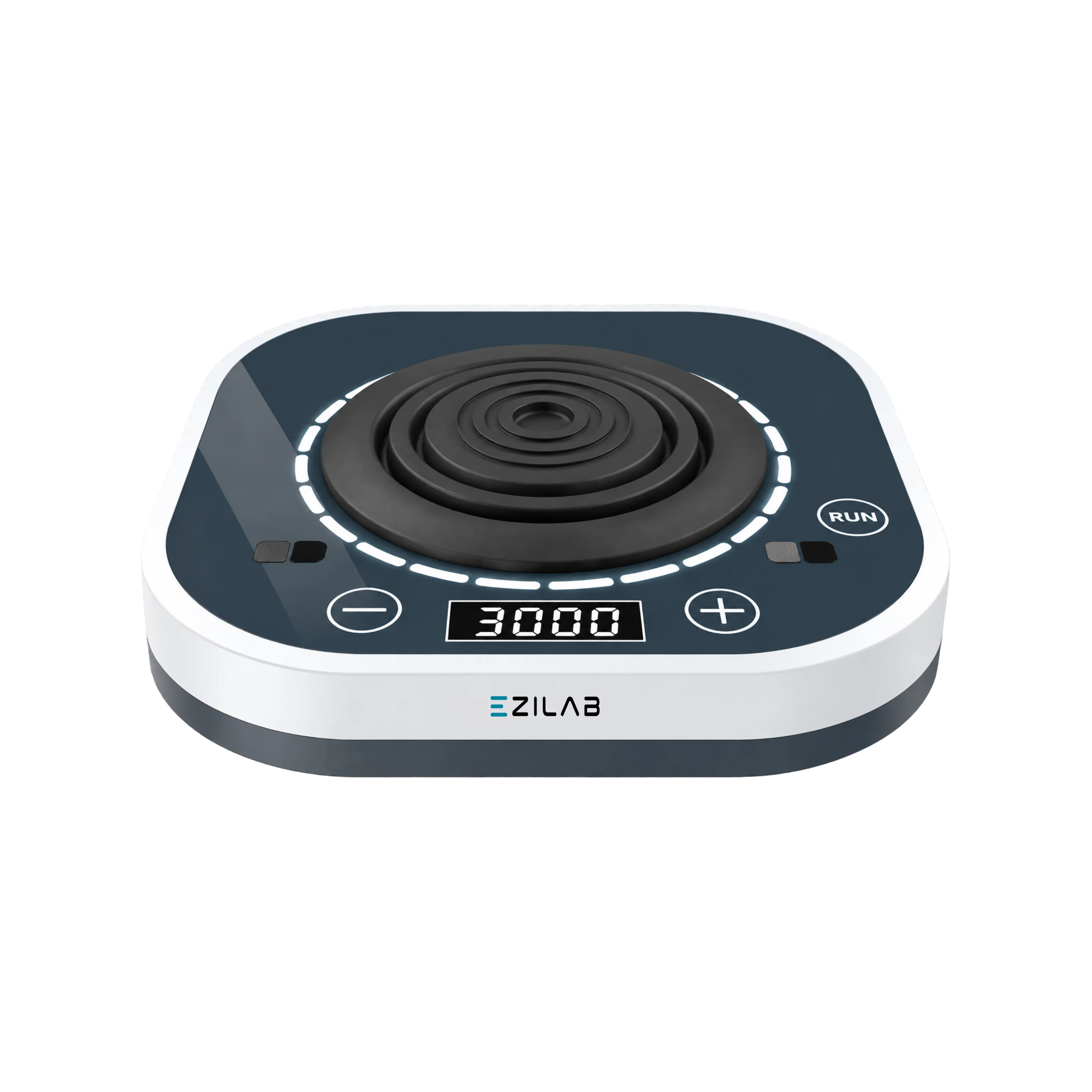
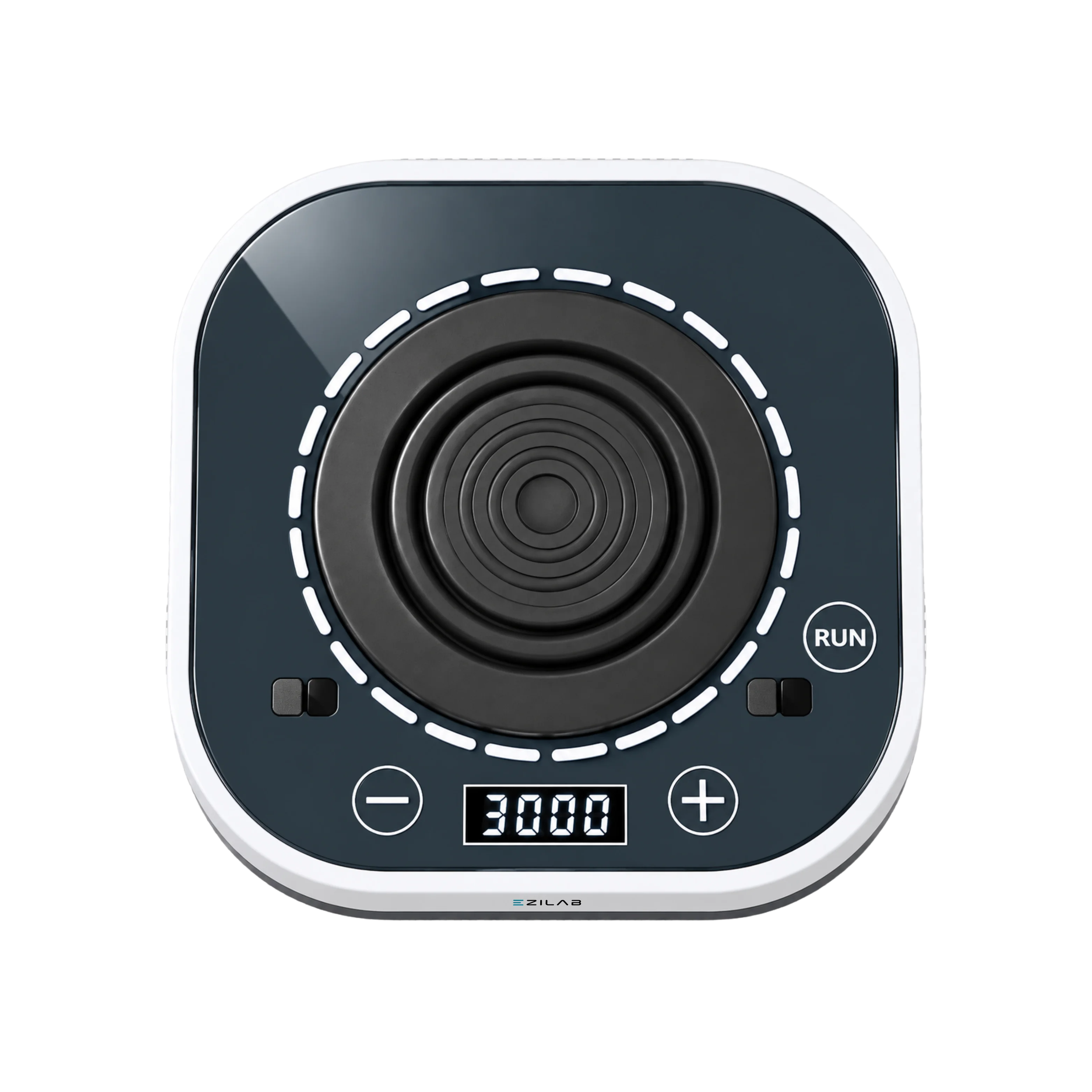
EziLab supplies the Vortex Mixer EZL-VM102 for molecular biology laboratories that need laser sensing activation rather than the brushless motor design found on the other vortex mixer sharing this same speed range in this catalog. Laser sensing starts mixing the moment a tube breaks the beam, without needing to press the tube against a pad, which matters in high-throughput molecular biology and clinical labs processing dozens of tubes back to back. Speed runs from 100 to 3000 RPM with a 4mm circular orbital motion, and IP42 protection means occasional splashes or spills near the unit won't interrupt operation. Reagent prep, cell resuspension, and general lab mixing tasks all suit this format, particularly where hands-free activation speeds up repetitive batch work. Labs weighing hands-free convenience against long-term motor durability should compare this laser sensing configuration against the brushless motor alternative sharing the same speed and protection rating in this catalog, since the choice between them comes down to activation method preference rather than core mixing performance. Molecular biology labs prioritizing hands-free tube activation over extended brushless motor service life get that convenience here. See the Laser Sensing Laboratory Mixer and Vortex Mixer ranges for fast, hands-free sample mixing needs across USA laboratory settings.
| Operating Mode | Digital display & Button & Laser Sensing |
|---|---|
| Motor type | Brushless motor |
| Speed Range | 100 to 3000RPM |
| Amplitude | 4mm Circular Oscillation |
| Direction of Rotation | Clockwise |
| RPM Increment | 100RPM |
| Shell Protection Level | IP 42 |
| Operating Temperature | 5 to 40°C |
| Operating Humidity | 80%RH |
| Power Consumption | 20W |
| Dimension | 150×150×45mm |
| Net weight | 1.26kg |
Silicone Cap
Adjustable Mixing Intensity
Non-Slip Feet
Noise Reduction
Laser Sensing activation
Vortex Mixer EZL-VM102 is used to quickly mix small liquid samples by creating a swirling motion, commonly applied in laboratories for tasks such as sample preparation, cell suspension, and homogenizing biological samples. It is essential in research, clinical, and industrial fields like biochemistry, microbiology, and medical diagnostics.