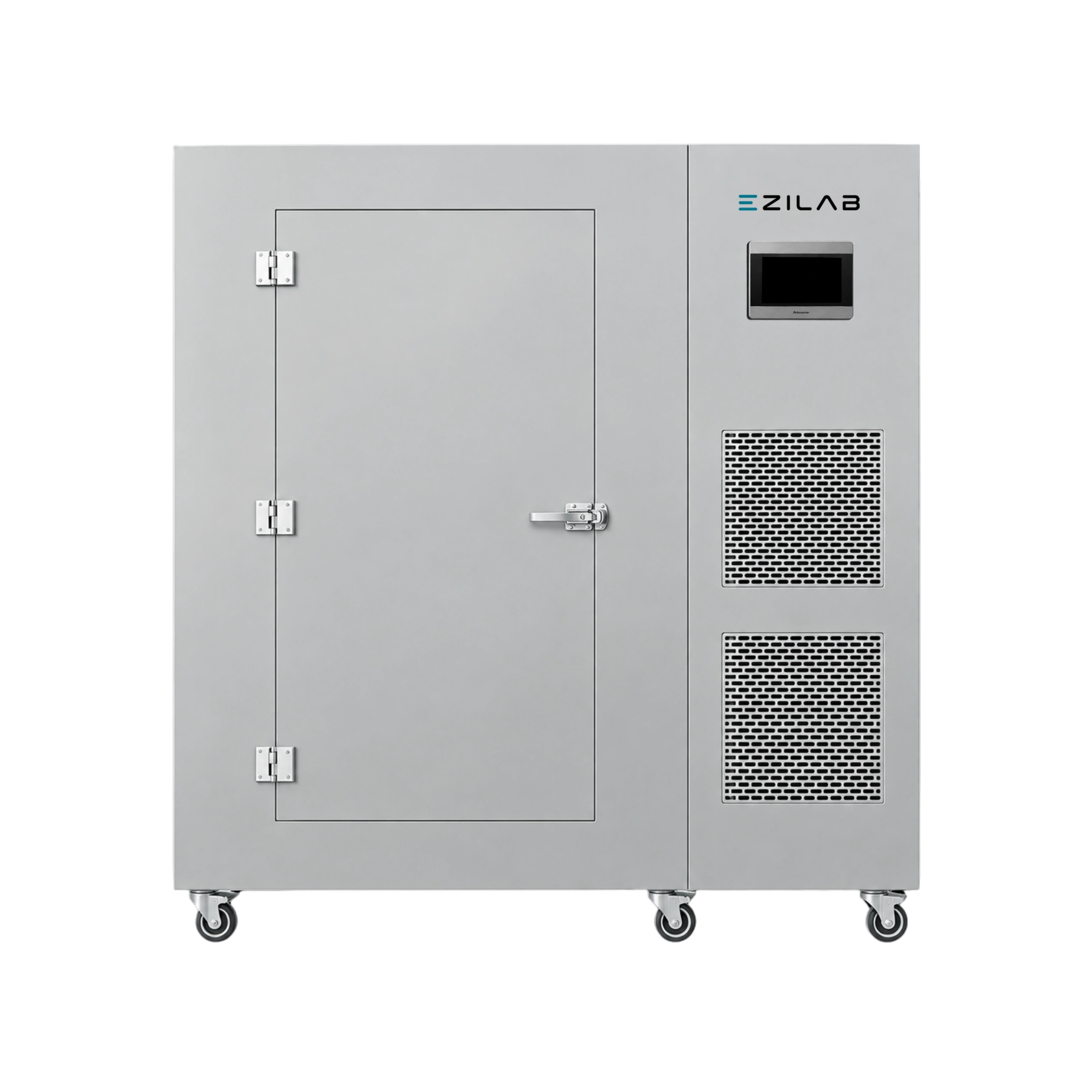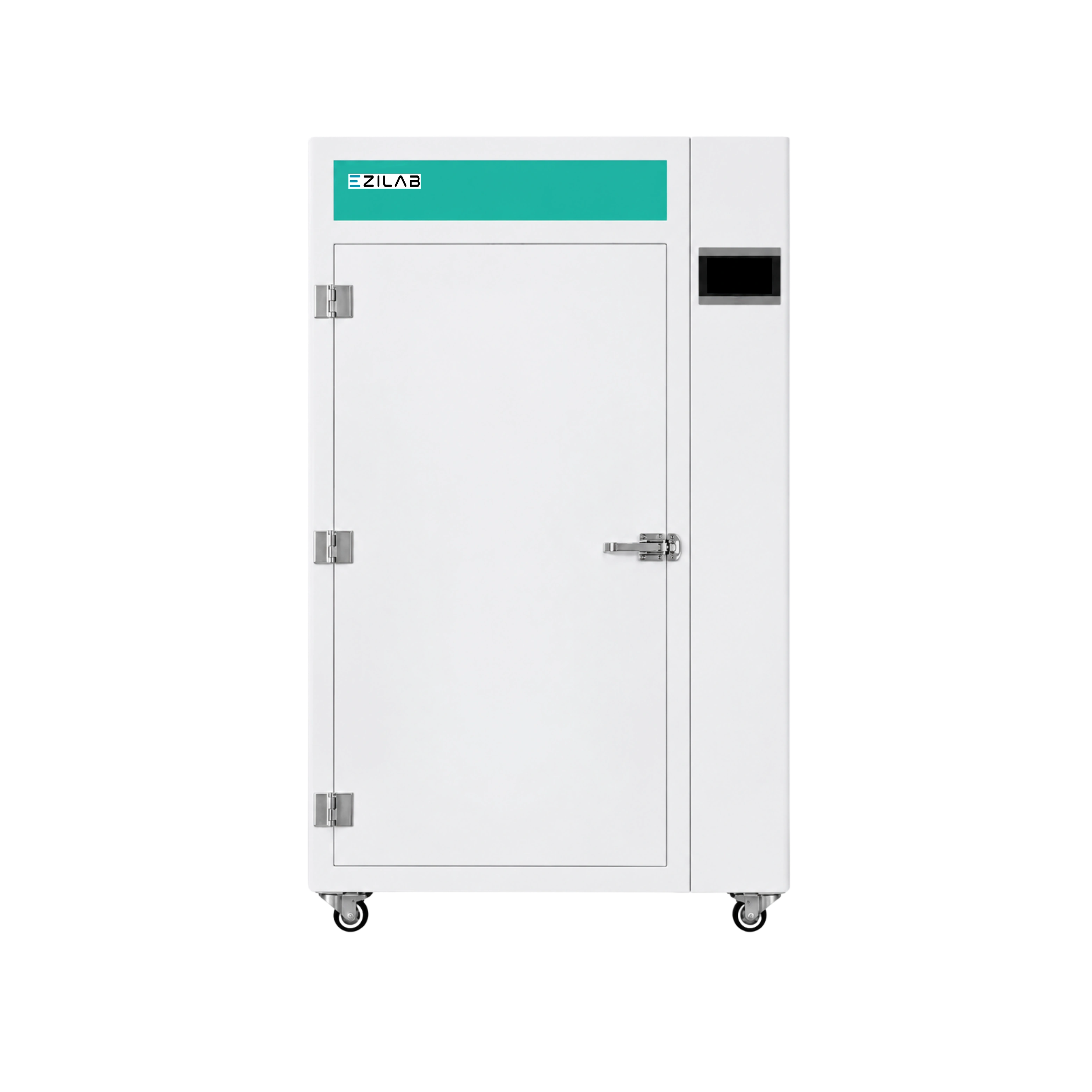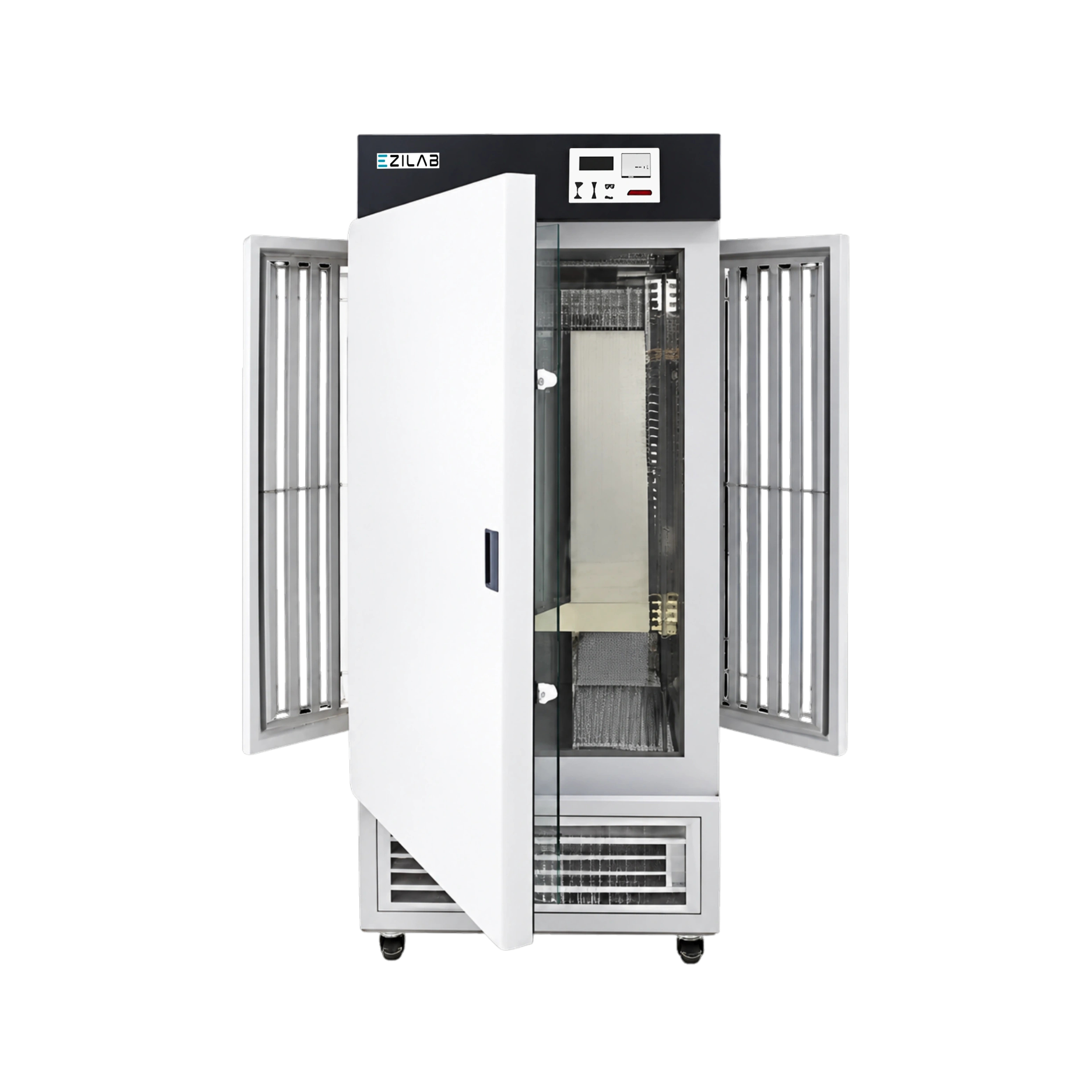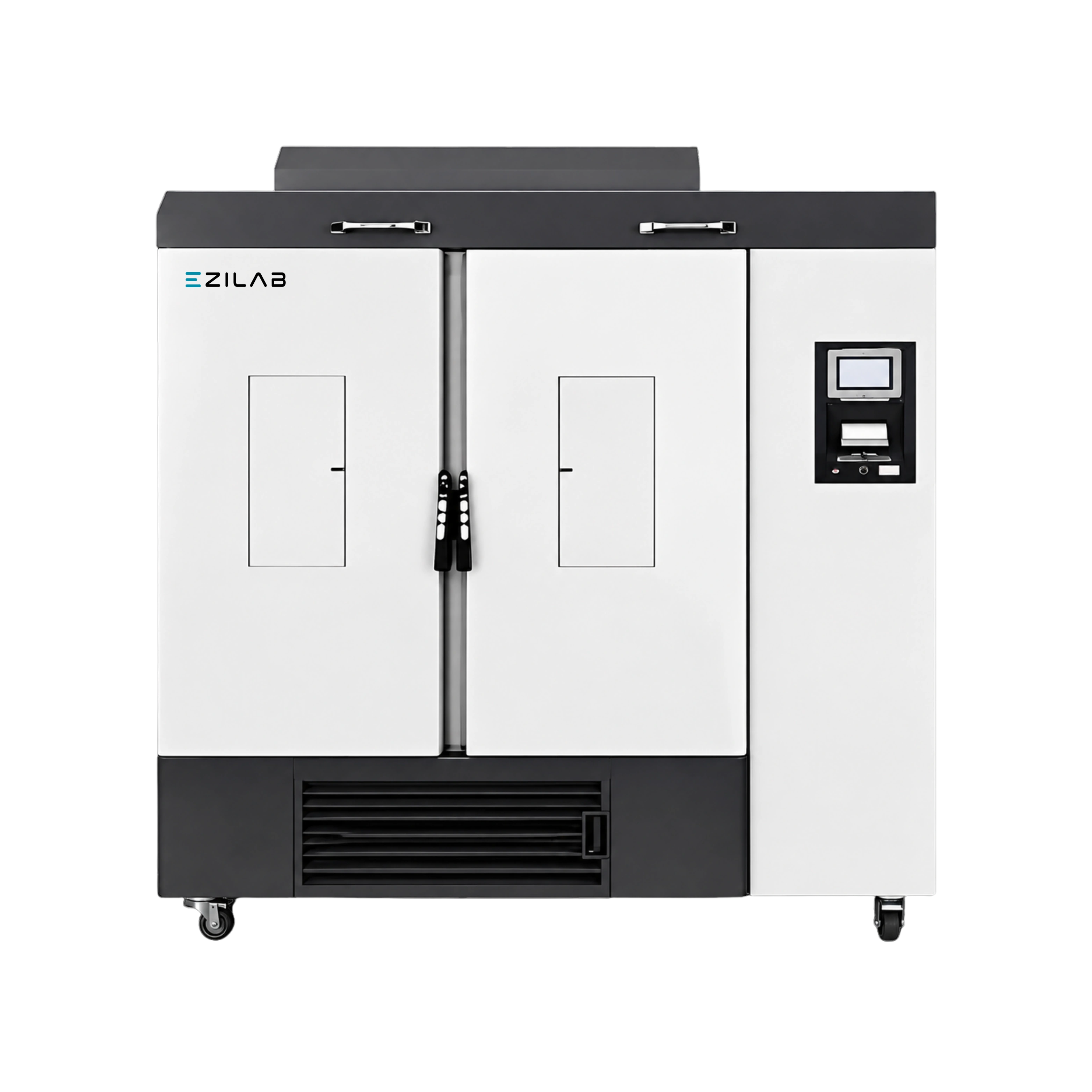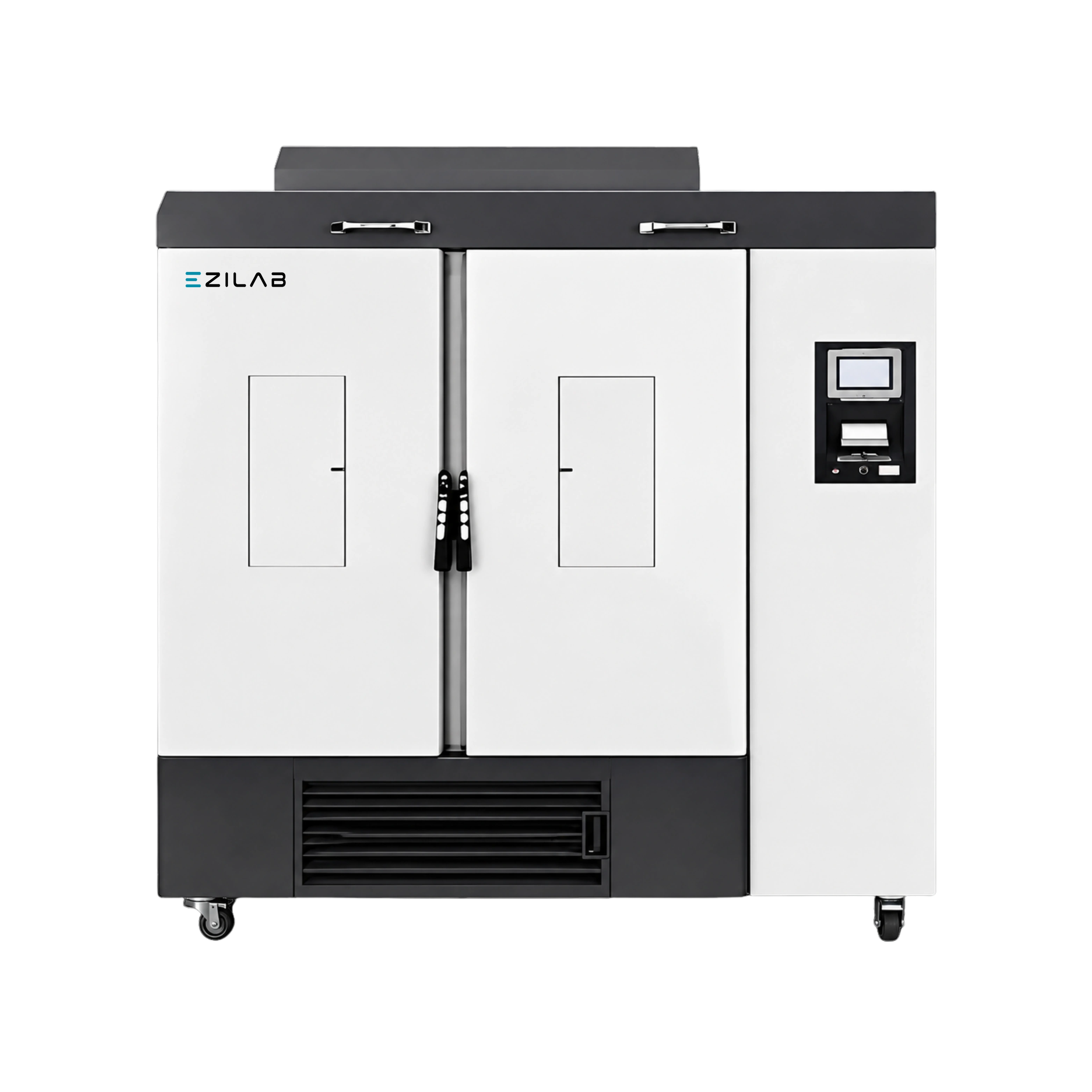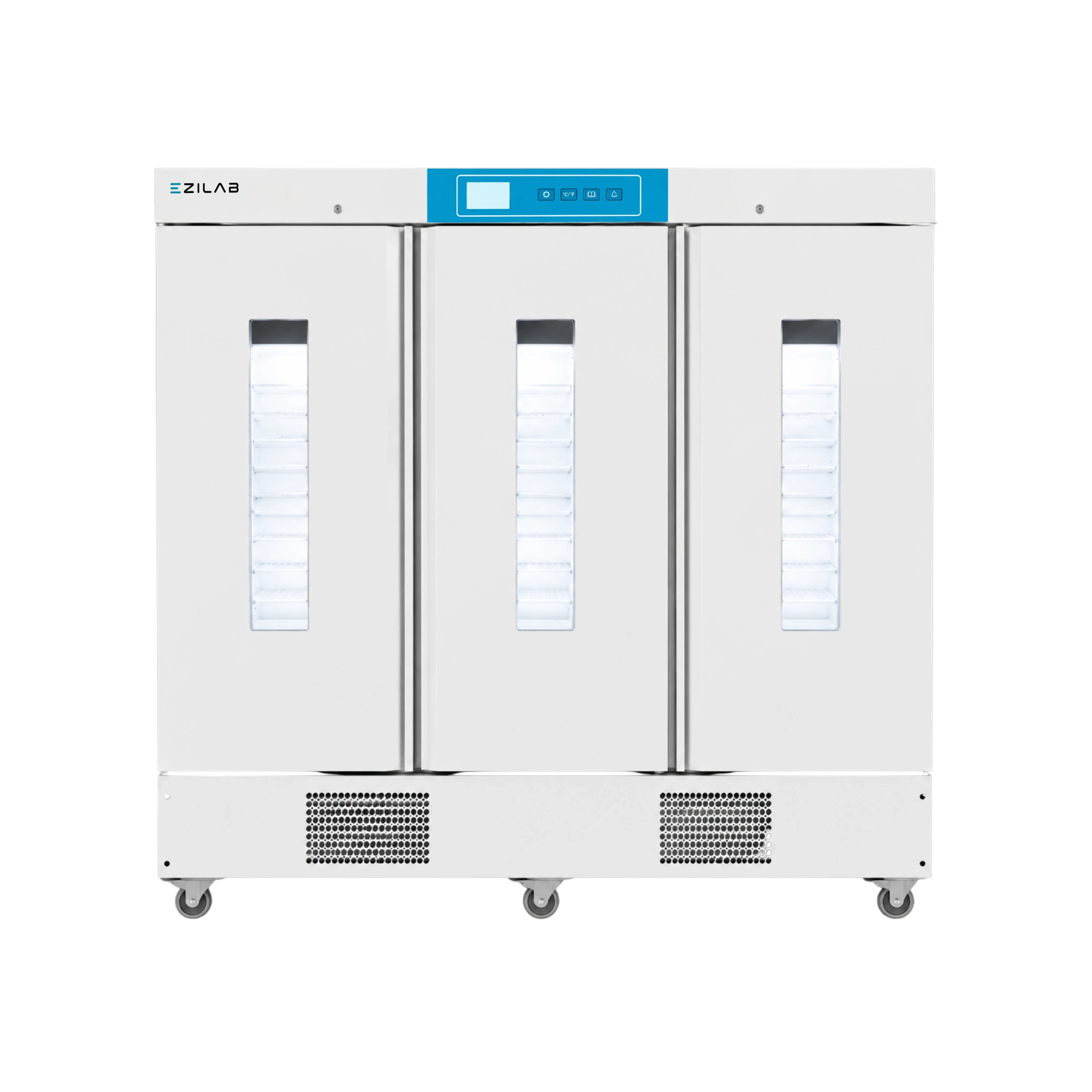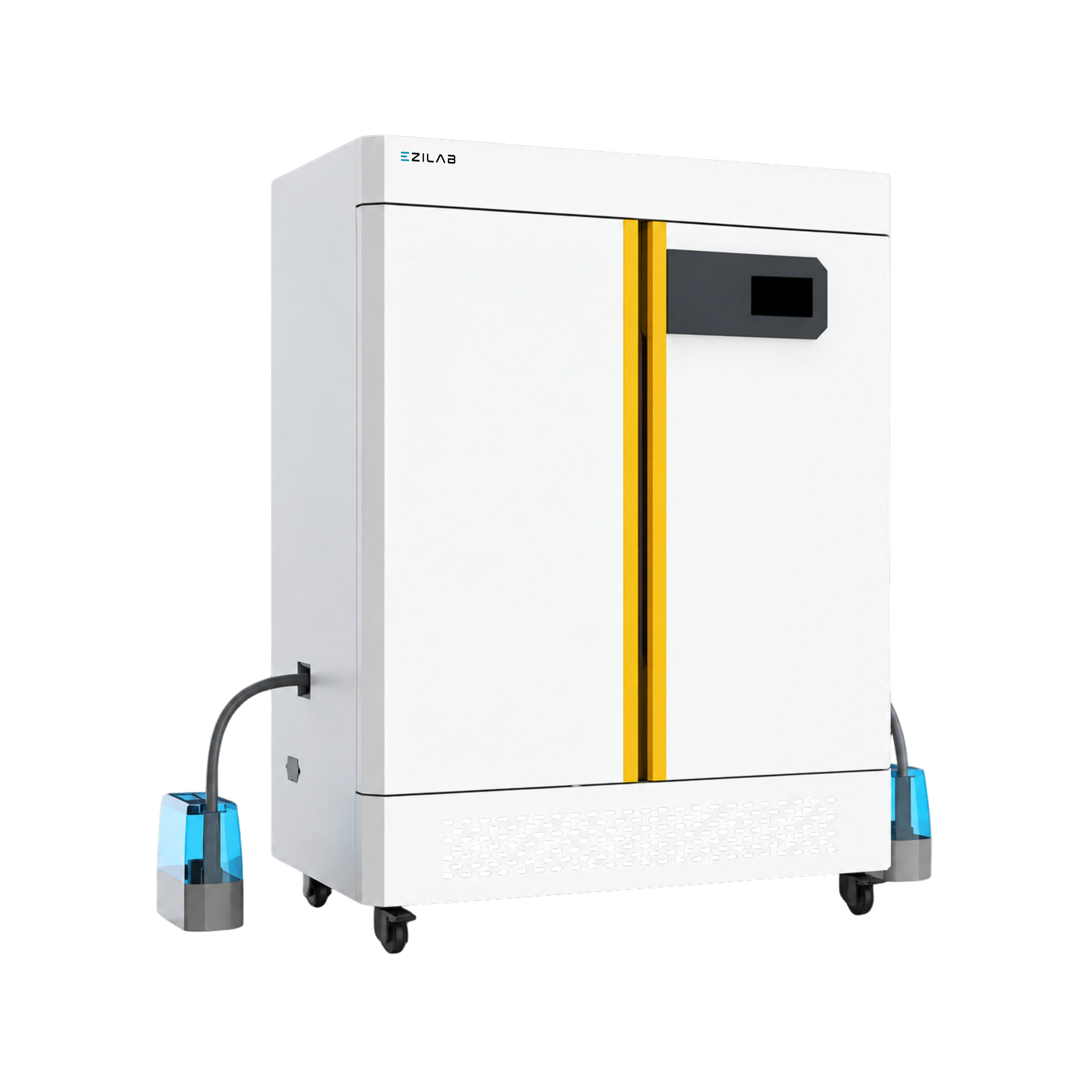
Ezilab's Plant Growth Chamber EZL-PG413 serves agricultural laboratories that need the highest light intensity in this line at 22,000 lux, above both the 588L Percival chamber's 15,000 lux and the largest 1213L unit's LED-based lighting spec. At 1000L capacity with 50-95% RH humidity control, this growth chamber sits between those two units on size while leading the range on light output, suited to research programs studying light-intensive plant responses where higher lux levels drive the experimental variable under study. That 22,000 lux rating matters most for crop research and photosynthesis studies involving high-light-requirement species or light-saturation experiments, where lower-intensity chambers elsewhere in this line would cap out below the light levels a study protocol calls for. The 1000L capacity supports multi-plant trials at a scale between the smaller 588L unit and the largest available chamber, giving agricultural research programs room for meaningful sample sizes without needing the maximum available chamber volume. The 50-95% RH range provides a practical humidity window for most cultivation research needs. EziLab's Growth Chamber and Plant Growth Chamber cover high-intensity plant cultivation research needs across USA agricultural laboratory settings.
| Capacity | 1000L |
|---|---|
| Temperature Range (Light OFF) | -15 to 50 ℃ |
| Temperature Range (Light ON ) | -5 to 50 ℃ |
| Temperature Fluctuation | ± 0.3 |
| Temperature Uniformity | Less than equal to ± 1 |
| Humidity Range | 50 to 95% RH |
| Humidity Fluctuation | ± 3% RH |
| Lighting Method | 3-sided side light source |
| Light Intensity Range | 0 to 22000 LX |
| Intensity Level | 0 to 100% |
| Power Consumption | 2500W |
| Internal Dimensions (L × W × H) | 1552 × 765 × 1940 mm |
| External Dimensions (L × W×H) | 1415 × 560 × 1165 mm |
| Net Weight | 220 Kg |
| Gross Weight | 310 kg |
Intelligent control system
User-friendly interface
Precise environmental regulation
Easy parameter adjustment
Efficient temperature control
Plant Growth Chamber EZL-PG413 is ideal for studying the effects of temperature stress on plant growth and crop development. It is also widely used for seed germination, seedling cultivation, plant growth experiments, and microbial research.