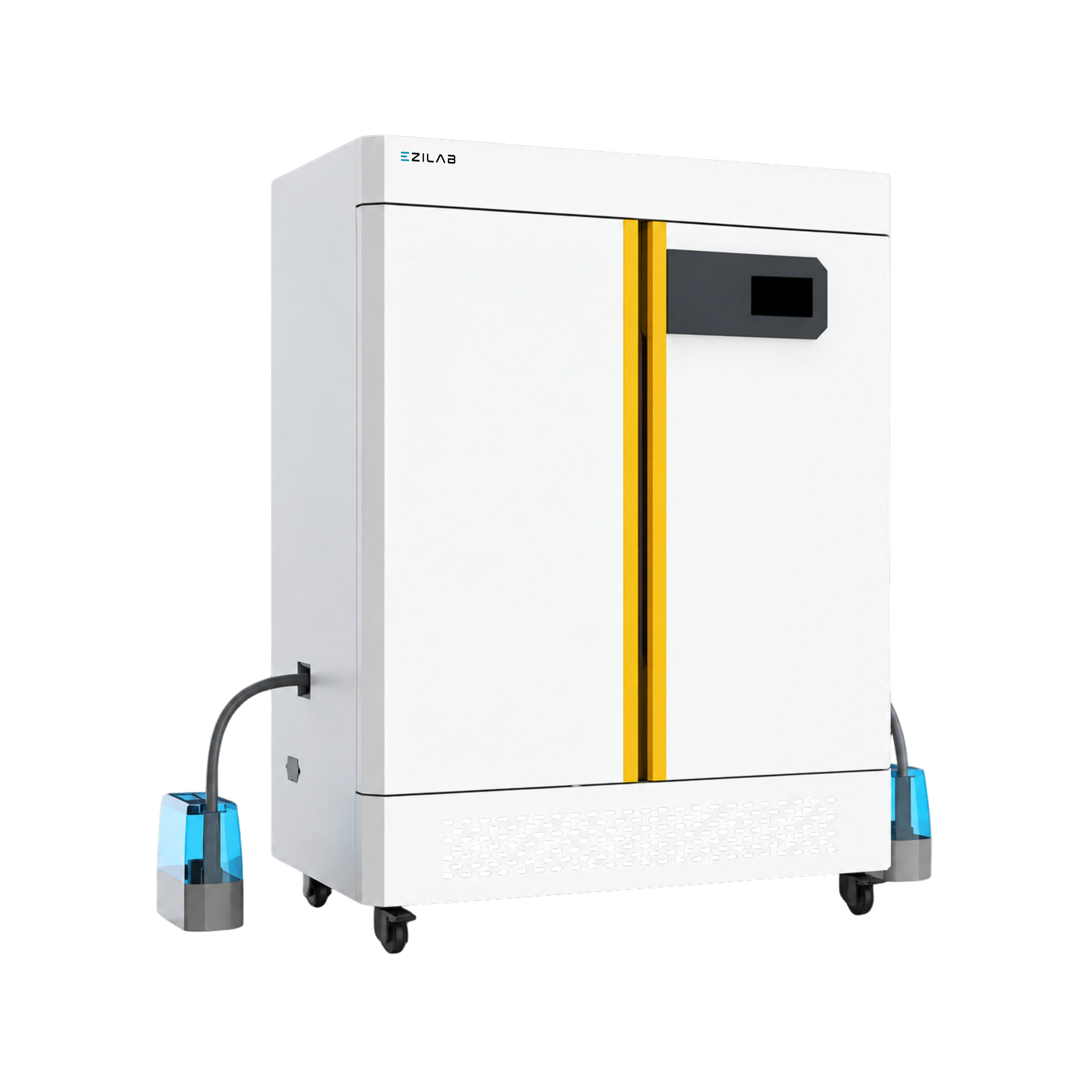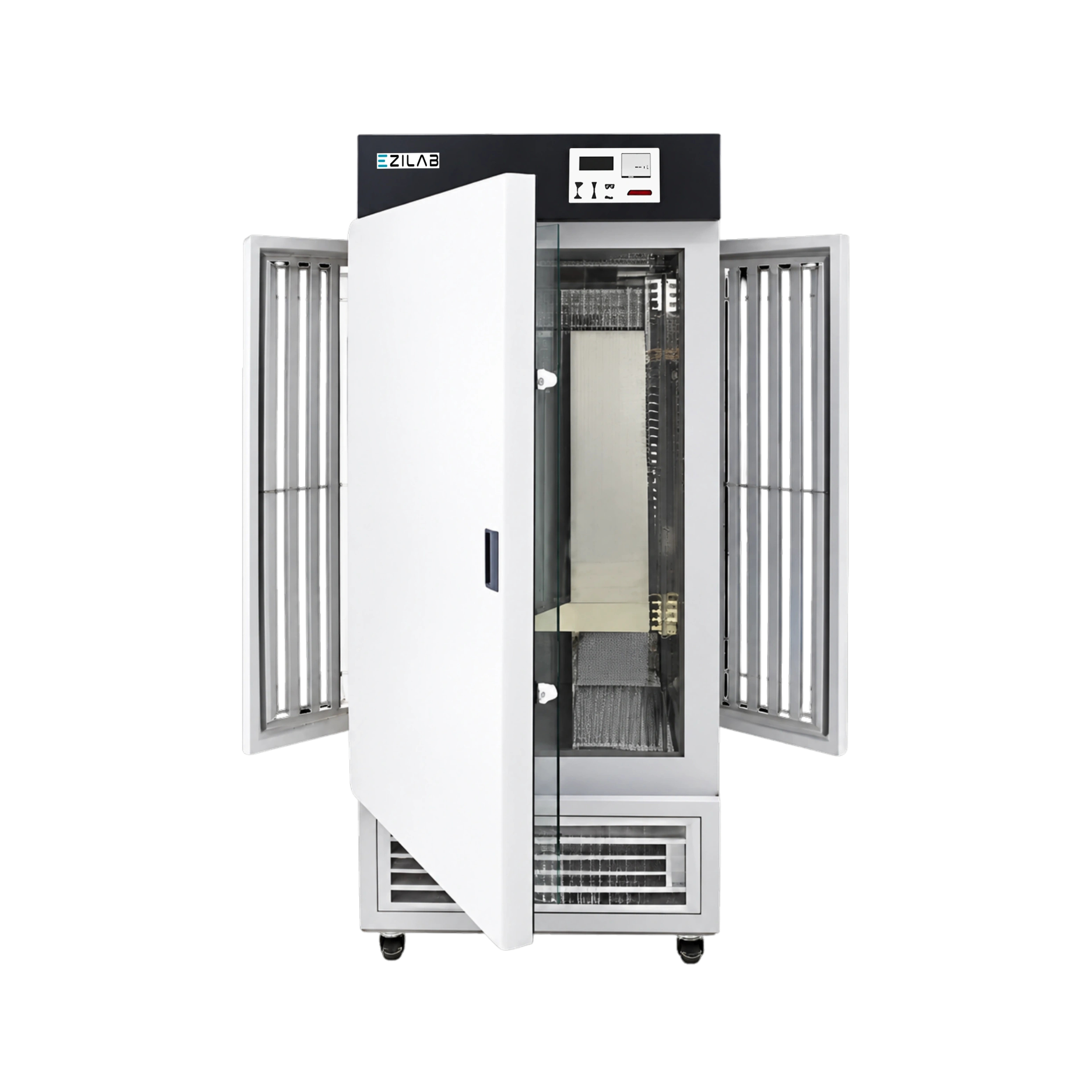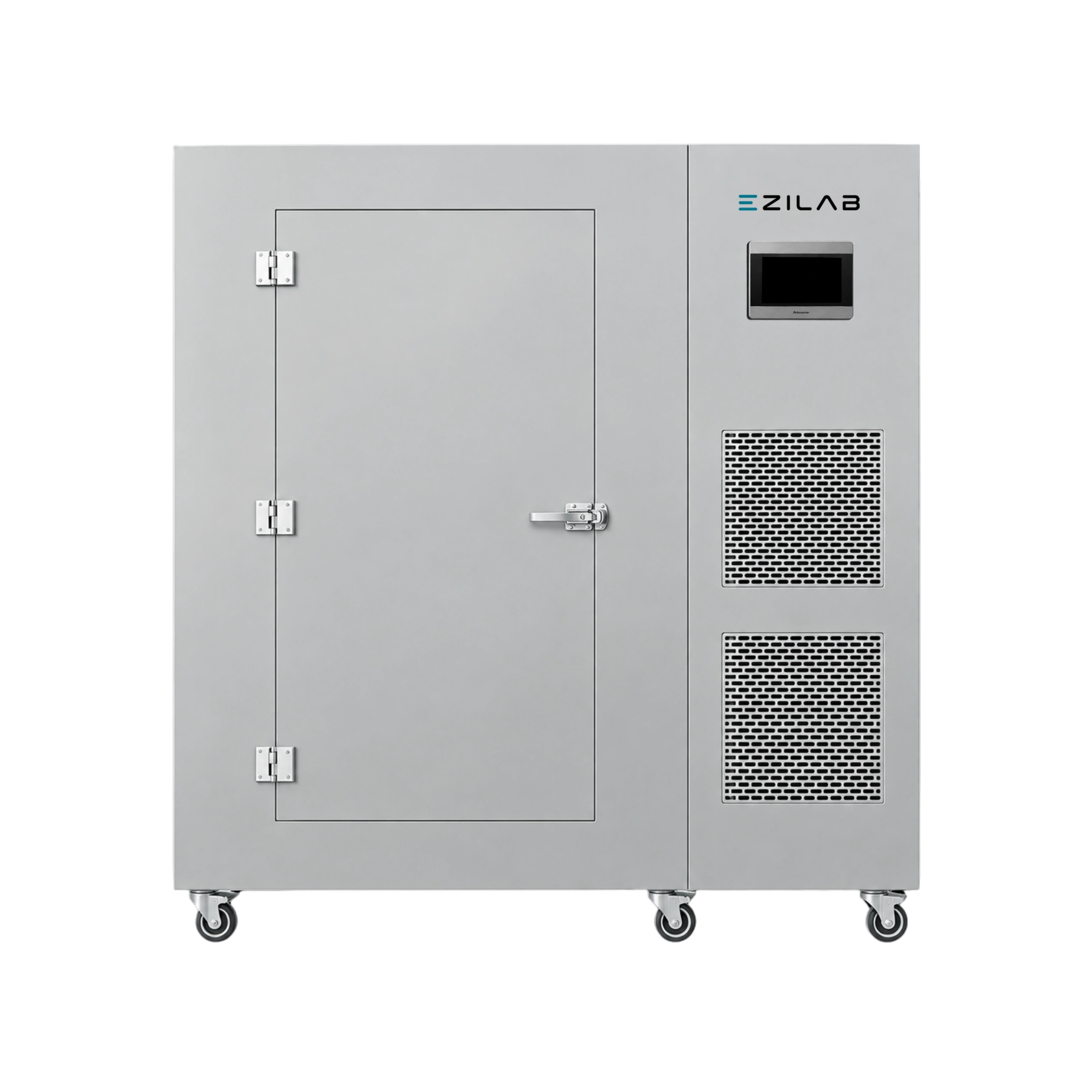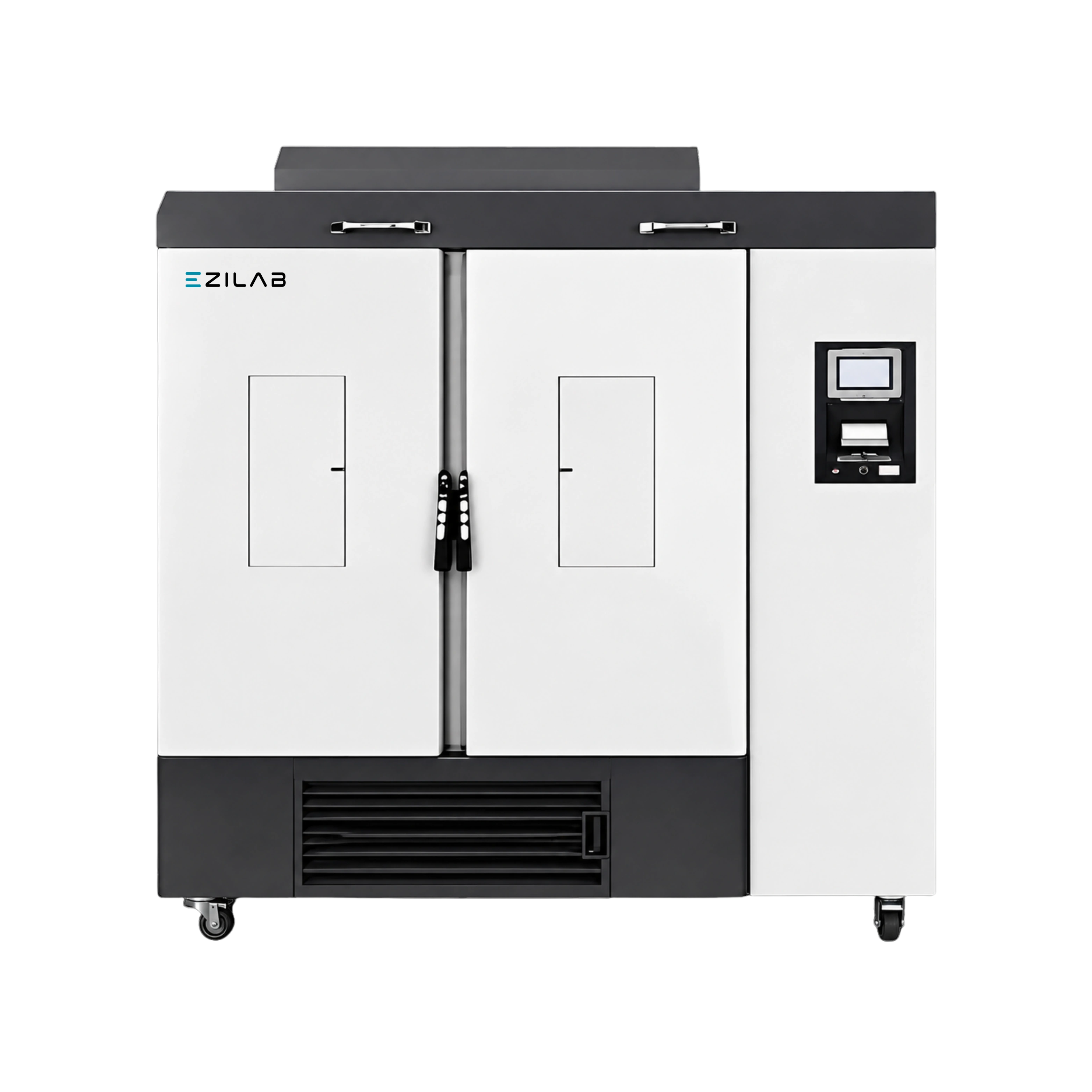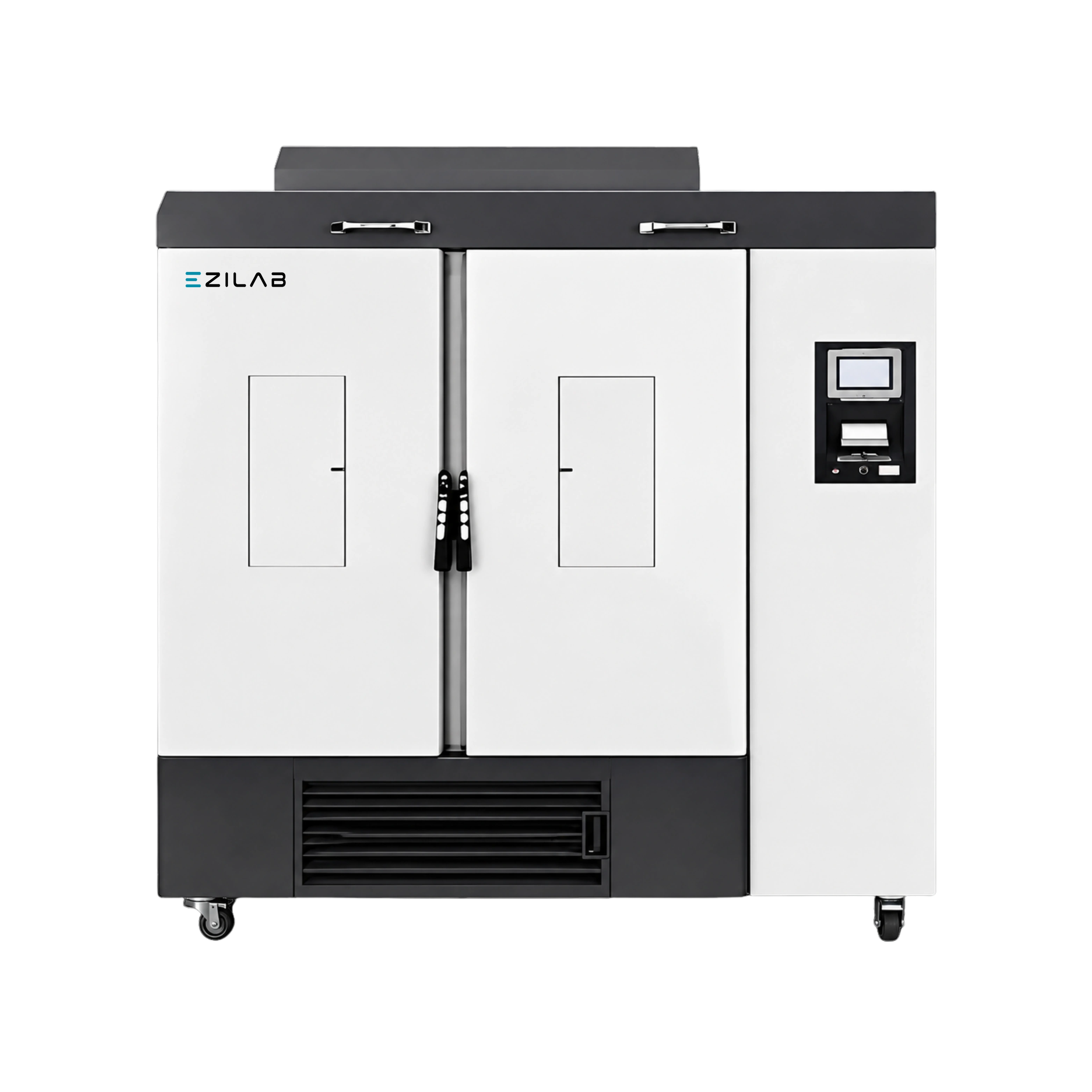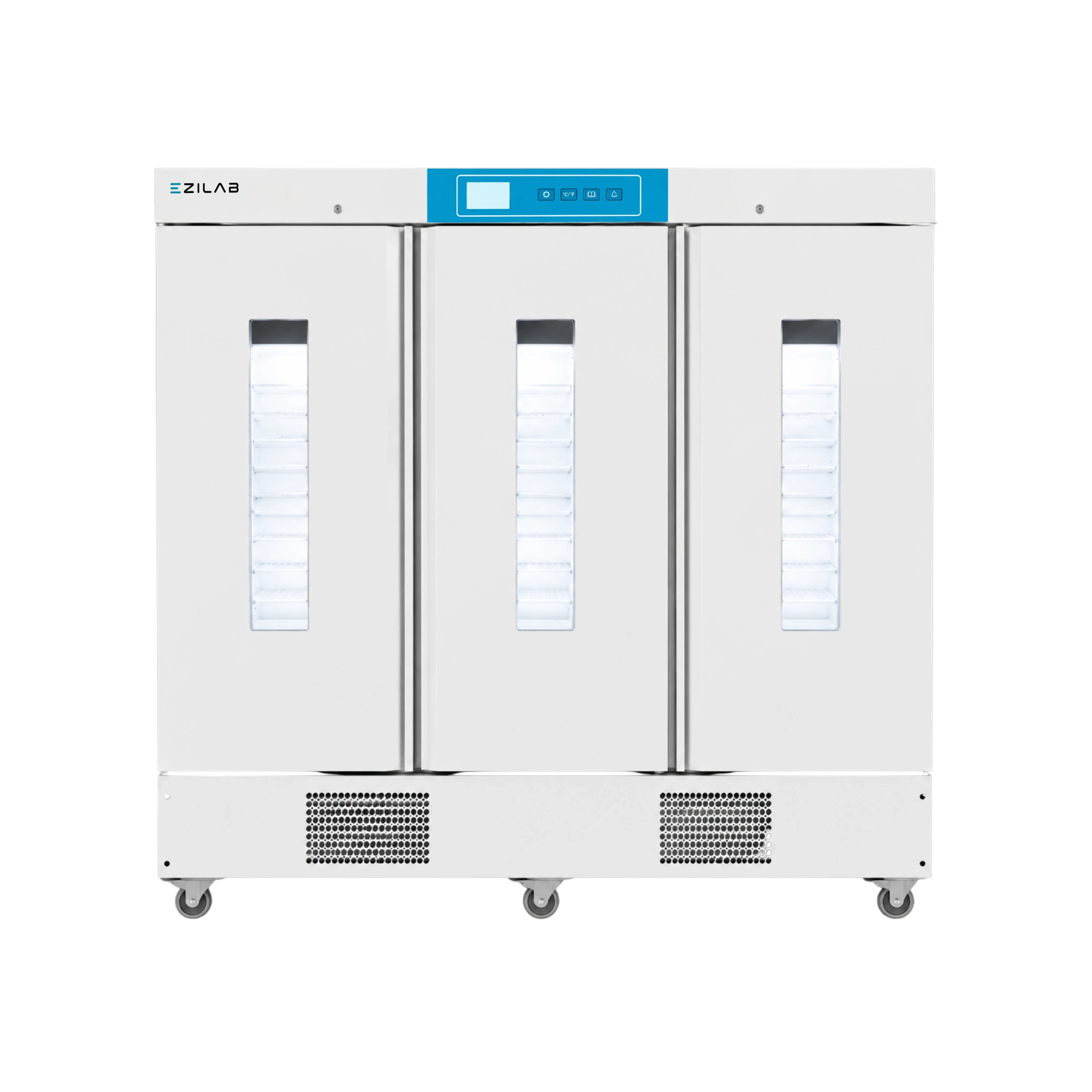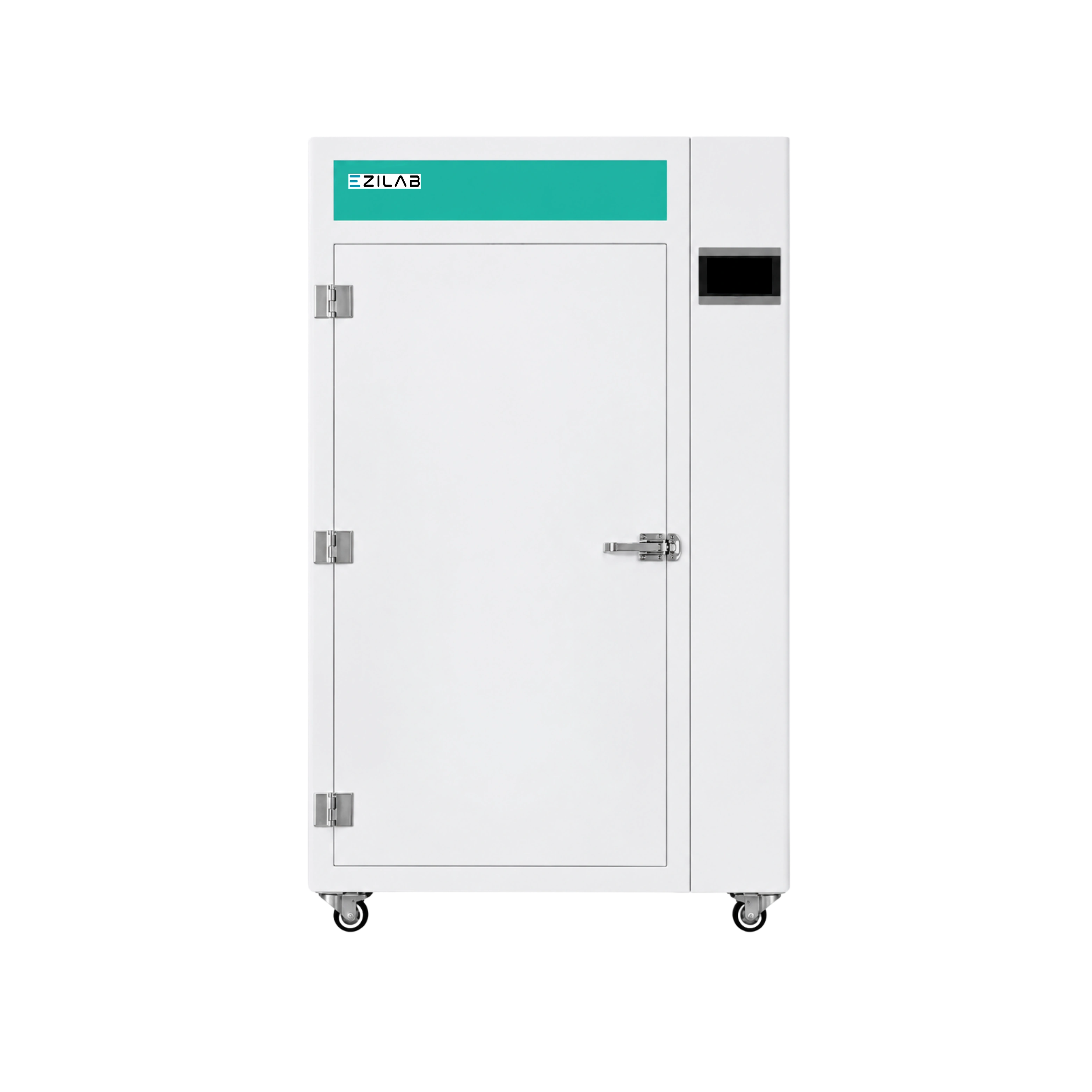
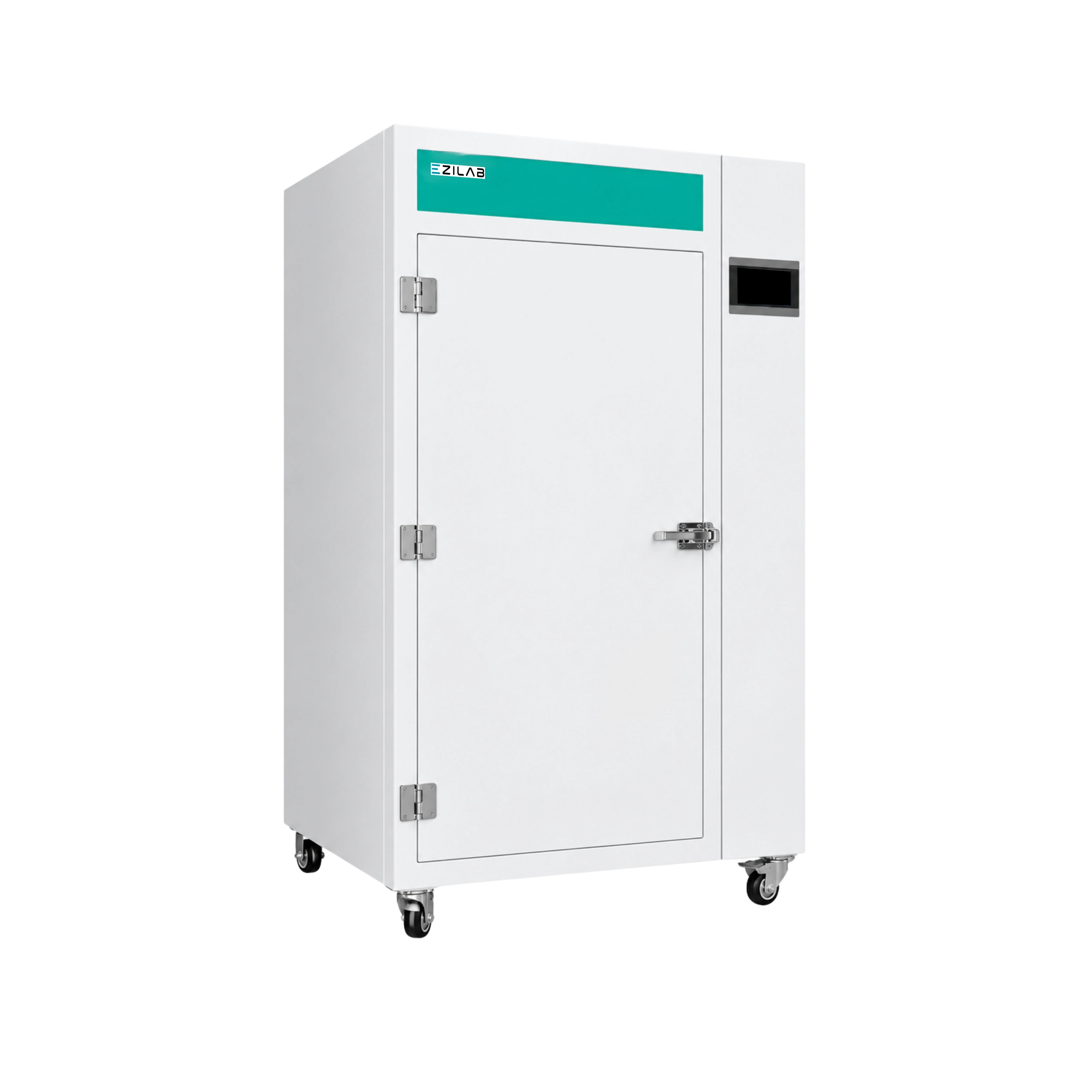
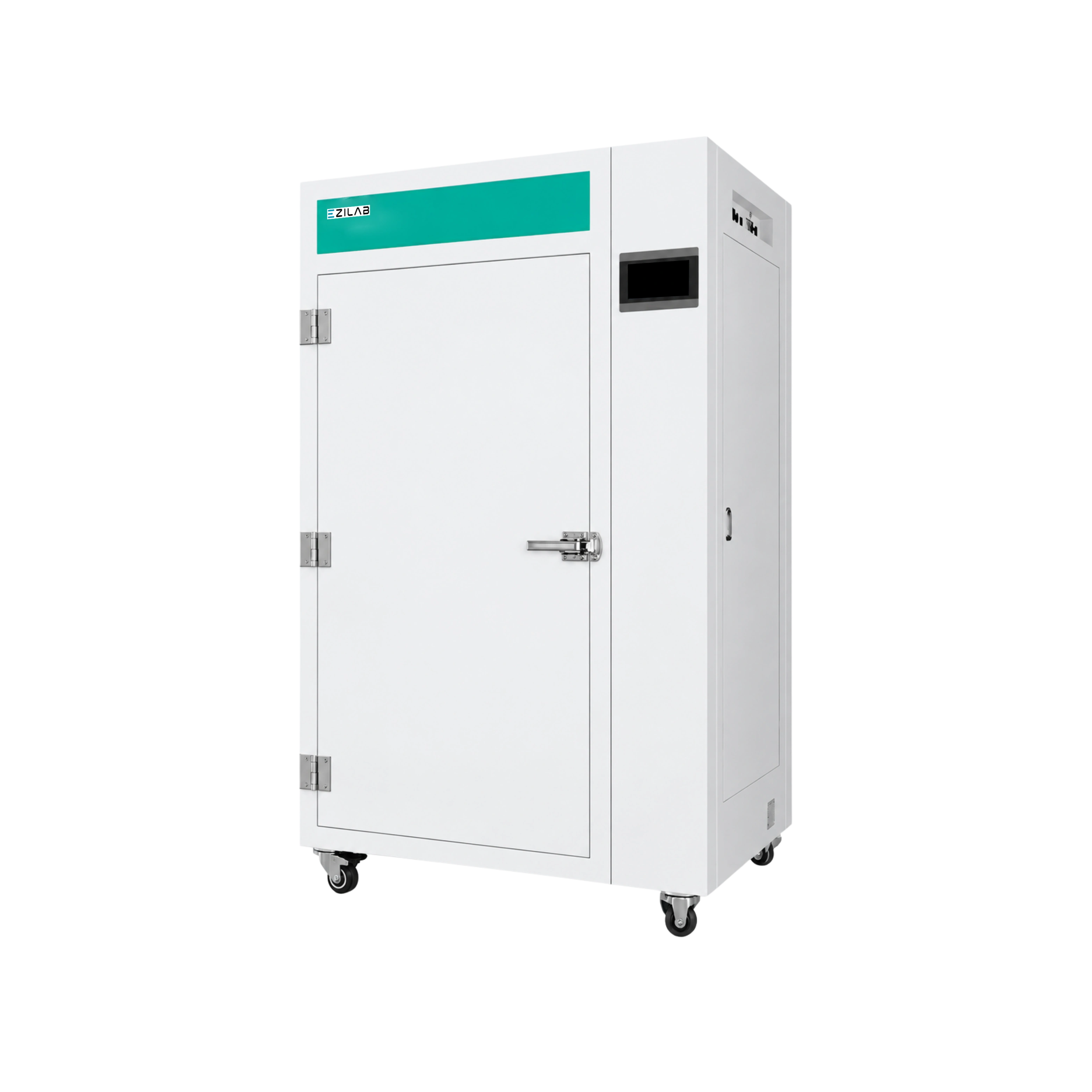
EziLab offers the Plant Growth Chamber EZL-PG414, a 790 L environmental growth chamber that holds 3°C to 45°C and 50% to 90% RH for controlled plant studies. PID control keeps temperature fluctuation and uniformity within ±0.5°C, with humidity uniformity of ±3.0% RH. Four modular LED lighting shelves deliver up to 300 µmol/m²/s at 10 cm, and light intensity adjusts to match each crop or growth stage. A fresh air recycling system and advanced circulation move conditioned air evenly through the 781 × 656 × 1515 mm stainless steel interior, while an insulated door holds conditions steady. A smartphone app lets staff check and change settings remotely. Optional CO2 modules, observation windows, extended temperature and humidity ranges, and white, blue, red, far red, or multi-color LED panels tailor the chamber to each protocol. As a plant incubator, it reproduces day and night cycles so researchers can run growth studies, seed testing, tissue culture, and climate simulation with repeatable results. Agricultural researchers compare varieties and stress responses, biotechnology labs grow transgenic and tissue-culture plantlets, pharmaceutical teams cultivate medicinal plants, and university departments run plant science courses and graduate projects. See the Plant Growth Chambers and Plant Growth Chamber pages for full specifications.
| Capacity | 790 L |
|---|---|
| Temperature Range | Temperature Range |
| Temperature Fluctuation | ±0.5°C |
| Temperature Uniformity | ±0.5°C |
| Humidity Range | 50% RH to 90% RH (lights ON/OF) |
| RH Fluctuation | RH Fluctuation |
| RH Uniformity | ±3.0% RH |
| Illumination | LED lights |
| Intensity | 300 µmol/m²/s @10 cm |
| Shelves | 4 modular lighting shelves |
| Air Flow | Equipped with fresh air recycling system |
| Remote Control | Smartphone APP remote control |
| Interior Dimensions (W × D × H) | 781 × 656 × 1515 mm |
| Exterior Dimensions (W × D × H) | 1165 × 800 × 1940 mm |
Stainless steel construction
PlD temperature control
Advanced air circulation system
Built-in insulated door
Adjustable light intensity
Accessory | Description | Quantity |
CO2 Control module | Ambient to 2000/5000 PPM | 1 |
Observation Window | - | 1 |
Temperature Range | -10℃(Lights OFF) to 45℃ | 1 |
Humidity Range | 30% RH to 90% RH (Lights off) | 1 |
White Color LED Lights Panel with Full-spectrum | Spectrum: 400nm to 700 nm Colour: White Intensity: 1600μmol /m²/s Size(L×W×H): 590×510×55 mm | 1 |
White Color LED Lights Panel with Full-spectrum | Spectrum: 400nm to 700 nm Colour: White Intensity: 1000μmol/m²/s Size(L×W×H): 530×350×8mm | 1 |
White Color LED Lights Panel with Full-spectrum | Spectrum: 400nm to 700 nm Colour: White Intensity: 300/700μmol/m²/s Size(L×W×H): 530×350×8mm | 1 |
Blue Color LED Lights Panel | Spectrum: : 450nm ± 5 nm Colour: Blue Intensity: 400μmol/m²/s Size(L×W×H): 590×510×55 mm | 1 |
Red Color LED Lights Panel | Spectrum: 660nm ± 5mm Colour: Red Intensity: 300μmol/m²/s Size(L×W×H): 530×350×8mm | 1 |
Far Red Color LED Lights Panel | Spectrum: 735nm ± 5nm Colour: Far Red Intensity: 110PFD Size(L×W×H): 530×350×8mm | 1 |
Four Colors (Red/Blue/Far Red/White) LED Lights Panel | Spectrum: 660nm, 450nm, 735nm (± 5mm), 400nm to 700 nm Colour: Red, Blue, Far Red, White Intensity: 800/1200μmol/m²/s Size(L×W×H): 530×350×8mm / 590×470×8mm | 1 |
Four Colors (Red/Blue/Far Red/Green) LED Lights Panel | Spectrum: 660nm, 450nm, 735nm (± 5mm), 525nm Colour: Red, Blue, Far Red, Green Intensity: 600/1300μmol/m²/s Size(L×W×H): 530×350×8mm / 590×470×8mm | 1 |
Eighteen Colors LED Light Panel | Spectrum: Spectrum: (365-375)nm, (385-395)nm, (395-405)nm, (410-420)nm, (435-445)nm, (450-455)nm, (460-465)nm, (500-510)nm, (520-530)nm, (550-560)nm, (585-595)nm, (600-610)nm, (620-630)nm, (660-665)nm, (735-745)nm, (810-820)nm, (840-850)nm, (940-950) nm Total Intensity: 2000μmol/m²/s Size(L×W×H): 530×350×55mm1 | 1 |
LED Lighting Controller (Handheld Model) | - | 1 |
LED Lighting Controller (Table Model) | - | 1 |
Plant Growth Chamber EZL-PG414 is used in agricultural, biotechnology, pharmaceutical, and academic research facilities to cultivate plants for growth studies, seed testing, tissue culture, and climate simulation experiments.