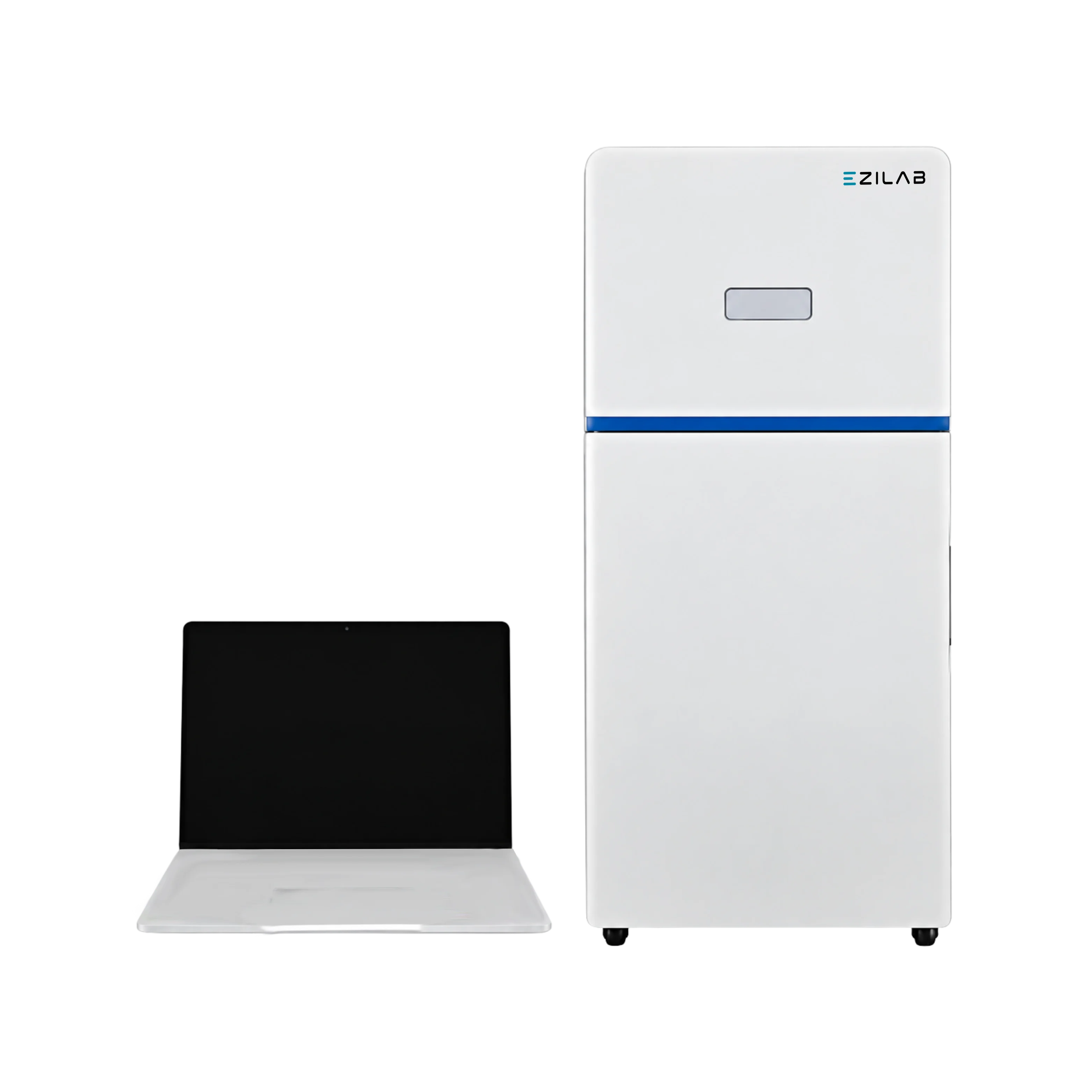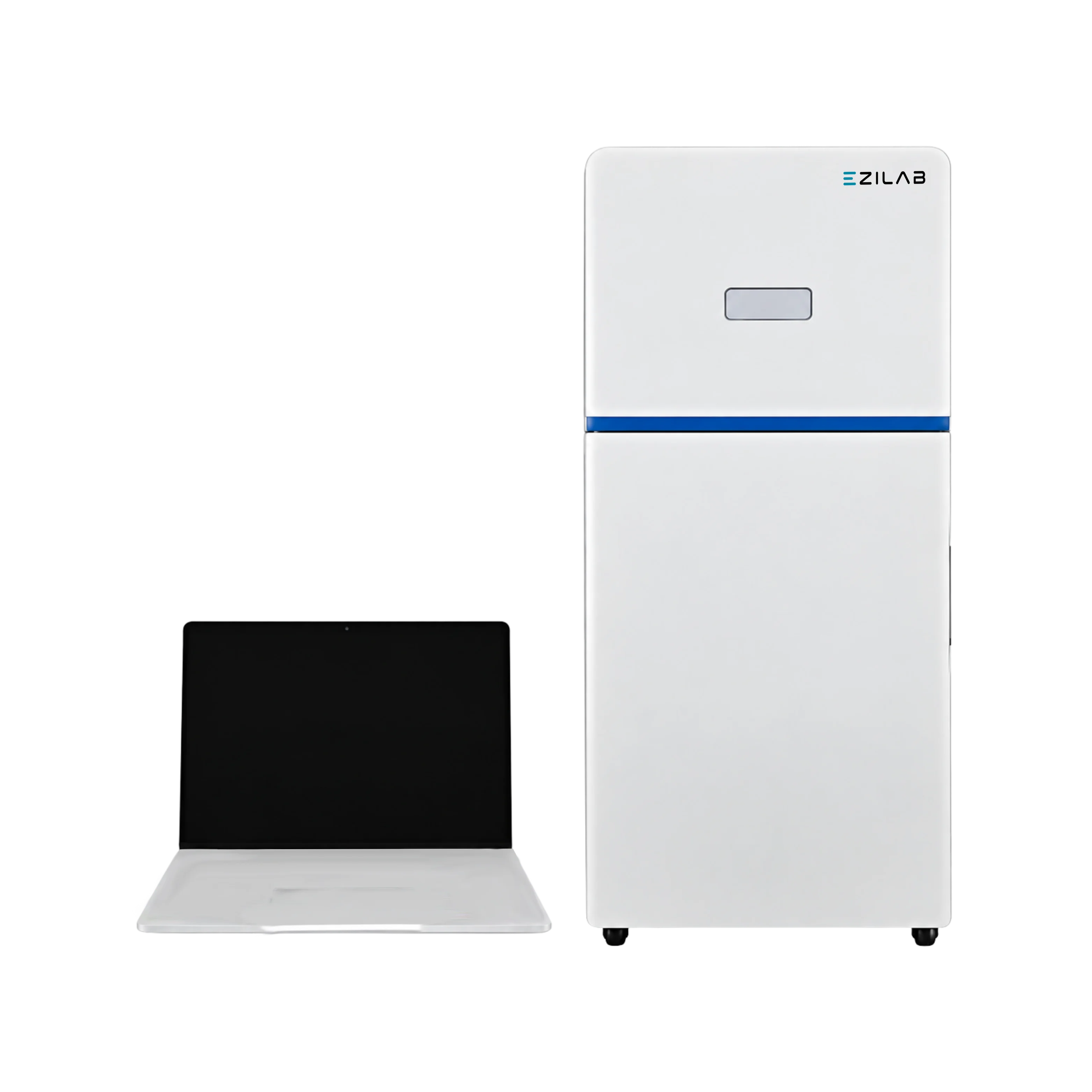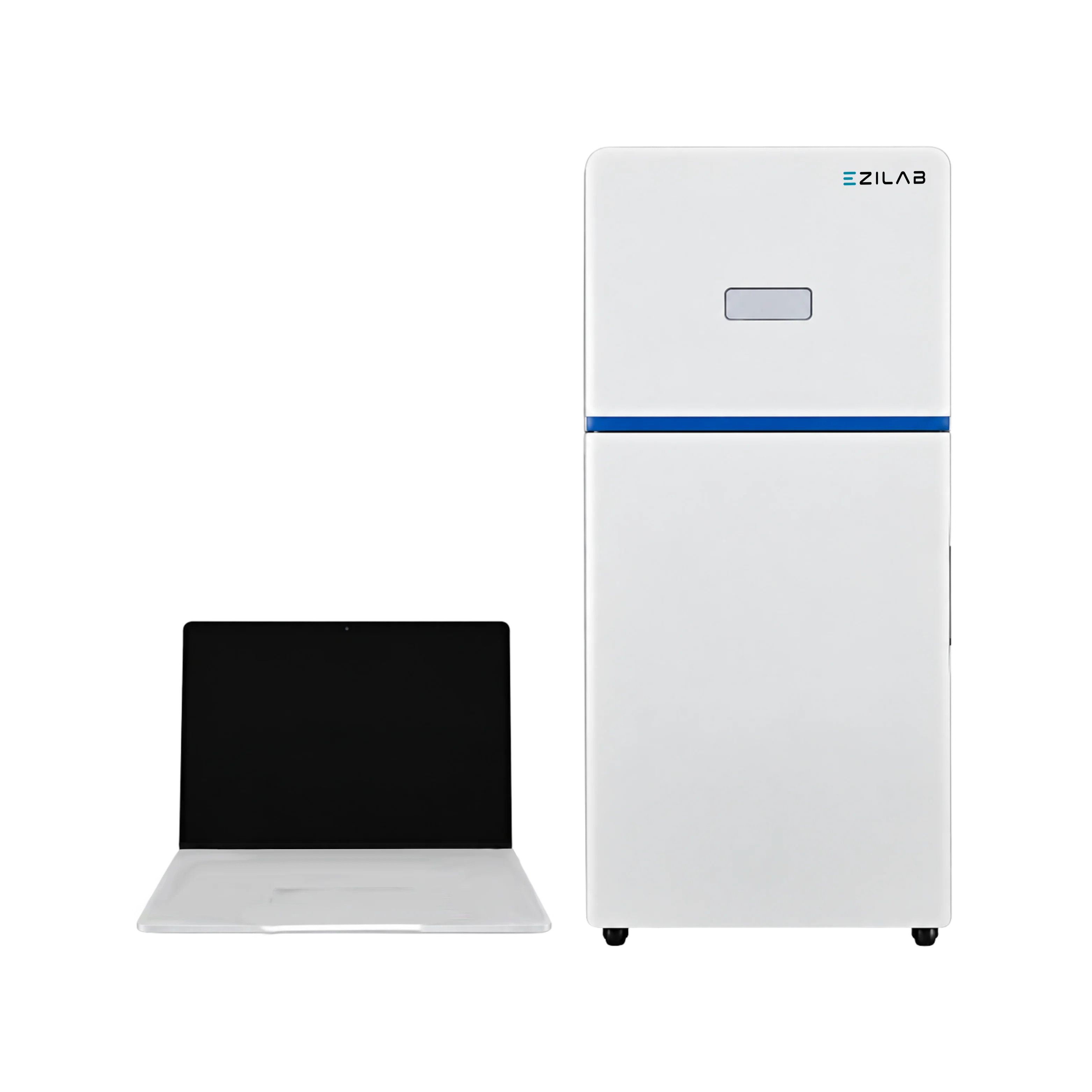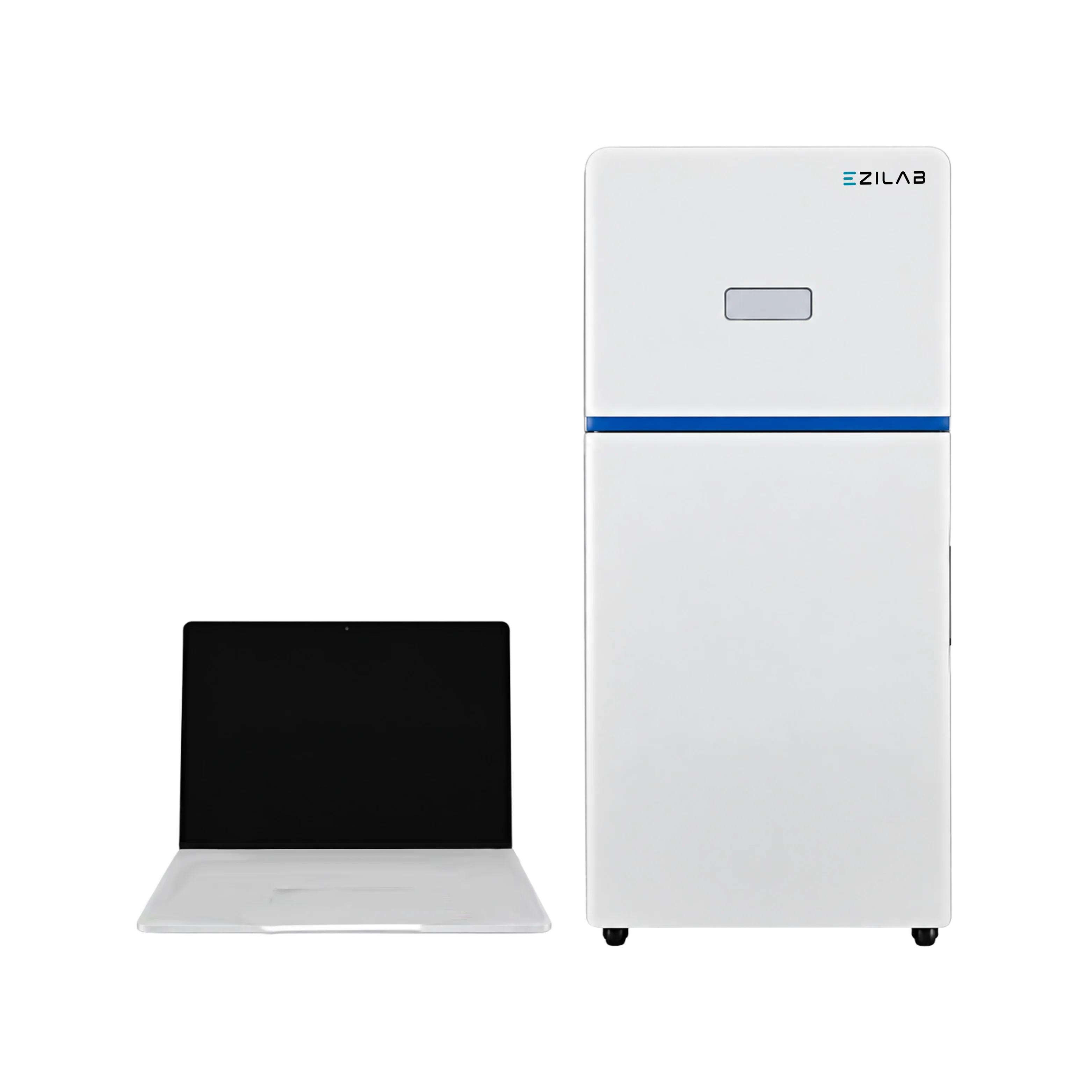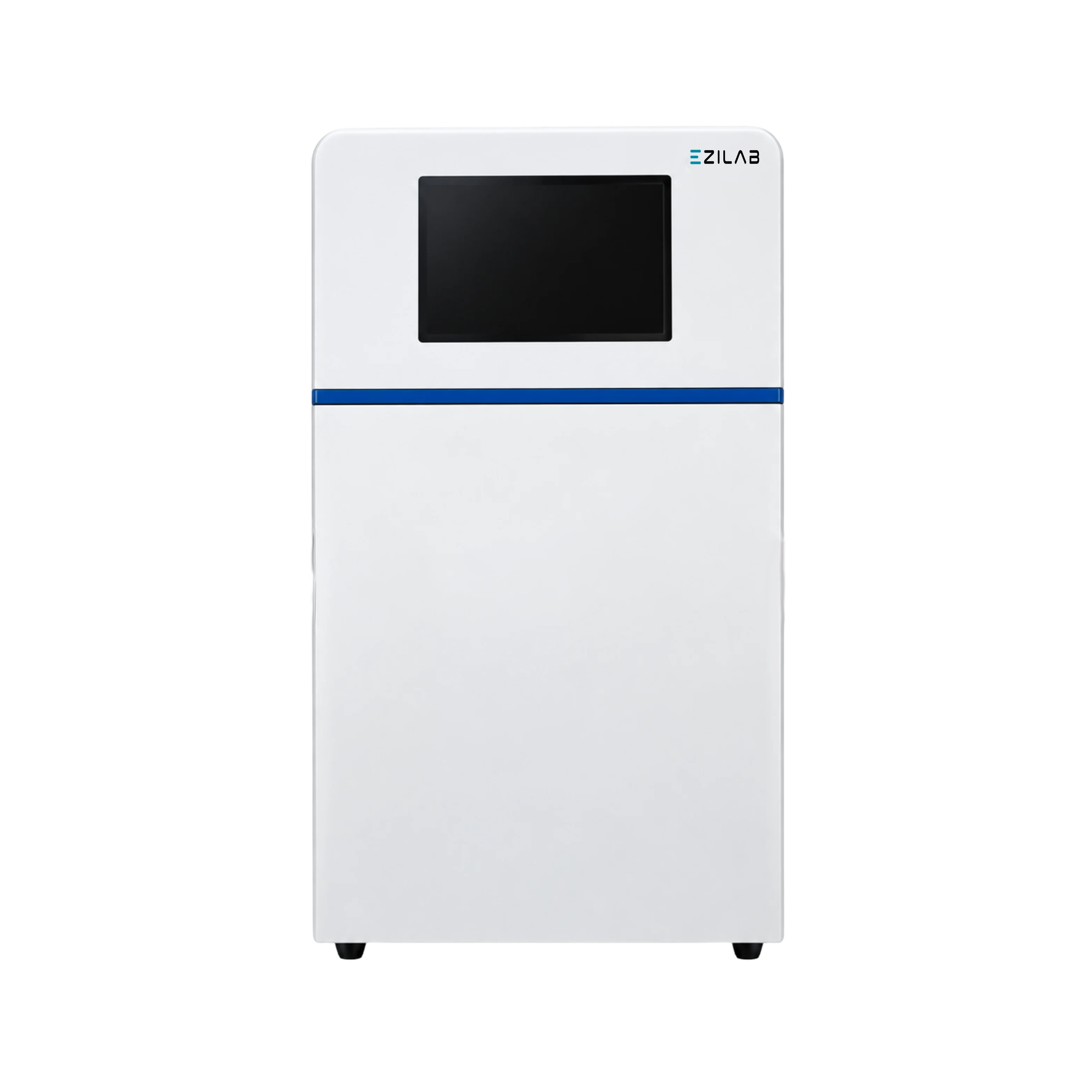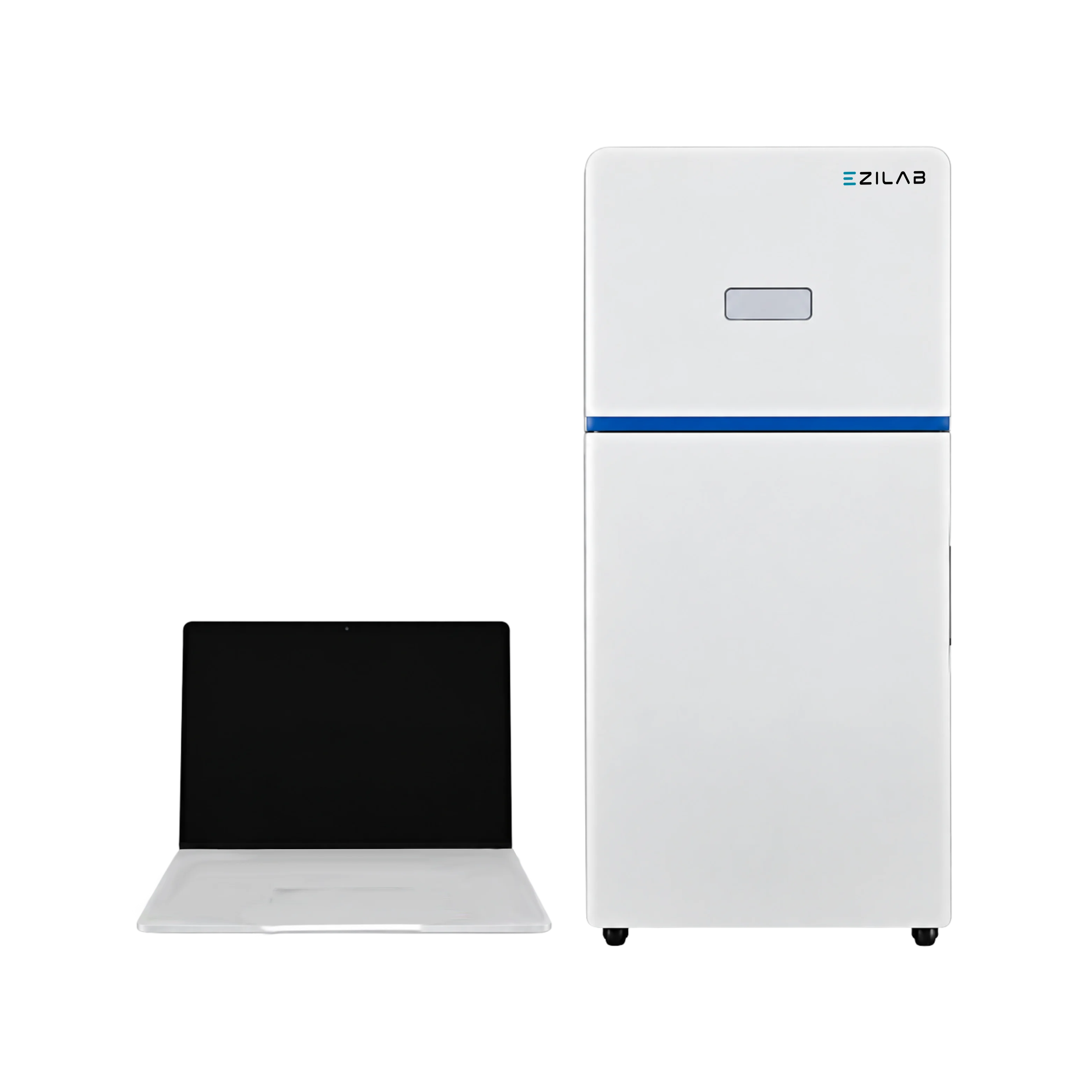
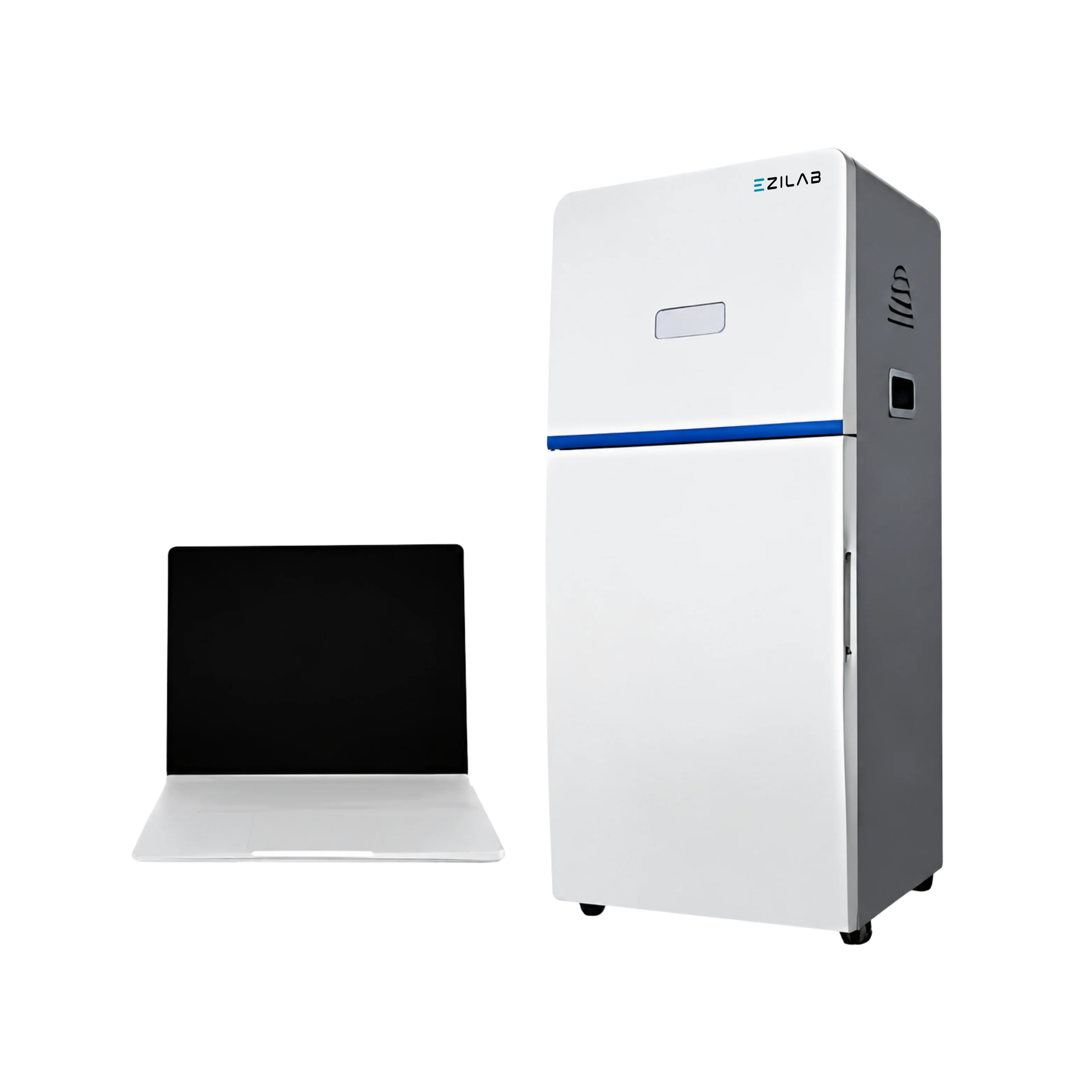
EziLab offers the Chemiluminescence Imaging System EZL-CS132, a chemi gel imager built around a 6.05 megapixel scientific CCD of 2750 by 2200 pixels, each 4.54 µm square, cooled to -25 °C with quantum efficiency of 75 % or more and 16 bit depth. A motorized F0.8 lens gathers more light than the F0.95 on the sibling EZL-CS131, so faint bands show in shorter exposures. The cabinet carries a slim blue and white light transilluminator, a touch screen, switchable modes, auto exposure, band recognition, background wiping, pixel binning, and optical density readout for quantitation. The unit measures 430 by 380 by 690 mm and ships at 31 kg with a molded front and door. Choose it over the EZL-CS131 when low-abundance protein signals keep stretching exposure times. Molecular biology cores use it for routine blot work, pharmaceutical discovery groups track target expression, academic labs run thesis projects on it, and diagnostics developers validate antibody lots. Typical runs include chemiluminescent western blots, Coomassie and silver stained protein gels, DNA and RNA gels, membrane dot blots, and color colony plates. Request a faint-band image from a real blot, with its exposure time, before judging F0.8 against F0.95 on paper. To see the lens variants together, start in Imaging System and finish in Chemiluminescence Imaging System.
| Lens | Motorized F0.8 Ultrafast Lens |
|---|---|
| Touch Screen | Digital display |
| Camera | Scientific CCD Camera |
| Resolution | 6.05 Megapixels, 2750×2200 |
| Sensor Size | 12.49mm ×9.99mm |
| Pixel Density | 16 bit ( 65536 Grayscale) |
| Pixel Size | 4.54×4.54µm |
| Quantum Efficiency | ≥ 75% |
| Absolute Cooling Temperature | -25°C |
| Product Dimension (W×D×H) | 430×380×690 mm |
| Outer Pack Dimension (W×D×H) | 550×490×760 mm |
| Gross Weight | 31 kg |
| Feature Area | Description |
| Cooled Imager | A cooled scientific CCD imager supports long exposures on faint chemiluminescent signals. |
| Lens | A motorized lens with a large aperture collects light for weak bands. |
| Exposure and Modes | Auto exposure and switchable imaging modes cover different sample types. |
| Image Tools | Pixel binning and background wiping clean up the picture, while band recognition and optical density calculation handle quantitation. |
| Light and Housing | A slim transilluminator gives blue and white light, set in a molded front and door. |