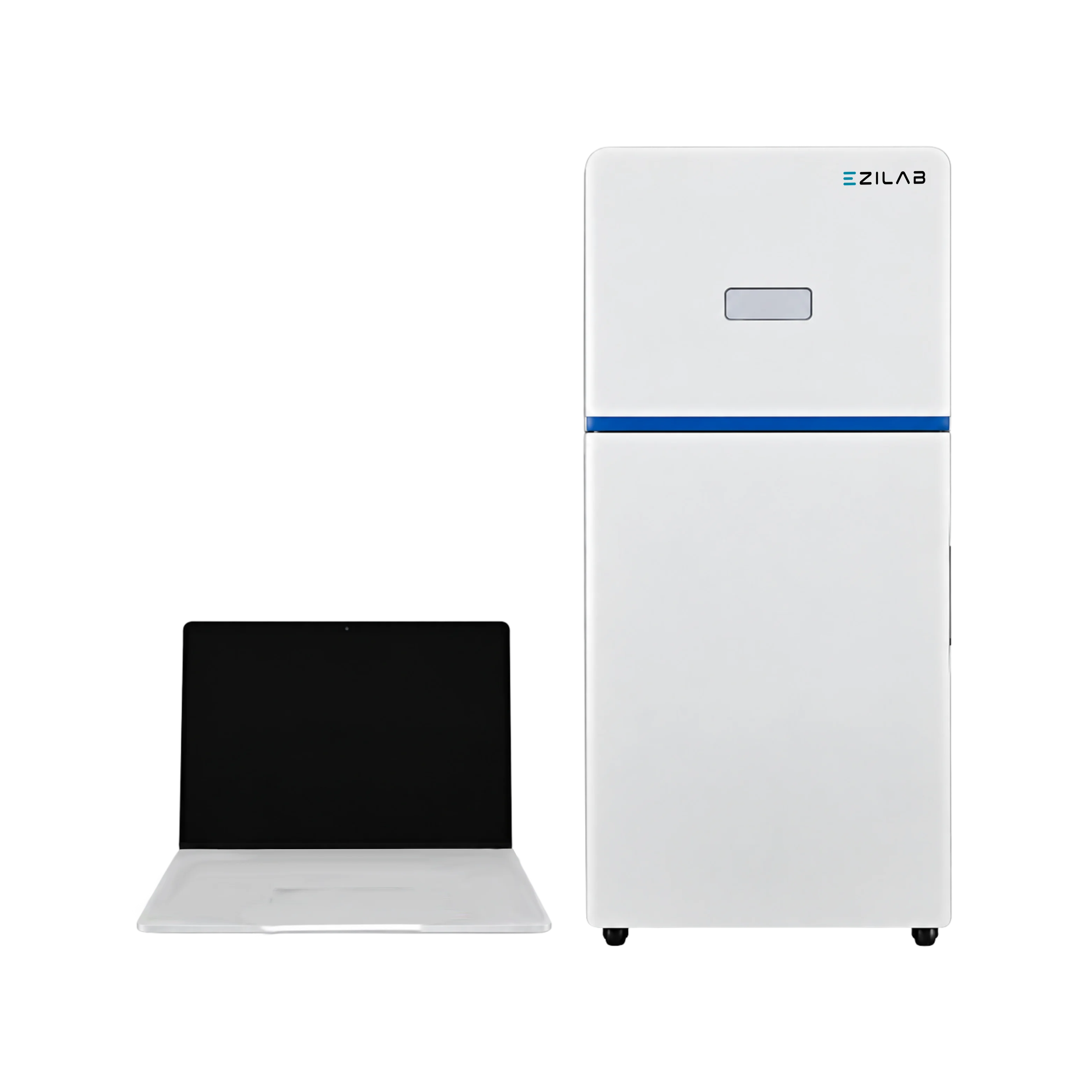
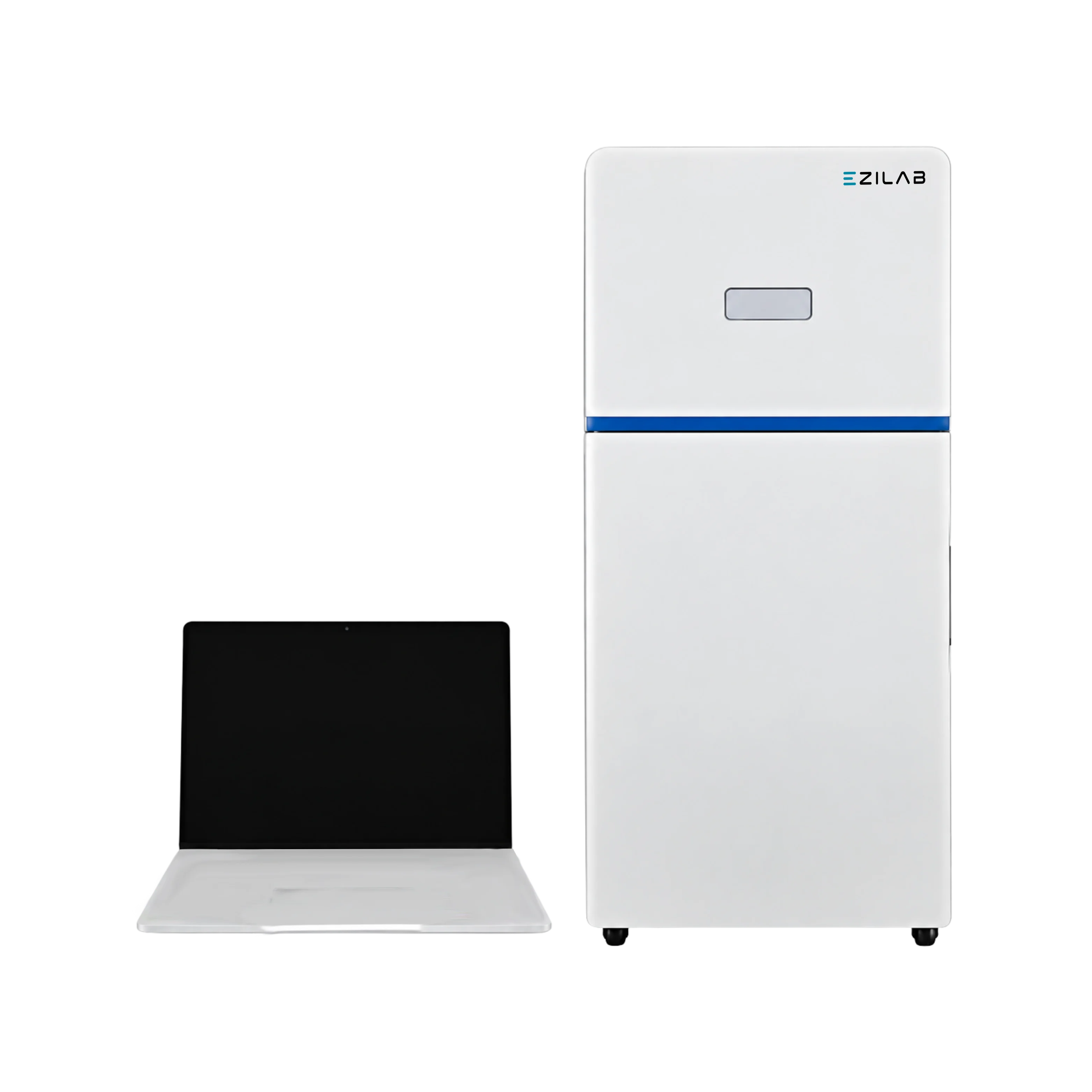
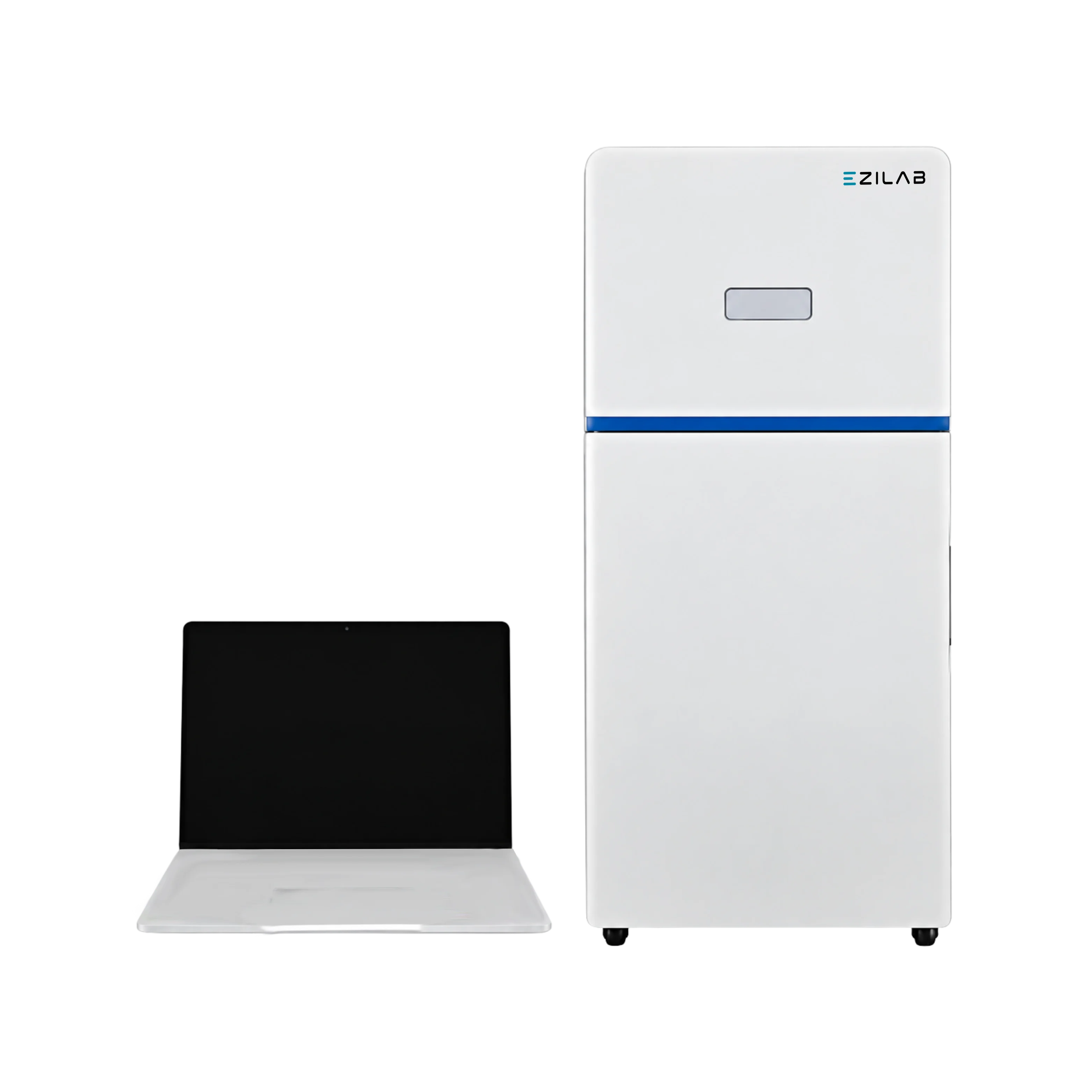
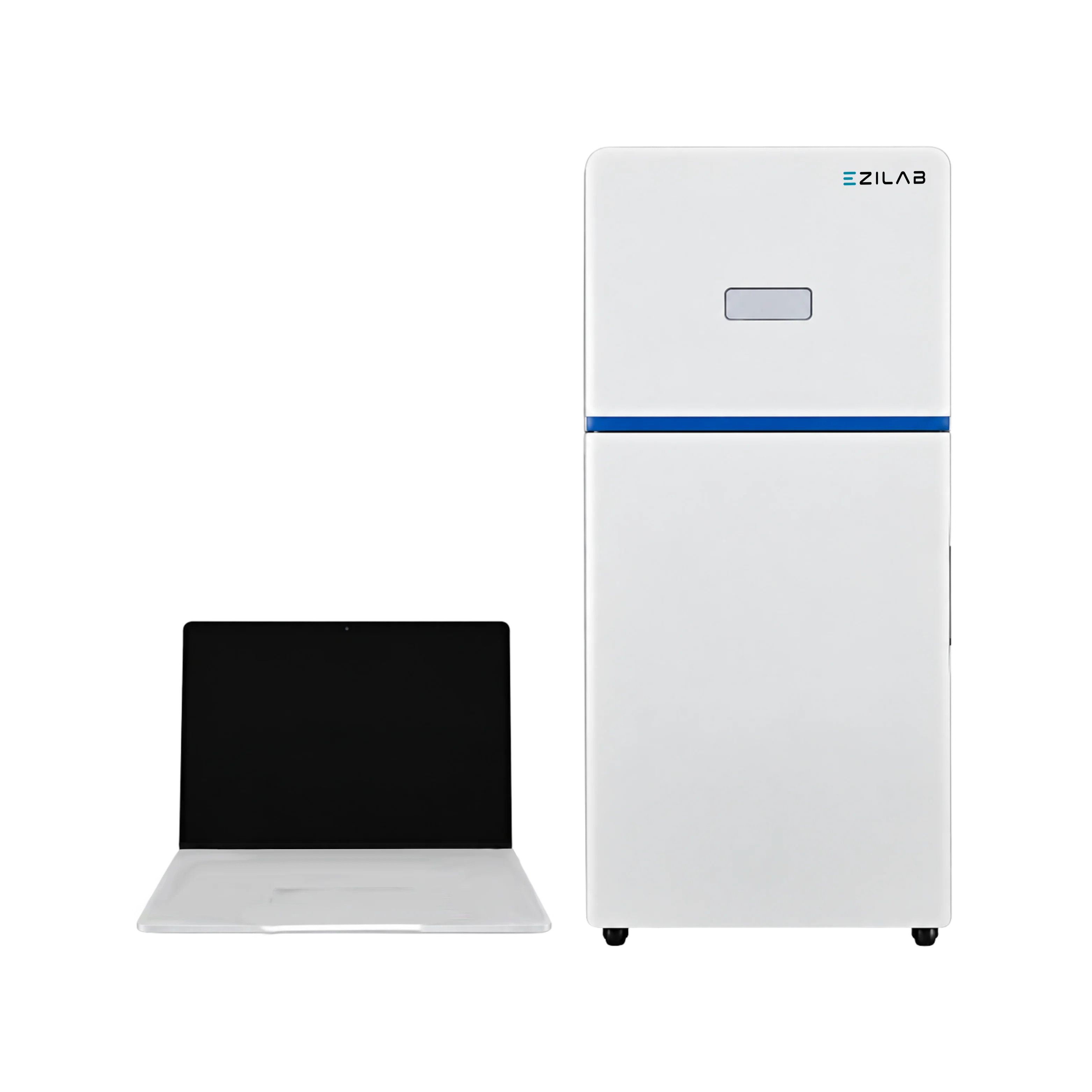
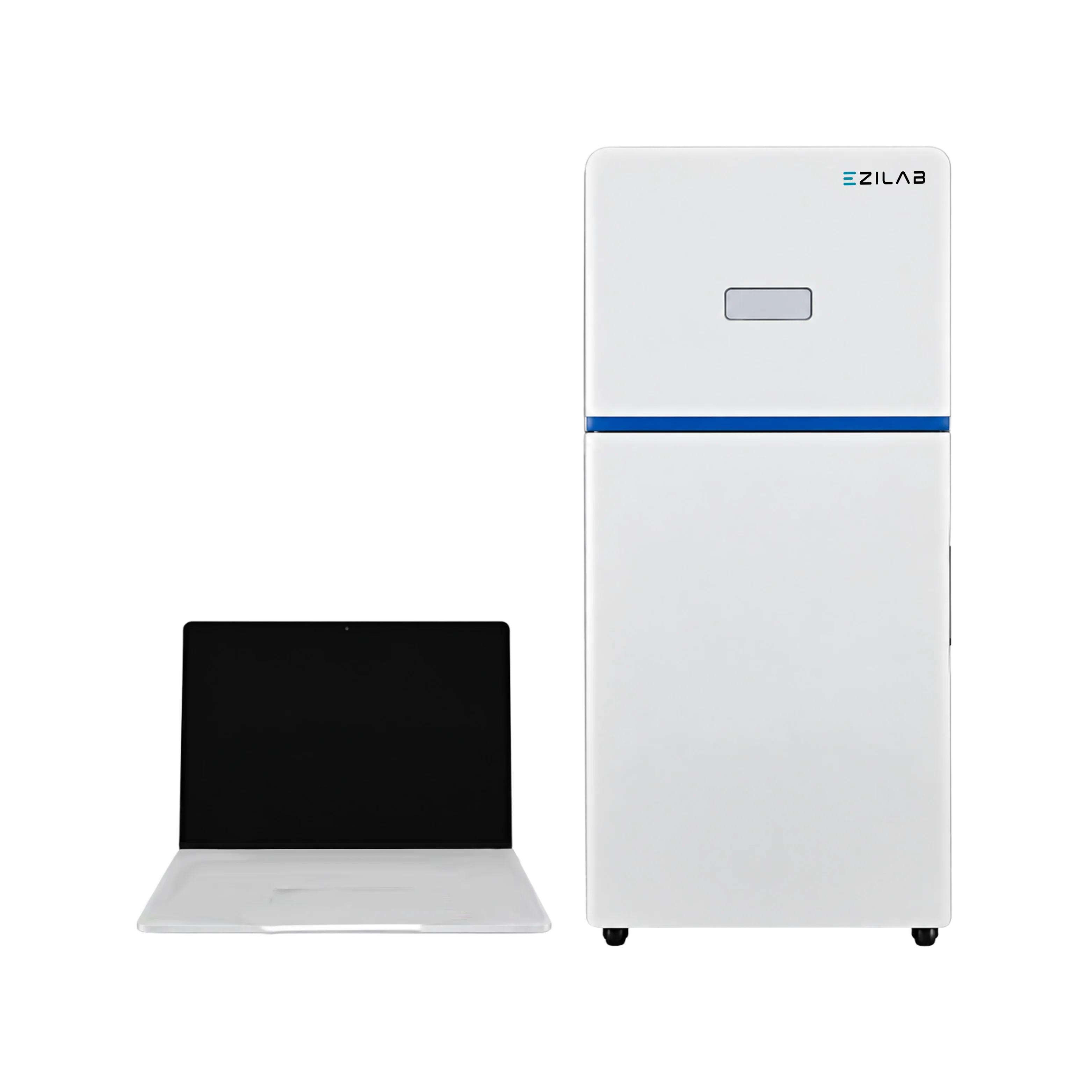
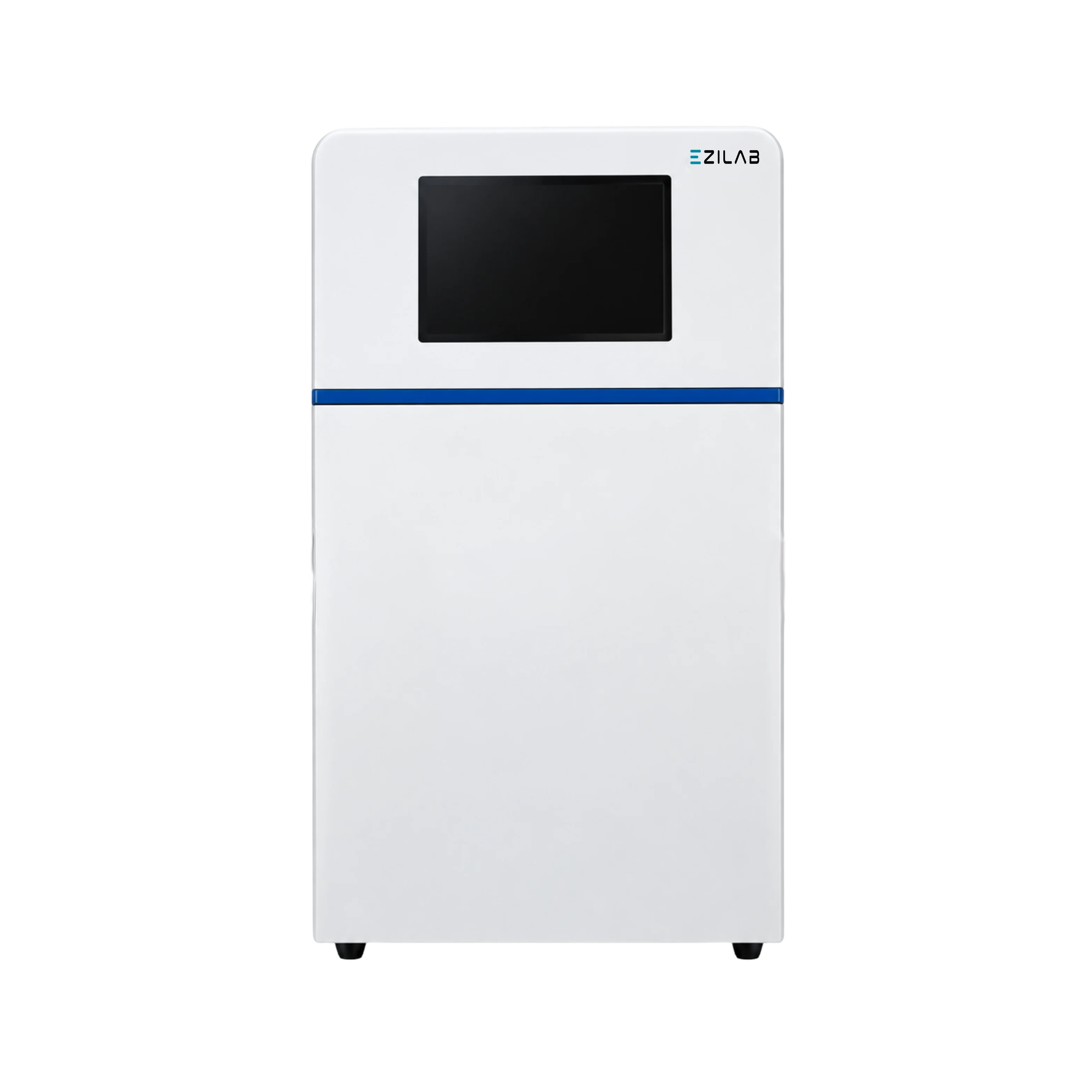
EziLab offers the Chemiluminescence Imaging System EZL-CIS100, a multi gel imager pairing a 6.05 megapixel CCD of 2750 by 2200 pixels with cooling to -30 °C, so dark current falls to 0.0003 electrons per pixel per second and readout noise stays under 5.5 electrons RMS at 16 bit. A motorized F0.8 lens gathers faint signal, quantum efficiency reaches 75 % or more, an eight-socket filter wheel ships with a 590 nm filter, and lighting covers epi-white LED banks, a 302 nm UV transilluminator and a white LED transilluminator over a 260 by 210 mm image area. Software runs live preview and quantitation, and the darkroom cabinet measures 560 by 480 by 780 mm plus a separate control module at 39 kg. Choose it over the -25 °C siblings when fluorescent, colorimetric and chemiluminescent stains pass through one instrument. Protein research labs image western blots on it, molecular biology cores document DNA gels under UV, pharmaceutical groups quantify expression, and diagnostics developers validate enzyme assays. Routine work spans ECL blots, ethidium and SYBR gels, Coomassie stains, and fluorescent membranes. Ask for a sample ECL blot from your own antibody dilution; other imagers branch from Imaging System into Chemiluminescence Imaging System.
| CCD Sensor Size | 12.49 × 9.99 mm |
|---|---|
| Resolution | 6.05 Megapixels, 2750 × 2200 |
| Pixel Density | 16bit (65536 Grey Scales) |
| Pixel Size | 4.54 × 4.54 µm |
| Lens | F0.8 motorized lens |
| Light Source |
LED Epi-white light × 2 UV-Transilluminator (302 nm) White-LED Transilluminator |
| Display | NA |
| Quantum Efficiency | Greater than equal to75 % |
| Readout Noise | Less than 5.5e- RMS |
| Dark Current | 0.0003 e/p/s |
| Dynamic Range | 4 orders of magnitude |
| Standard Filter | 590 nm filter |
| Filter Wheel | 8 Sockets Filter Wheel |
| Maximum Image Area | 260 × 210 mm |
| Cooling Temperature | -30˚C |
| Software | Image acquisition and analysis software |
| Dimensions (W× D × H) | 560 × 480 × 780 mm + 380 × 350 × 490 mm |
| Weight | 39 kg |
| Feature Area | Description |
|---|---|
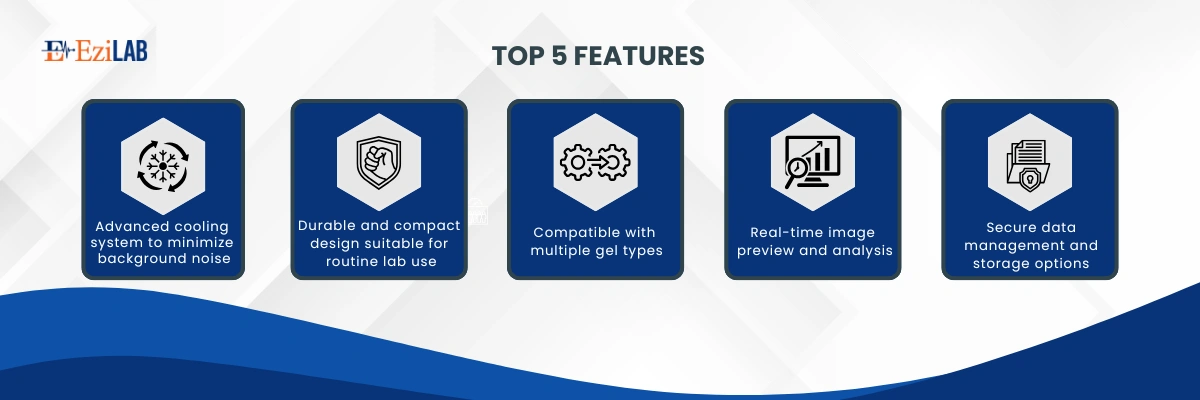
| Camera | Cooled CCD camera with a motorised lens for capturing faint signals. |
| Imaging Modes | Epi-white lighting, UV transillumination and white transillumination for fluorescent, colorimetric and chemiluminescent stains. |
| Filters | Filter wheel with a standard filter included. |
| Software | Image acquisition and analysis software with live preview and quantitation tools. |
| Darkroom | Enclosed imaging chamber that blocks light leakage, with a separate control module. |
The Chemiluminescence Imaging System EZL-CIS100 is optimized for high-sensitivity imaging, enabling clear visualization of faint protein signals. The system uses advanced optics and a high-resolution camera to capture even minimal chemiluminescent emissions. This makes it ideal for detecting low-expression targets in Western blots or DNA/RNA applications. The enhanced sensitivity helps reduce exposure times while preserving image clarity. As a result, researchers can obtain reliable, publication-quality data from challenging samples.
Ezilab’s Chemiluminescence Imaging System EZL-CIS100 is well-suited for shared environments thanks to its intuitive software and user-friendly interface. Multiple users can quickly set up protocols without extensive training, making it a practical choice for academic institutions and core imaging facilities. The system allows for flexible imaging workflows and automatic adjustments that reduce the risk of user error. Its durability and performance consistency ensure smooth operation across frequent use cases. These factors contribute to high throughput and collaborative research efficiency.
Our Chemiluminescence Imaging System EZL-CIS100 is designed with user safety in mind, offering a fully enclosed imaging chamber that prevents light leakage and reduces exposure risk. The internal components are shielded to avoid accidental contact with sensitive optics or electronics. Automated door locks and low-light indicators help prevent interruptions during imaging. The design ensures minimal operator exposure to chemicals and light, even during extended imaging sessions. These features make the unit safe for long-term and repeated use in both educational and professional labs.
The chemiluminescence Imaging System EZL-CIS100 is equipped with image-saving and export features that allow easy integration into lab data workflows. High-resolution images can be stored locally or transferred via USB or network connections. This facilitates secure data backup and supports collaboration between teams or departments. The intuitive software also enables annotation and image comparison for detailed analysis. With built-in data management tools, it supports both research publication and regulatory documentation needs.
Our Chemiluminescence Imaging System EZL-CIS100 is particularly valuable in molecular biology applications that involve protein or nucleic acid detection. It is commonly used for Western blot analysis, gel documentation, and other chemiluminescent assays. The system is compatible with a wide range of substrates and reagents, making it flexible for various experimental designs. Its fast capture speed and high sensitivity ensure that both routine and advanced imaging tasks are handled efficiently.
Ezilab’s Chemiluminescence Imaging System EZL-CIS100 features a simplified control panel and intuitive imaging software that guide users through the setup and capture process. Automated exposure settings and step-by-step protocols minimize the learning curve for new users. Built-in presets allow researchers to select optimal parameters based on assay type without manual adjustments. Visual previews ensure accurate positioning and focus before image capture. These design elements make the system accessible to students, interns, and non-imaging specialists.