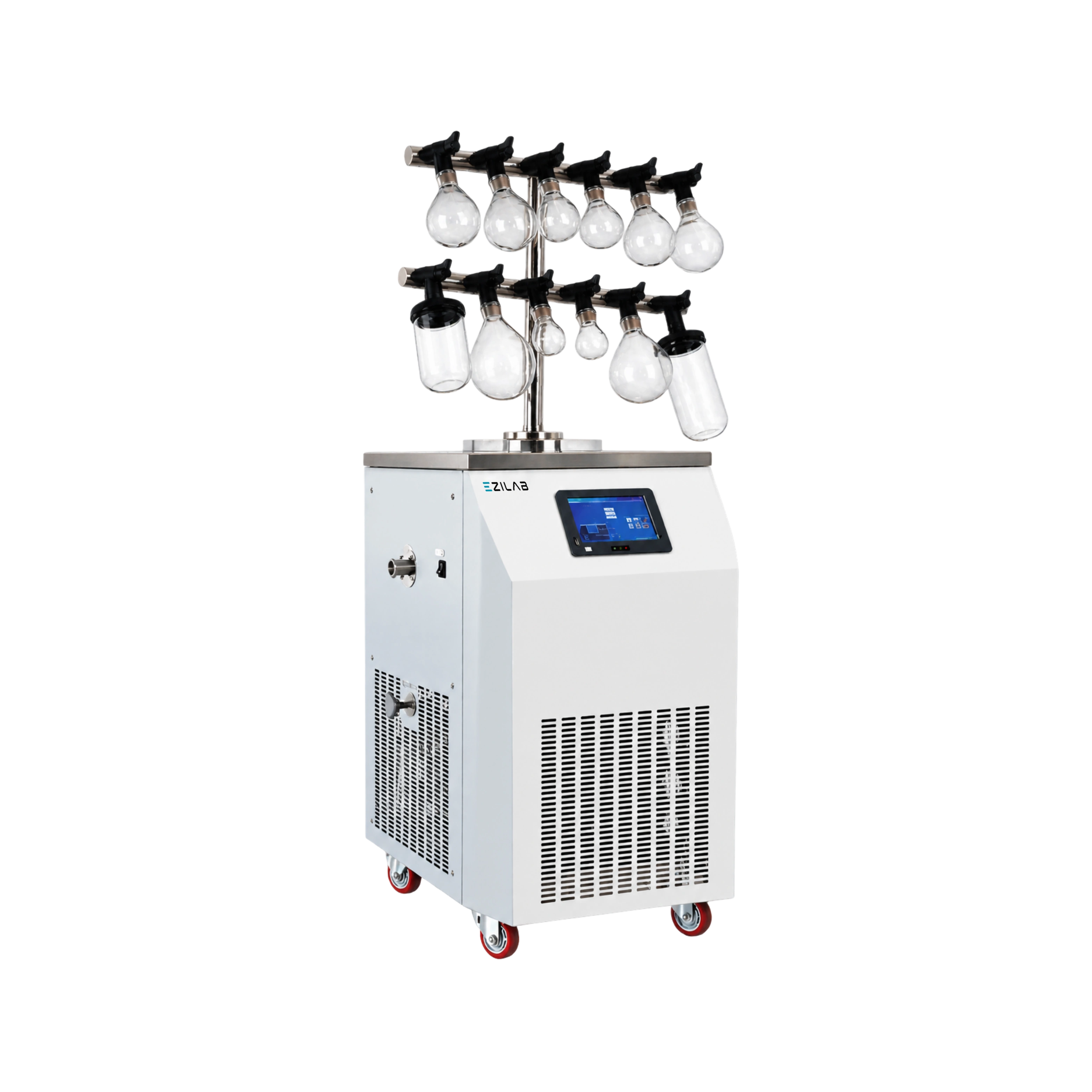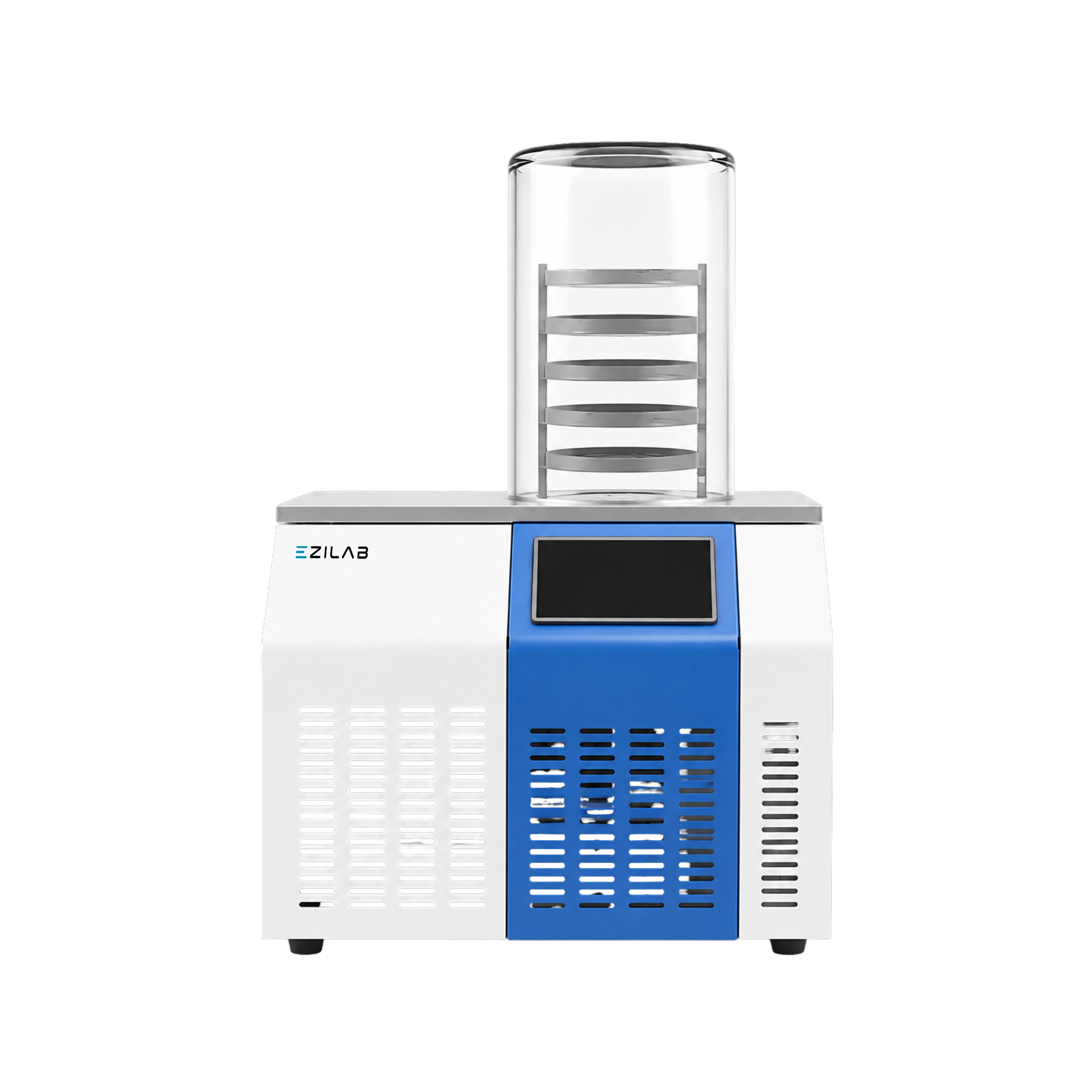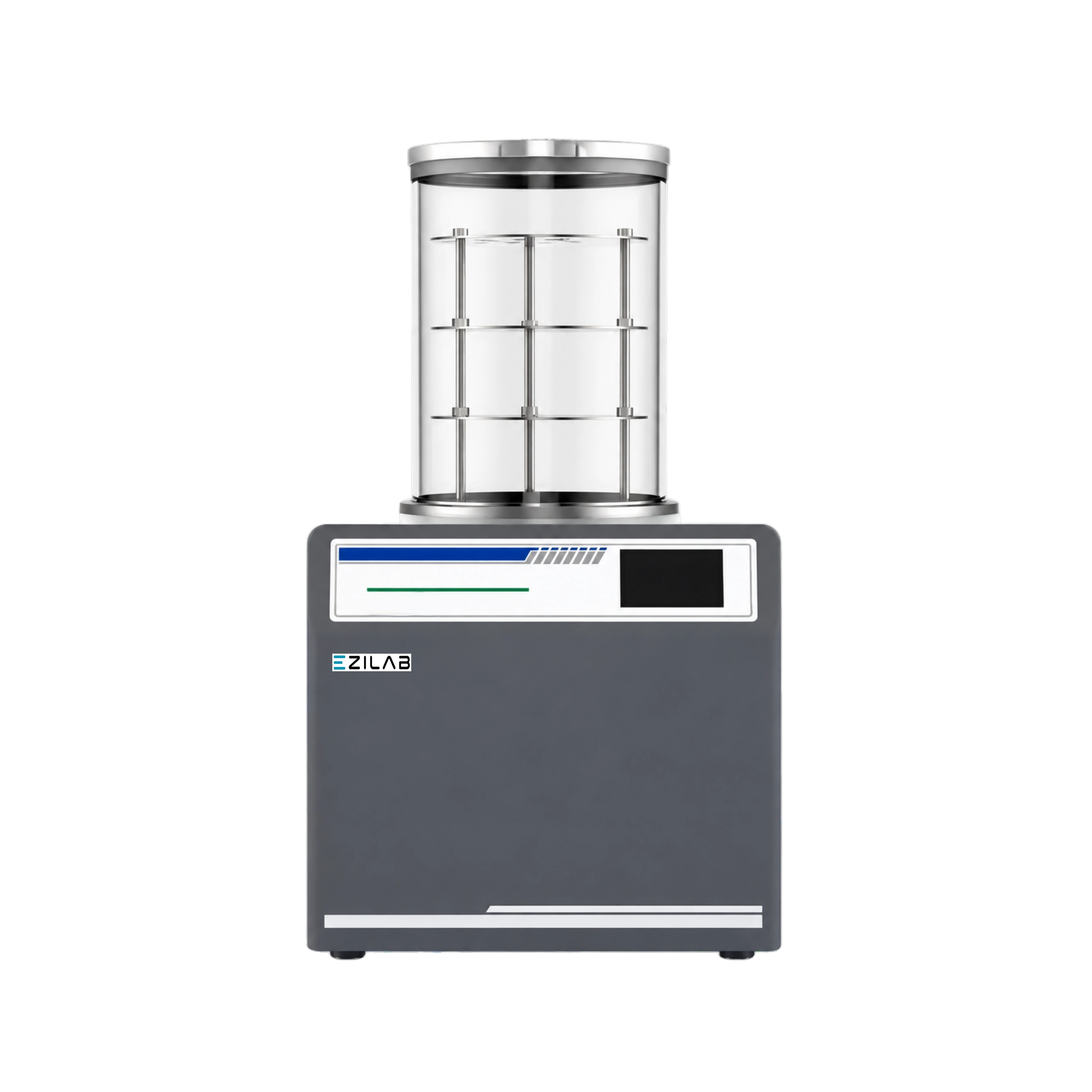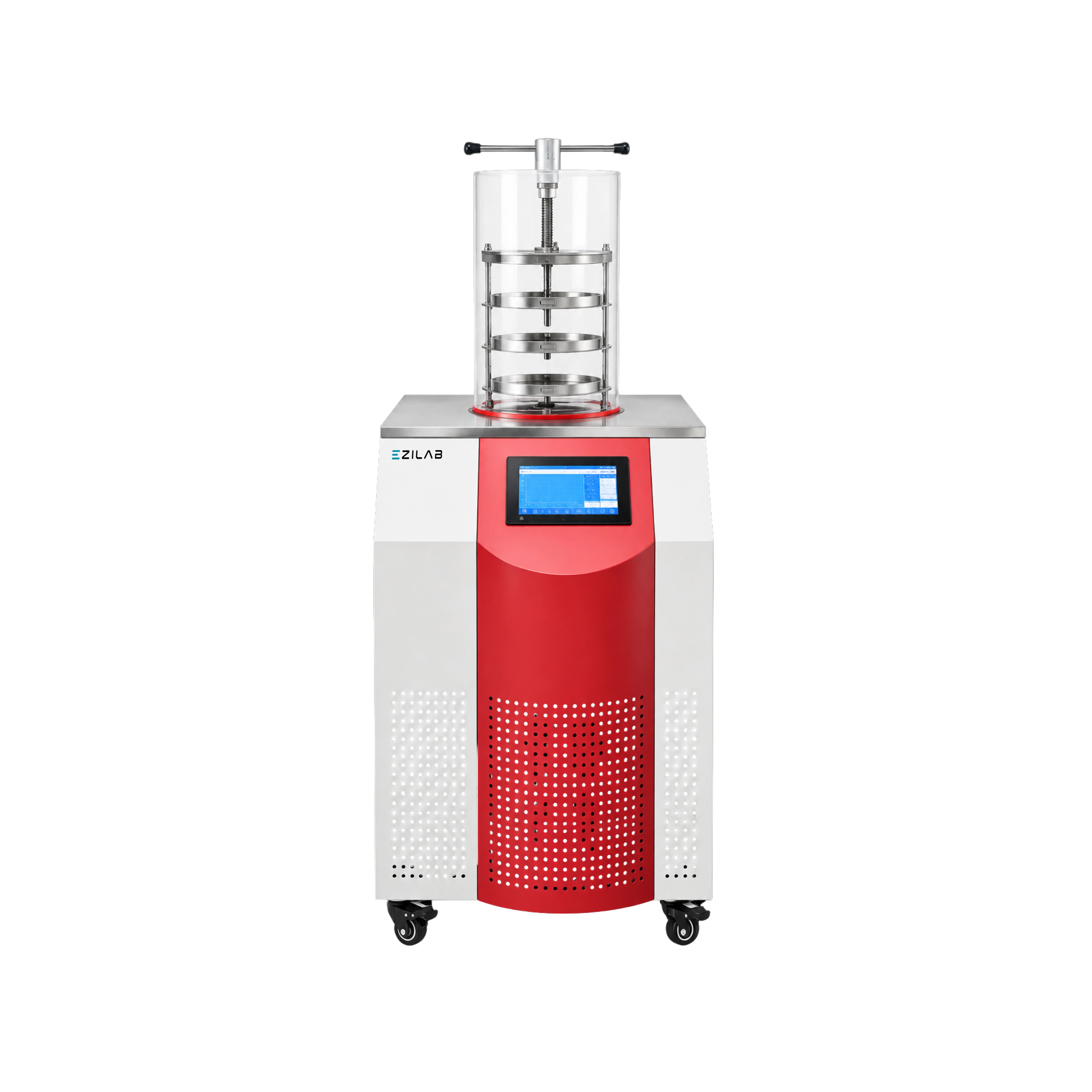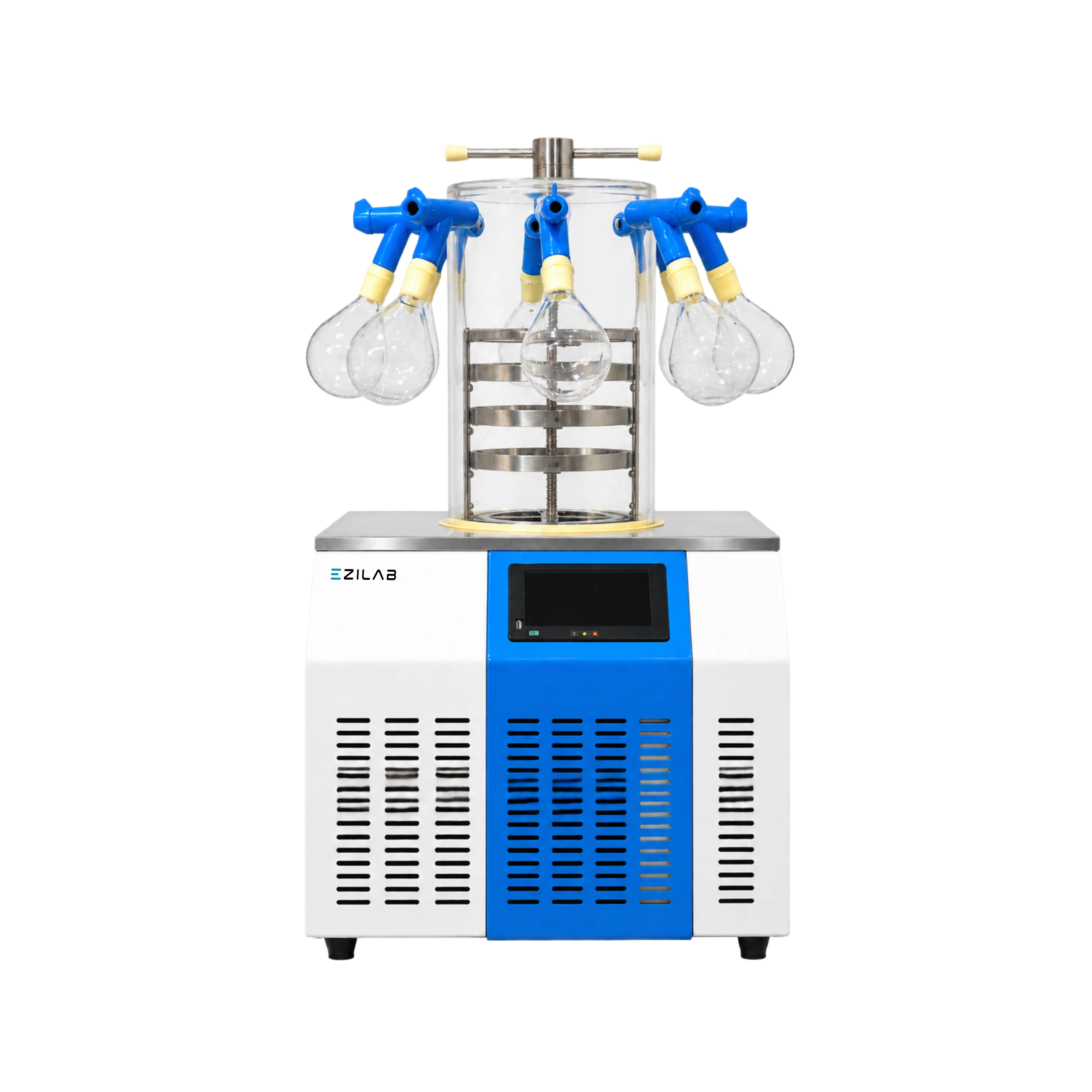
Ezilab's Manifold Freeze Dryer EZL-FDF300 serves pharmaceutical laboratories that need individual flask-port drying rather than the shelf-based configuration of the top press and standard freeze dryers in this catalog. With a -50°C cold trap, 10 Pa vacuum, and 0.12m² drying area, this freeze dryer manifold connects multiple sample flasks directly to individual ports around a manifold, drying each vessel independently rather than loading trays or vials onto a shared shelf surface. That manifold configuration is the defining format difference here — it suits samples in round-bottom flasks, individual reaction vessels, or containers that don't fit a standard shelf format well, letting each connected vessel dry under the same vacuum and cold trap conditions without requiring a shelf-compatible container shape. The -50°C cold trap condenses water vapor pulled from the connected flasks, while the 10 Pa vacuum matches the sublimation-supporting pressure used across the other freeze dryers in this line. Pharmaceutical and research labs working with flask-based samples rather than vial or tray formats — small-molecule synthesis intermediates, solvent removal from reaction products, or non-standard container shapes — get a drying format matched to that specific vessel type. EziLab's Freeze Dryer Manifold and Manifold Freeze Dryer cover flask-based lyophilization needs across USA pharmaceutical laboratory settings.
| Drying Area | 0.12 m² |
|---|---|
| Condenser Temperature | -50 ℃ |
| Vacuum Degree | < 10 Pa |
| Condenser Capacity kg/24 hours | 3 to 4 kg / 24 hours |
| Sample Tray | Φ200 mm × 4 layers |
| Bulk Liquid Capacity (10mm) | 1.2 L |
| Vial Capacity Φ12mm | 820 pieces |
| Vial Capacity Φ16mm | 460 pieces |
| Vial Capacity Φ22mm | 244 pieces |
| Optional Manifold | 8 ports |
| Optional Flask | 1000, 500, 250, 100, 50 ml |
| Vacuum Pump Flow Rate | 2 L / S, 7.2 m³ |
| Voltage | 220 V, 50 Hz |
| Power | 970 W |
| Dimension | 610 × 450 × 830 mm |
| Weight | 75 kg |
Robust construction
Integrated with a condenser
Oil mist filtration system
Anti-corrosion cold trap
Efficient freeze drying
Manifold Freeze Dryer EZL-FDF300 is widely used in pharmaceuticals, biotechnology, food, environmental testing, research, and medical device industries. Its ability to preserve sensitive samples while maintaining their integrity makes it valuable for both routine use and advanced research
The Manifold Freeze Dryer EZL-FDF300 is highly versatile and can handle a wide range of biological, pharmaceutical, and food-related samples. It supports bulk drying as well as multiple vial or flask connections, making it suitable for laboratories with diverse needs. The system maintains the structural integrity of sensitive samples, which is crucial for preserving enzymes, proteins, or probiotics. This adaptability allows the instrument to be used in academic research, product development, and routine quality control.
Ezilab’s Manifold Freeze Dryer EZL-FDF300 includes protective mechanisms such as vacuum and temperature monitoring to ensure safe operation. These safeguards help prevent equipment damage and protect users by maintaining stable working conditions throughout the freeze-drying cycle. Built-in alarms notify users in case of abnormalities, allowing timely corrective action. These measures make it safe to use in laboratories where sensitive materials and valuable samples are handled.
The Manifold Freeze Dryer EZL-FDF300 requires routine maintenance to ensure consistent performance, including cleaning of sample connections and periodic vacuum system checks. Proper care of the condenser chamber is also important to prevent contamination and maintain efficiency. Regular inspection of seals and gaskets helps avoid vacuum leaks that could affect results. Following these practices ensures the equipment remains reliable and extends its operational lifespan.
Ezilab’s Manifold Freeze Dryer EZL-FDF300 is equipped with data export options, allowing freeze-drying results to be recorded and easily reviewed in standard formats like Excel. This supports clear documentation, quality compliance, and traceability for regulated laboratories. Such functionality ensures research teams and quality managers have access to accurate records for analysis and reporting. It adds significant value for labs operating under strict documentation requirements.
Ezilab’s Manifold Freeze Dryer EZL-FDF300 is equipped with data export options, allowing freeze-drying results to be recorded and easily reviewed in standard formats like Excel. This supports clear documentation, quality compliance, and traceability for regulated laboratories. Such functionality ensures research teams and quality managers have access to accurate records for analysis and reporting. It adds significant value for labs operating under strict documentation requirements