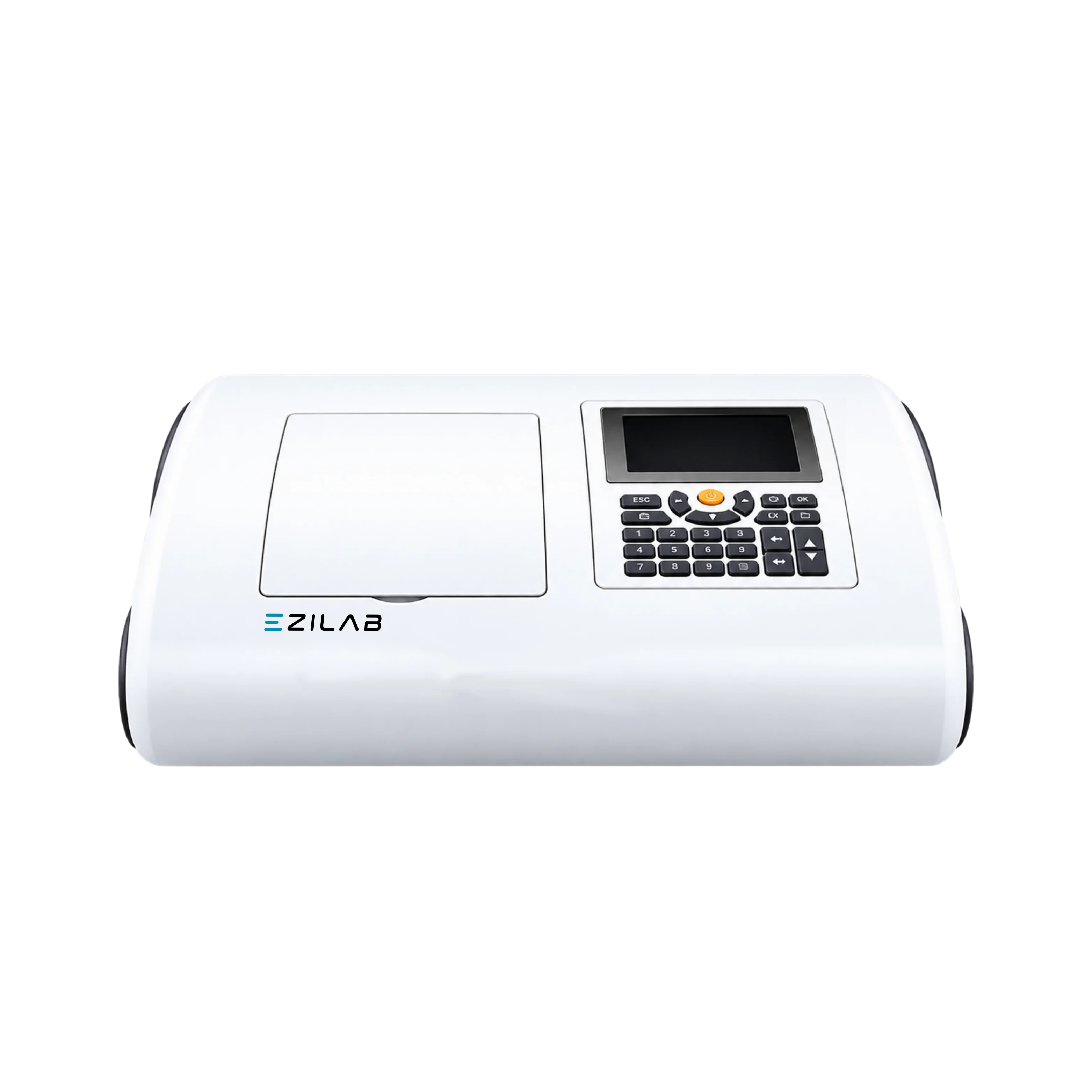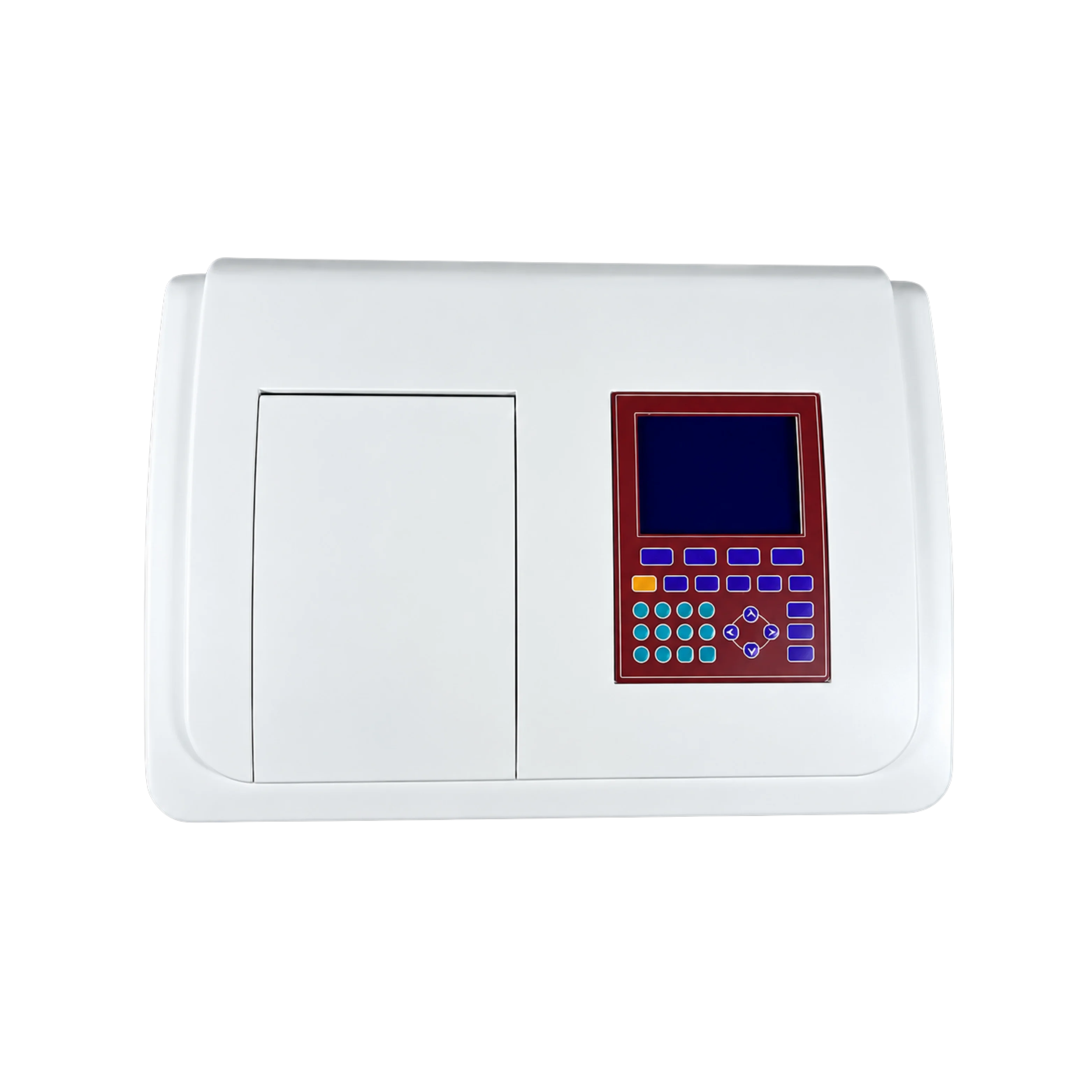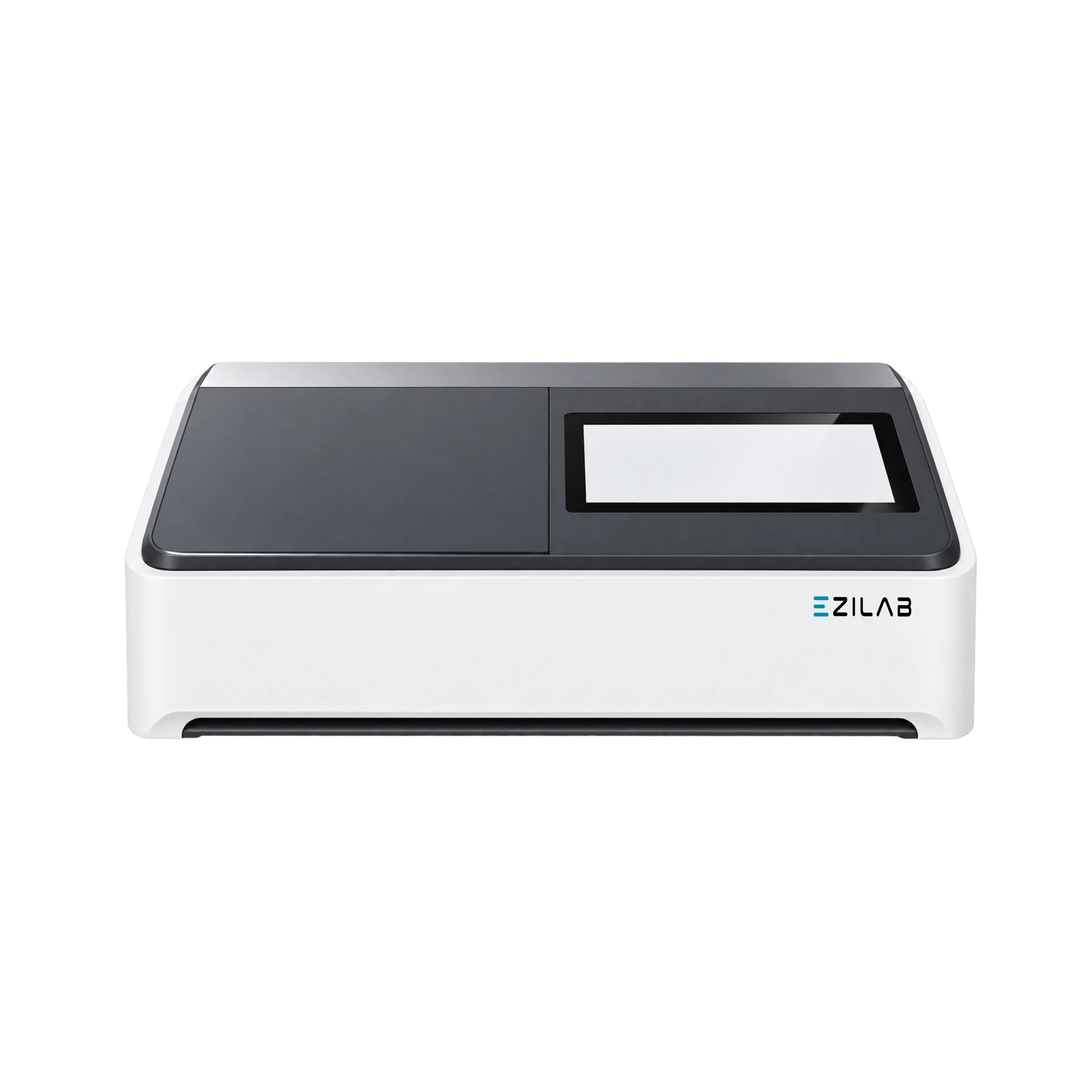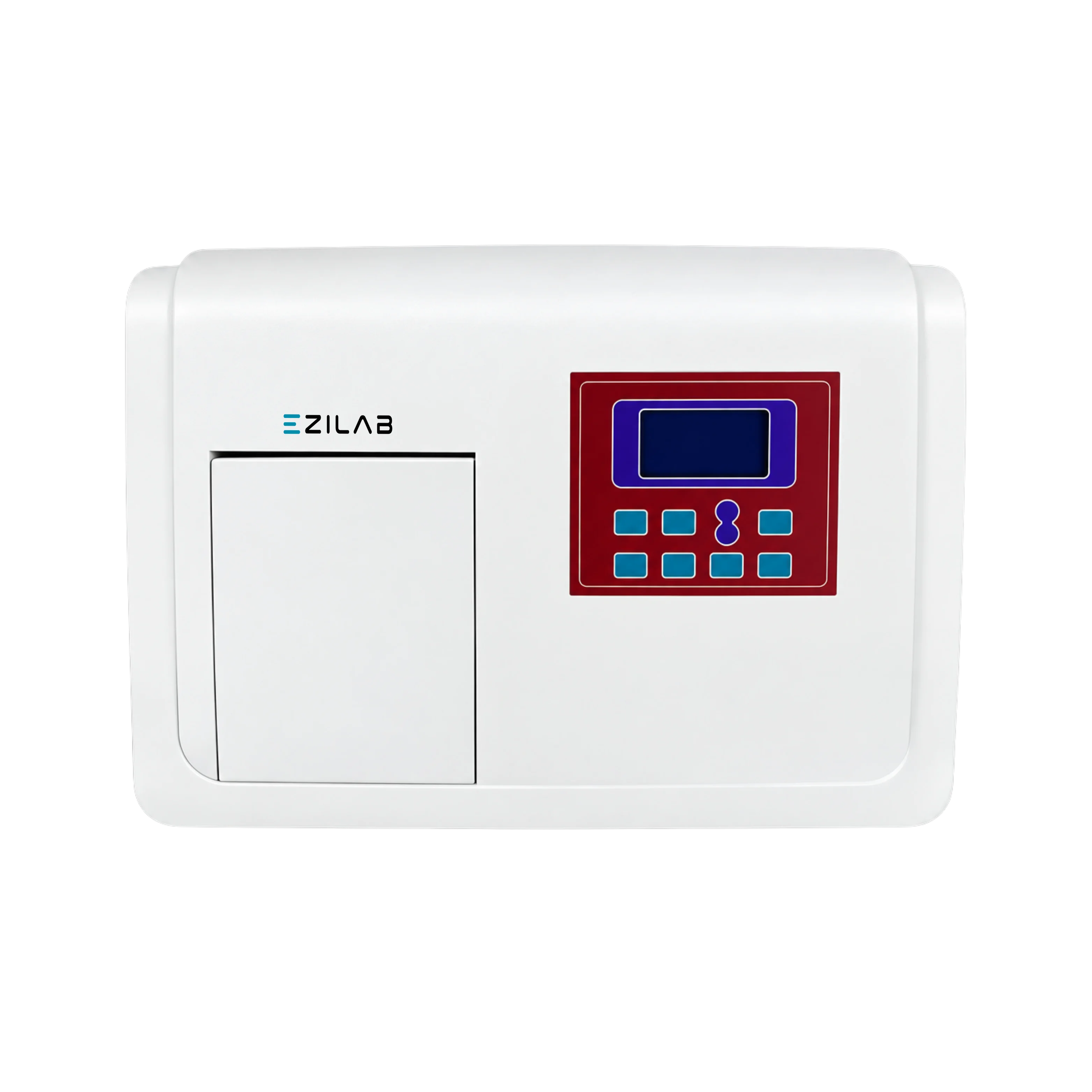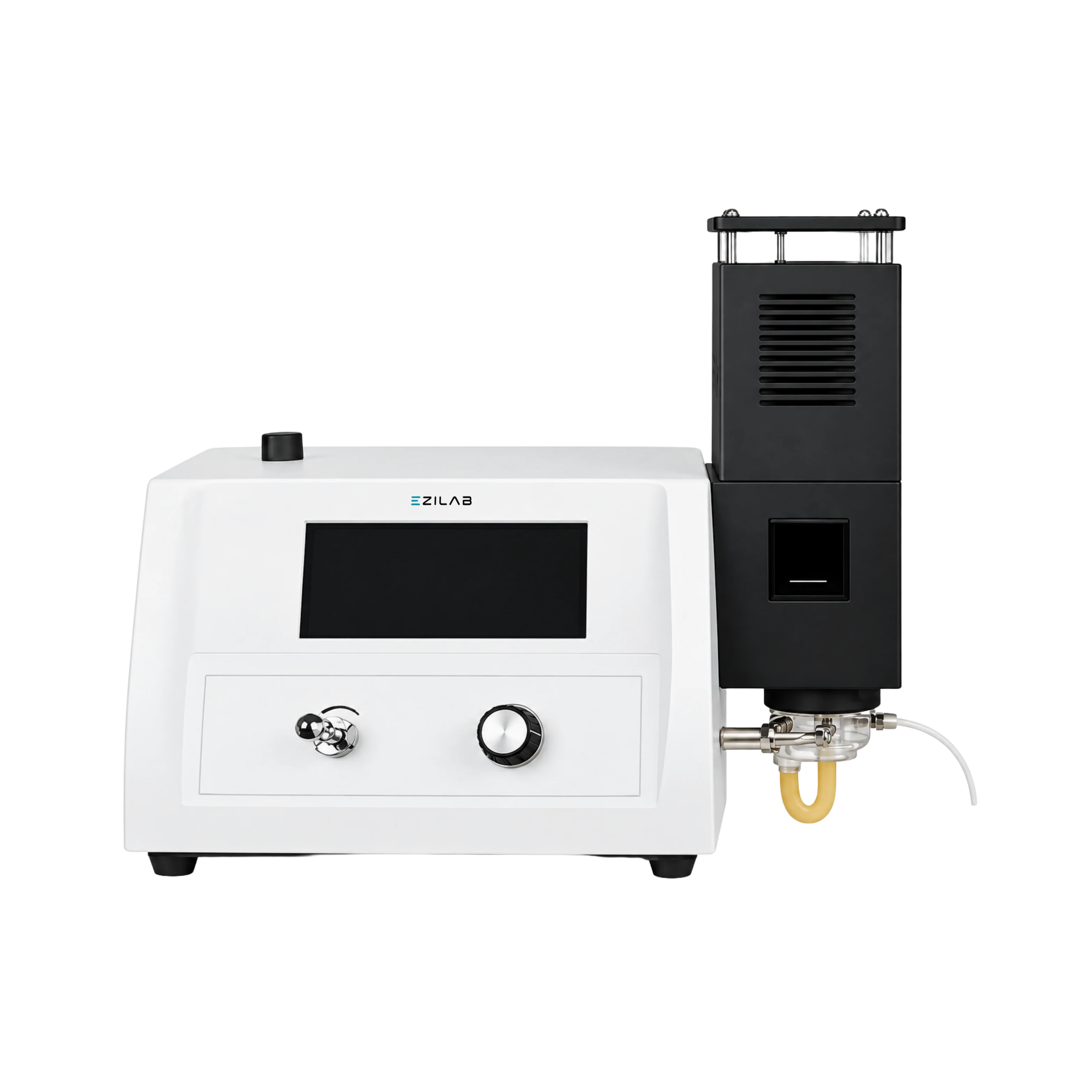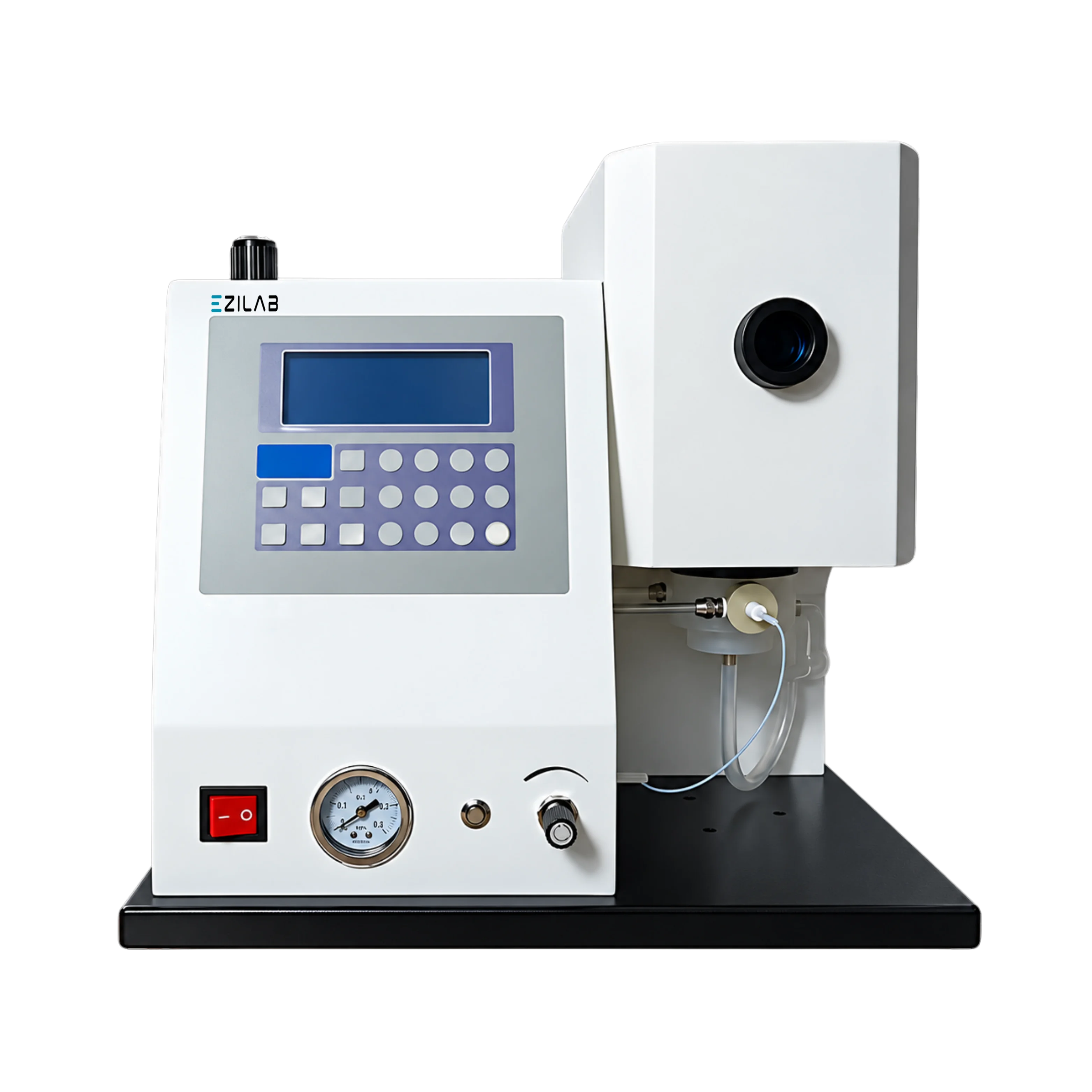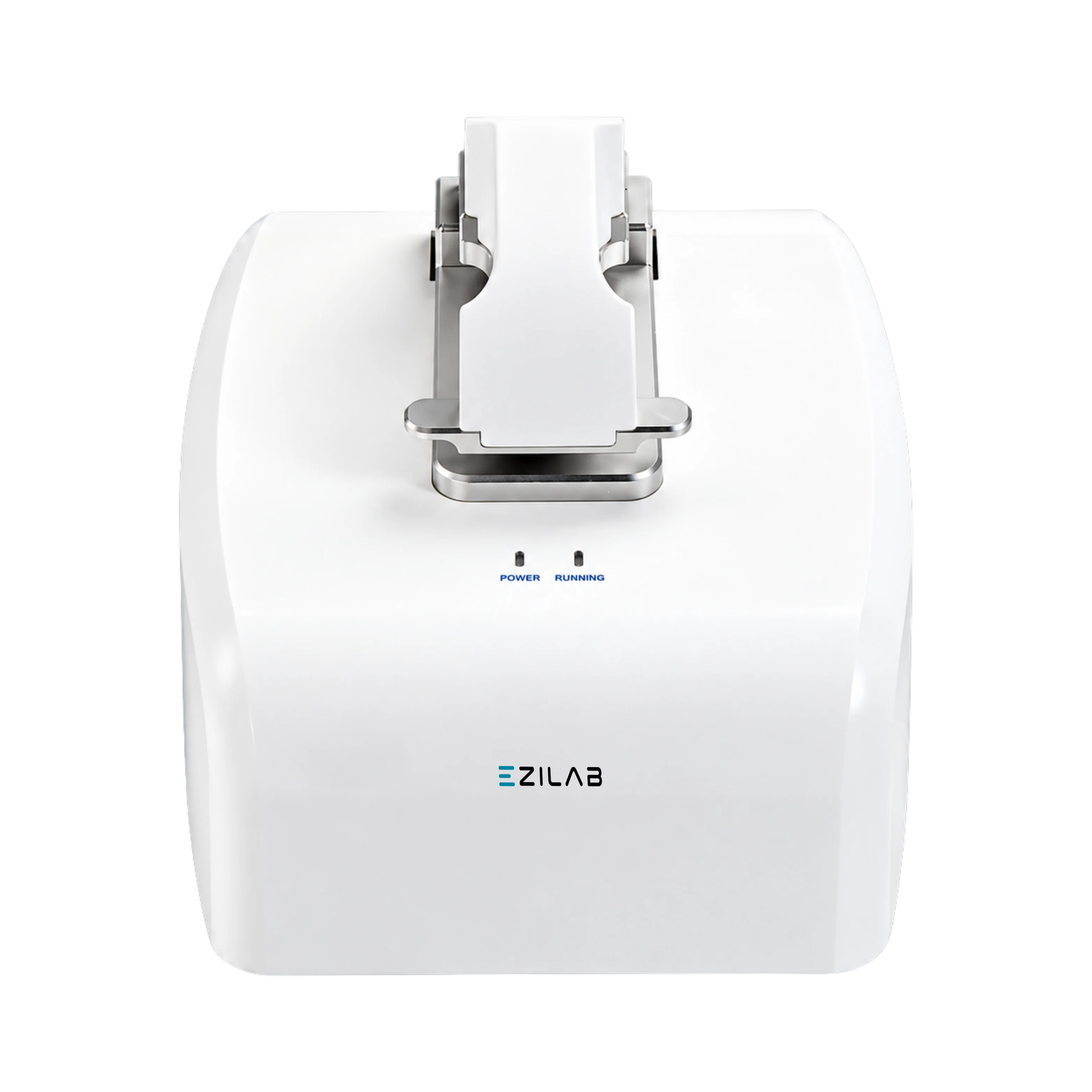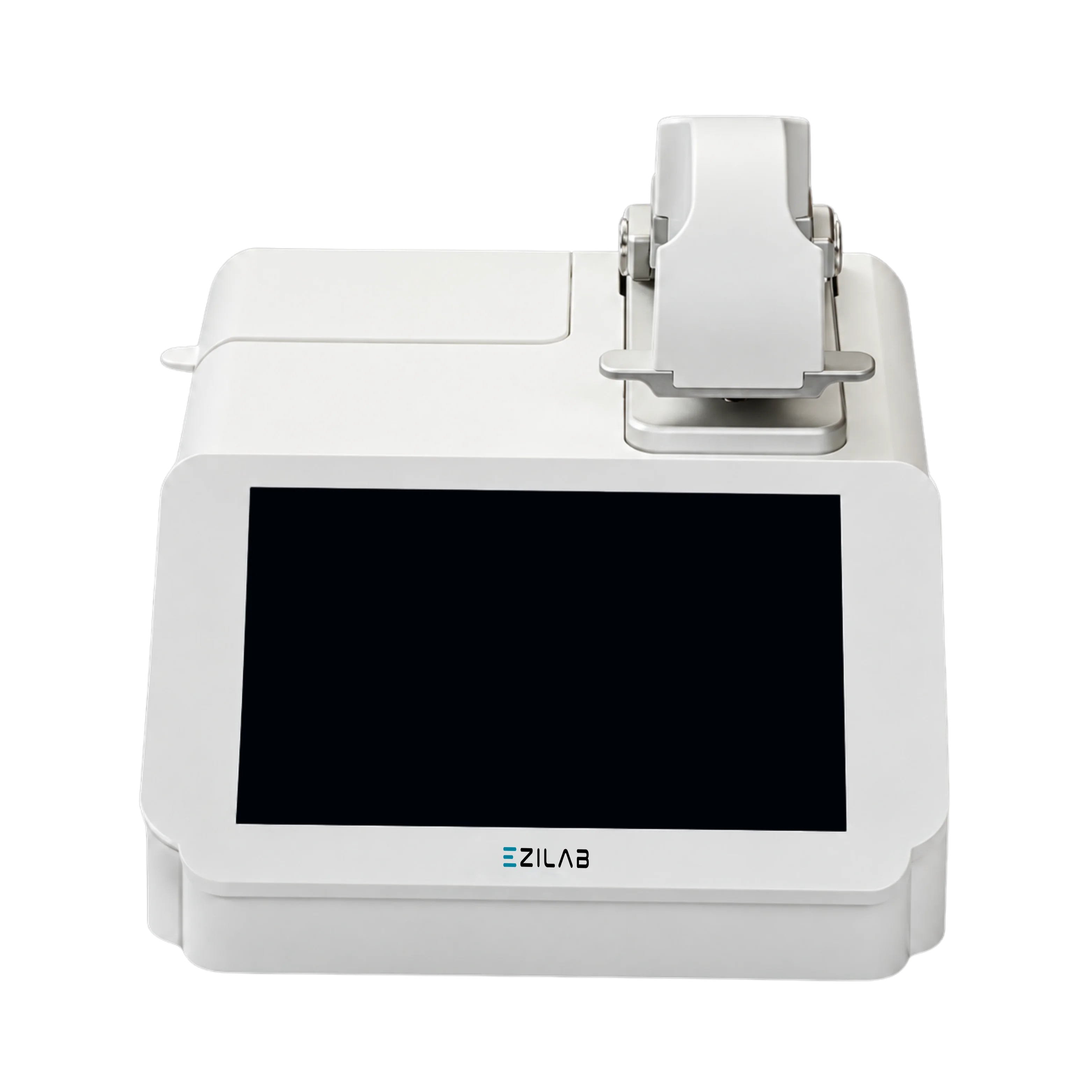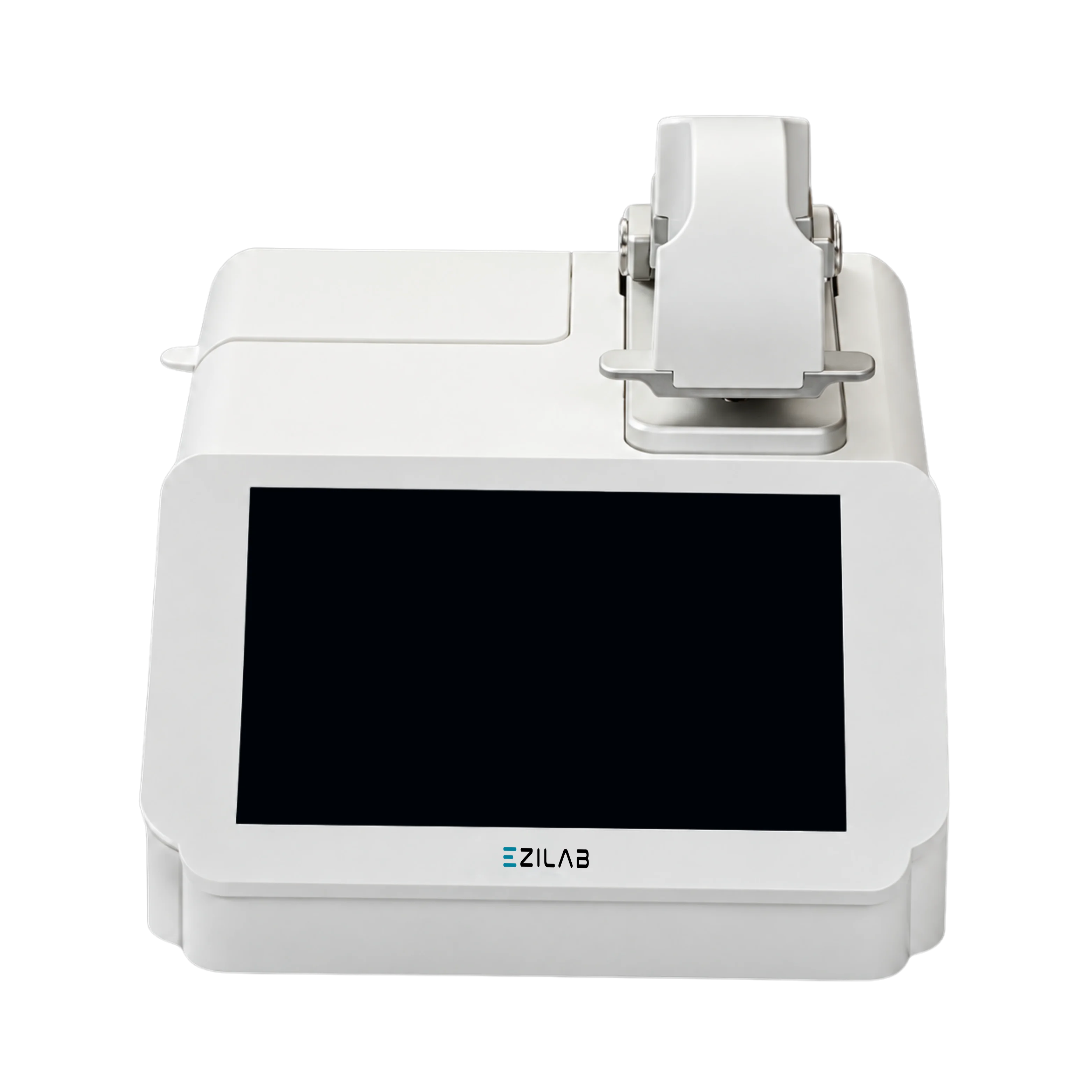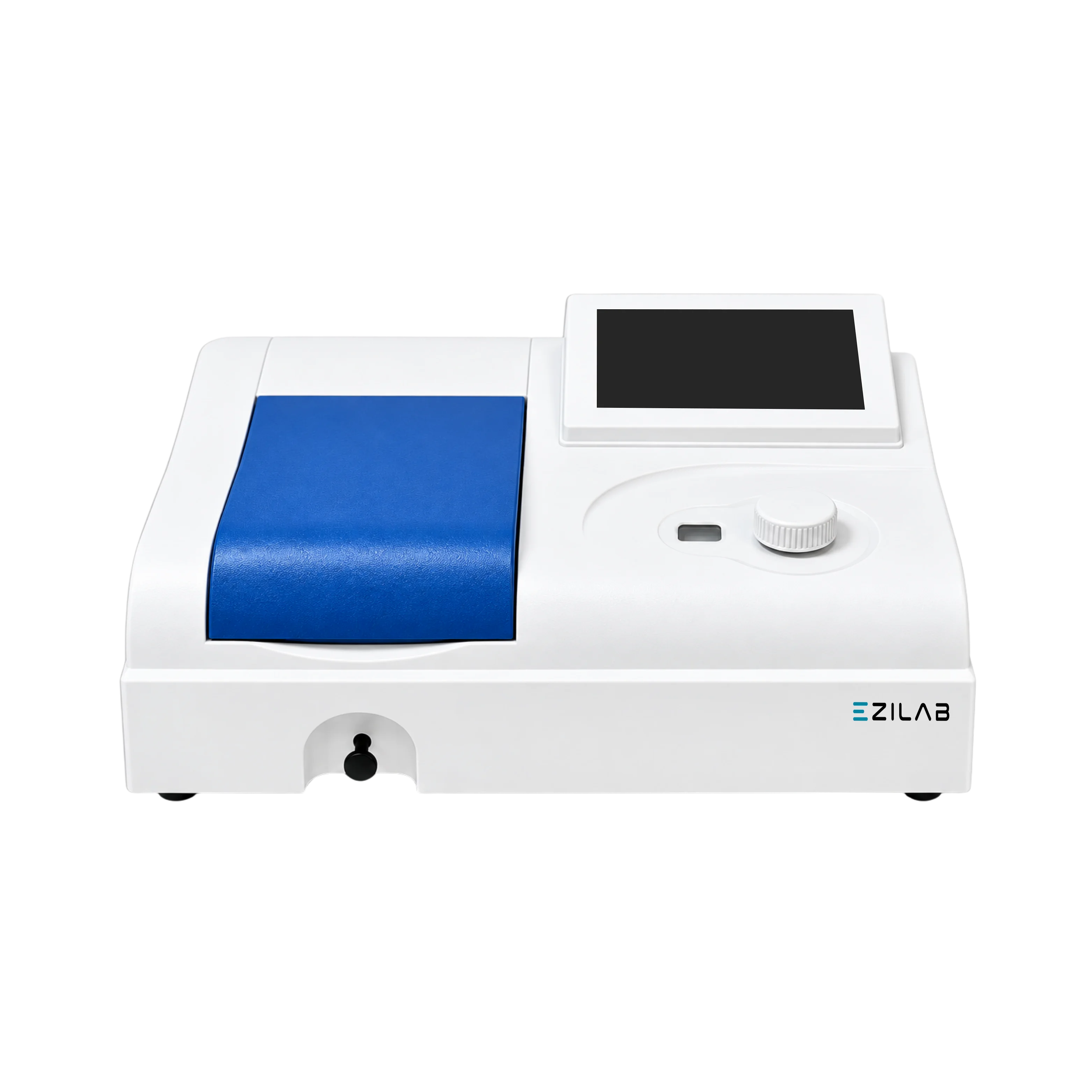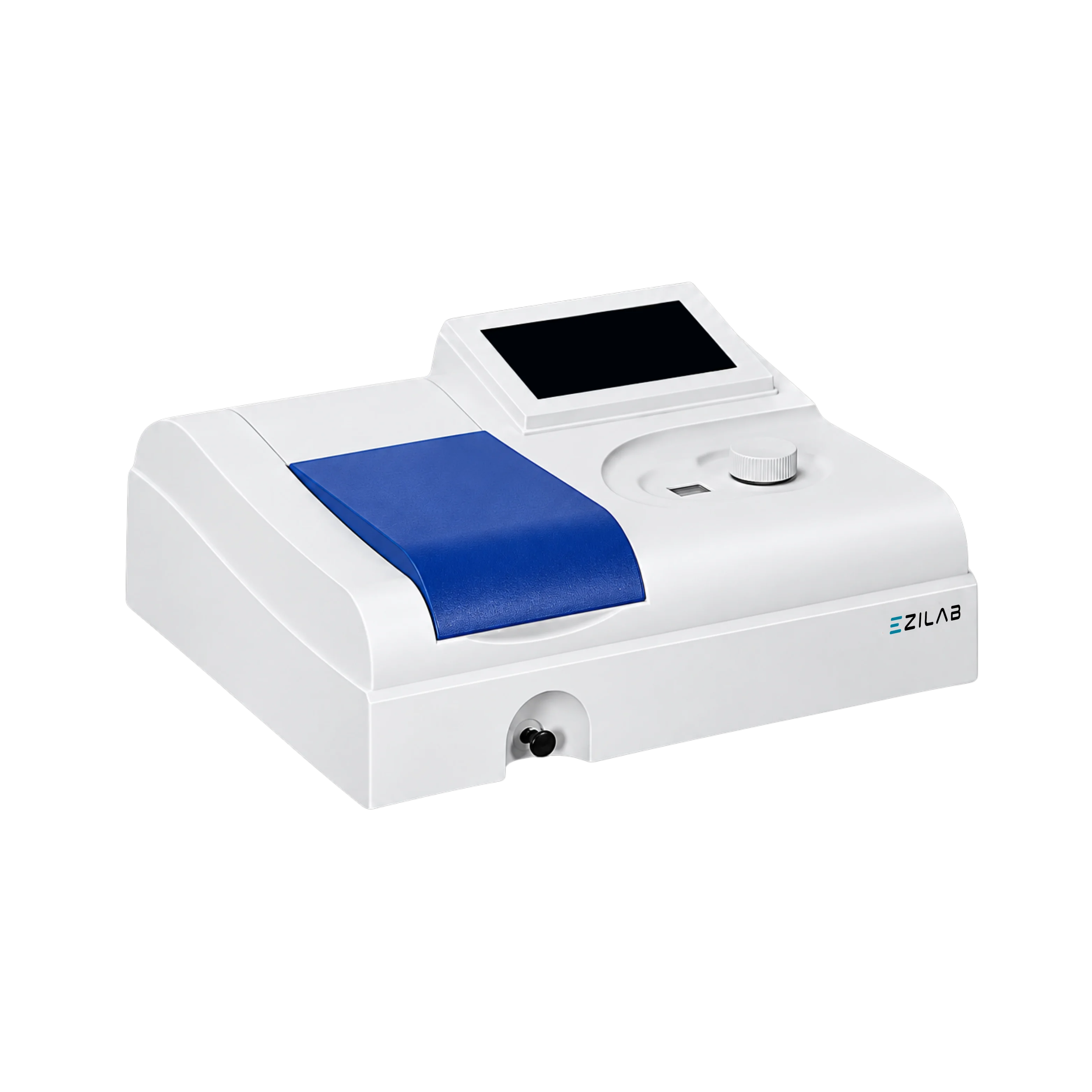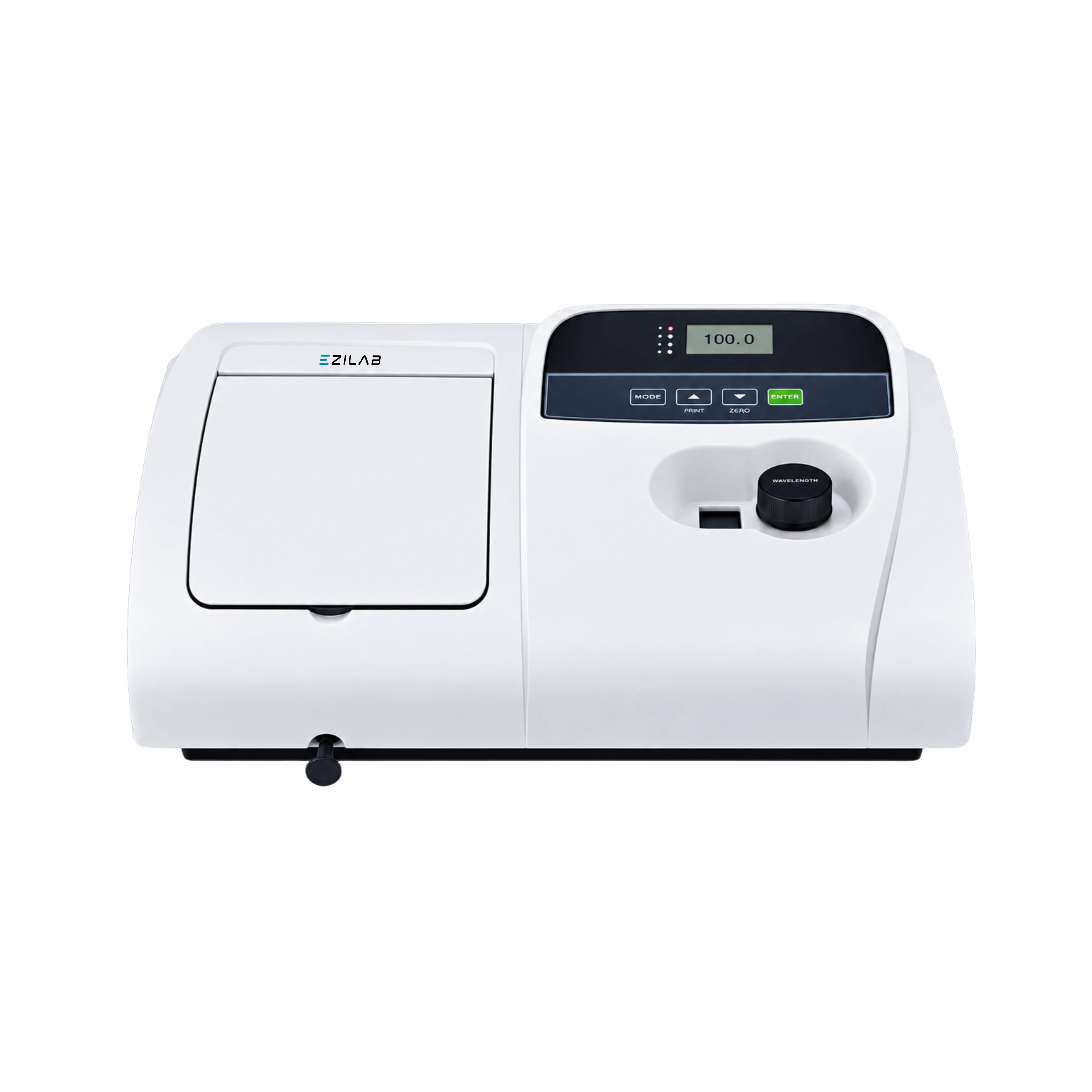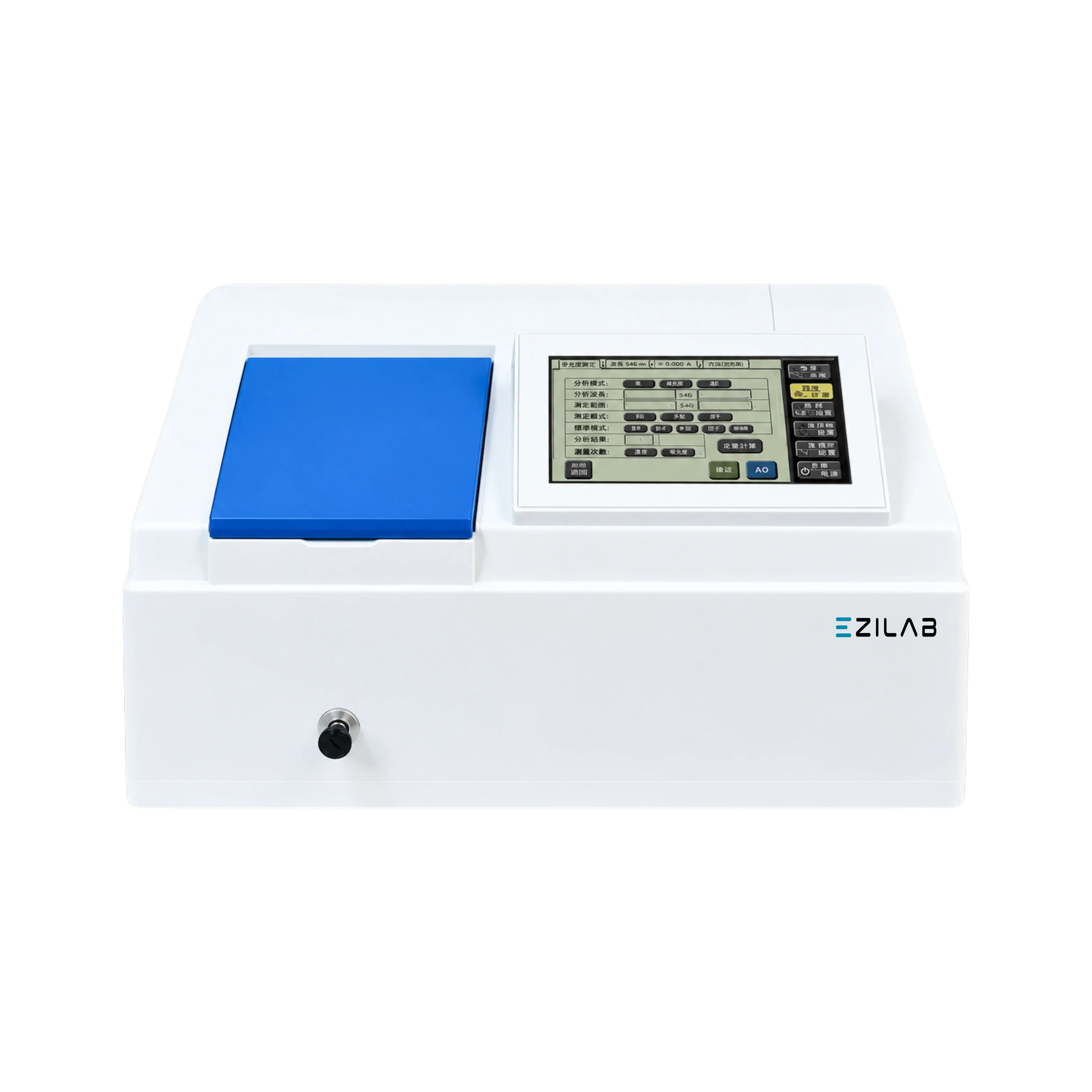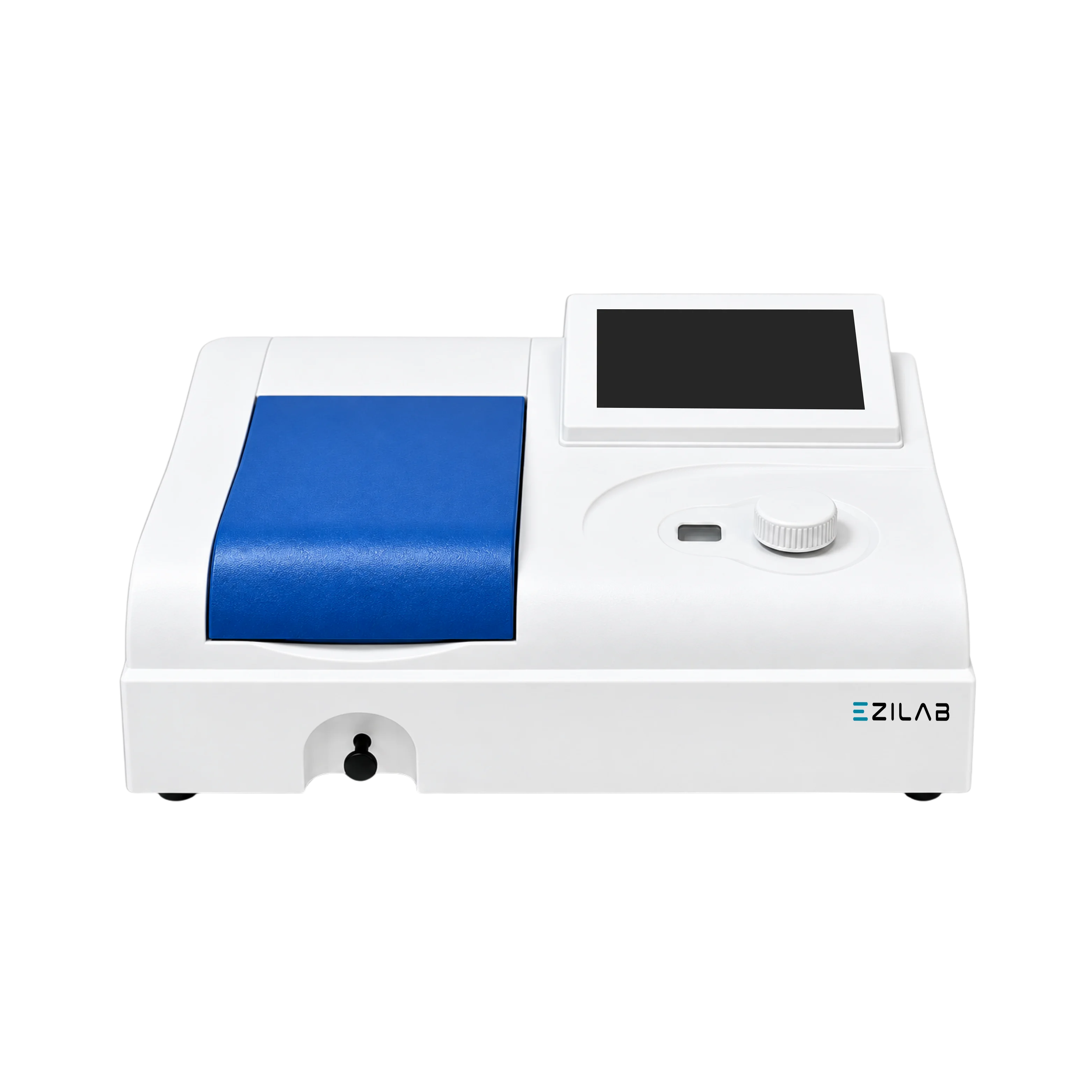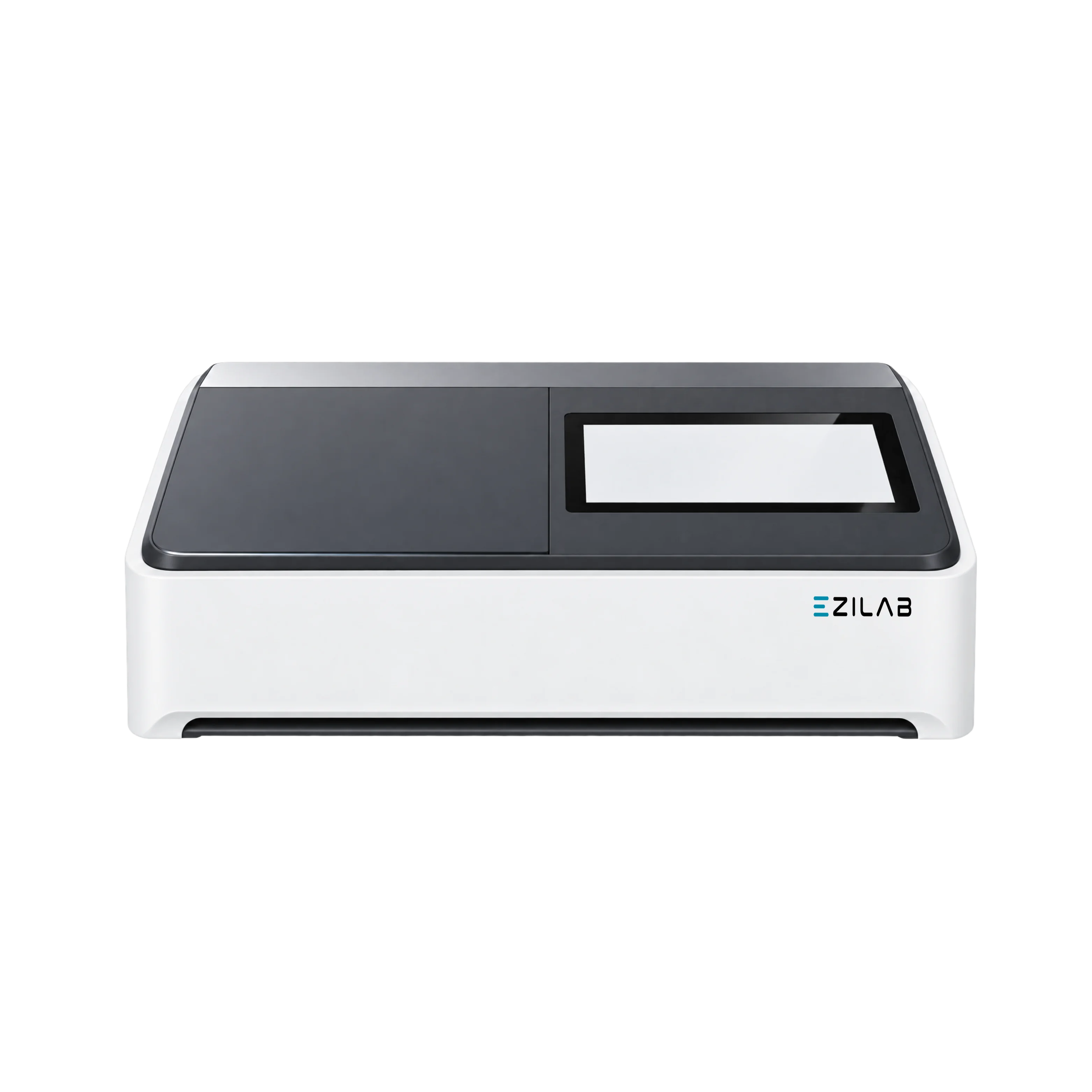
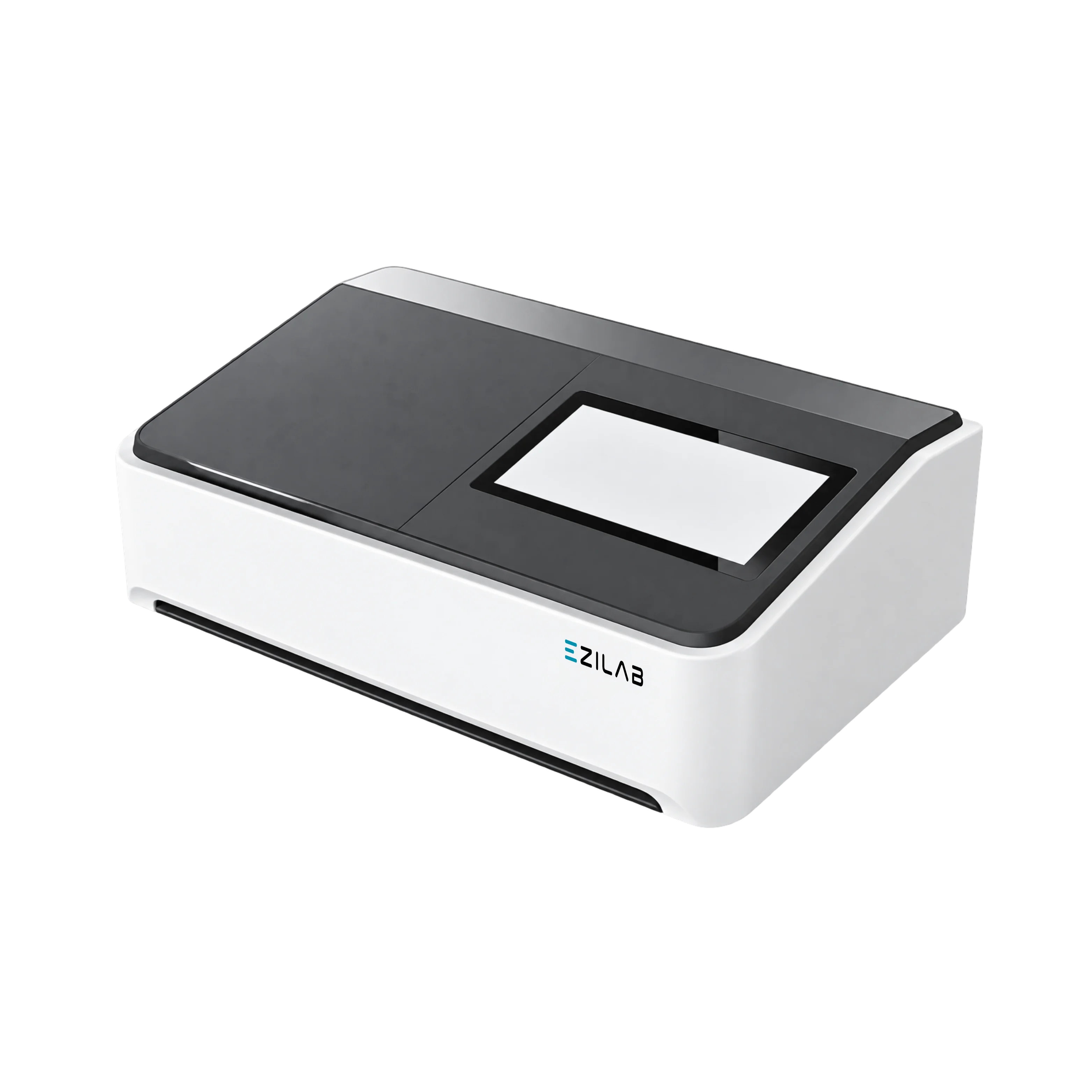
EziLab offers the Double Beam UV-Vis Spectrophotometer EZL-DBS103, a benchtop spectrophotometer covering 190 to 1100 nm at a fixed 1.8 nm bandwidth. Deuterium and tungsten lamps feed a fine-pitch grating, holding wavelength repeatability at 0.1 nm or better, stray light at 0.05% T or less, and baseline drift at 0.001 A per hour. Automatic wavelength calibration and a 10-inch touchscreen handle setup, and results export by USB or optional Bluetooth. The double beam spectrophotometer reads sample and reference at once, so lamp drift cancels during long kinetic runs and QC checks. Photometric range spans -0.3 to 3 Abs, 0 to 200% T, and direct concentration readout, and the touchscreen switches between scanning, quantitation, and kinetics. As a UV spectrophotometer it quantifies nucleic acids and proteins, and supplied glass and quartz cuvettes cover visible and UV work. Pharmaceutical QC labs check assay and drug release samples, while chemical and beverage producers run concentration and color checks on each batch. Environmental labs measure nutrients and contaminants in water, and university teaching labs use this lab spectrophotometer for method training. Dual 110 or 220 V input suits US sites. If your data system reads only USB files, skip the optional Bluetooth link and shortlist from the Spectrophotometer category and Double Beam UV-Visible Spectrophotometer range.
| Wavelength Range | 190 to 1100 nm |
|---|---|
| Bandwidth Options | 1.8 nm |
| Wavelength Accuracy | ± 0.1 nm, ± 0.3 nm |
| Wavelength Repeatability | Less than or equal to 0.1 nm |
| Photometric Accuracy | ± 0.3 % T (0 to 100 % T) ; ± 0.002 Abs (0 to 0.5 Abs) ; ± 0.004 Abs (0.5 to 1.0 Abs) |
| Photometric Repeatability | Less than or equal to 0.1 % T ; Less than or equal to 0.001 Abs (0 to 0.5 Abs) ; Less than or equal to 0.002 Abs (0.5 to 1.0 Abs) |
| Photometric Range | – 0.3 to 3 (Absorbance), 0 to 200 % (Transmittance), 0 to 9999 (Concentration) |
| Stability | Less than or equal to 0.001 A / h at 250 nm & 500 nm |
| Stray Light | Less than or equal to 0.05 % T at 220 nm & 360 nm |
| Light Source | Tungsten & Deuterium Lamp |
| Control Mode | Stand-alone or PC Software (Optional) |
| Optical System | Double Beam |
| Display | 10-inch Touch Screen |
| Output | USB Port or Bluetooth (Optional) |
| Power Requirements | AC 110 / 220 V, 50 / 60 Hz |
| Dimensions | 60 × 50 × 35 cm |
| Net Weight | 18 kg |
| Gross Weight | 20 kg |
| Feature Area | Description |
| Wavelength Range | Covers 190 to 1100 nm with 1.8 nm bandwidth. |
| Light Source | Tungsten and deuterium lamp. |
| Photometric Range | -0.3 to 3 Abs and 0 to 200 %T. |
| Display and Control | 10-inch touchscreen with stand-alone control or optional PC software. |
| Output and Calibration | USB output with optional Bluetooth, and automatic wavelength calibration. |
Spectrophotometer | 1 unit |
1 cm Glass Cuvette | 4 pieces |
1 cm Quartz Cuvette | 2 pieces |
Power Cord | 1 piece |
User’s Manual | 1 piece |
Dust Cover | 1 piece |
1 | Cell Holders |
2 | Control Units |
3 | Lamps |
4 | Glass Cuvette with Lid |
5 | Quartz Cuvette with Lid |
6 | Micro Cuvette |
7 | PC Software |
The Double Beam UV-Vis Spectrophotometer EZL-DBS103 is classified as a double-beam spectrophotometer because it splits the light beam into two paths: one passing through the sample and the other through a reference. This simultaneous measurement allows for better baseline stability, minimizes the effect of light source fluctuations, and enhances long-term measurement accuracy. It is especially useful in applications that require consistent and reliable absorbance readings over extended periods, such as kinetic studies or routine quality control testing.
Ezilab’s Double Beam UV-Vis Spectrophotometer EZL-DBS103 is used in a wide range of applications, including pharmaceutical analysis, chemical testing, environmental monitoring, food and beverage quality control, and biological research. It can measure absorbance, transmittance, concentration, and perform wavelength scanning. Its ability to deliver accurate, reproducible data makes it ideal for detecting contaminants, analyzing formulations, quantifying nucleic acids and proteins, and verifying product consistency in regulated environments like GMP or academic research labs.
Our Double Beam UV-Vis Spectrophotometer EZL-DBS103 ensures high accuracy through its double-beam configuration, precision optical grating, and wide wavelength range of 190 to 1100 nm. It offers wavelength accuracy up to ±0.1 nm and photometric precision through advanced signal processing. The instrument’s excellent baseline stability minimizes drift over time, even during long measurement sessions. An automatic 8-cell holder, high-quality lamps (deuterium and tungsten), and advanced software also contribute to the system’s consistent and dependable performance in various analytical tasks.
Ezilab’s Double Beam UV-Vis Spectrophotometer EZL-DBS103 is designed with a compact bench-top form factor that fits comfortably into standard laboratory environments. Despite its powerful features and high-performance optical system, the instrument maintains a space-saving footprint, making it ideal for labs where bench space is limited. It combines high accuracy and multi-sample capabilities without requiring a large setup, making it suitable for research institutions, educational labs, and quality control departments with space constraints.
The Double Beam UV-Vis Spectrophotometer EZL-DBS103 is highly user-friendly, featuring a large 10-inch touch screen with an intuitive interface that simplifies method setup, sample measurement, and data analysis. It supports both stand-alone operation and PC connectivity via USB or optional Bluetooth, giving user flexibility in control and data management. Its automatic cell holder reduces manual handling, while built-in software guides users through each step, making it ideal for both experienced professionals and newcomers in academic or industrial labs.
Our Double Beam UV-Vis Spectrophotometer EZL-DBS103 requires minimal maintenance, thanks to its durable components and automated calibration features. It includes an automatic wavelength calibration function that ensures consistent accuracy without frequent manual adjustments. Routine maintenance involves periodic cleaning of the sample compartment, inspecting the cell holder, and replacing the deuterium or tungsten lamps after their operational life. The user-friendly interface also provides system alerts and reminders for maintenance checks, making it easy to keep the device in peak condition and extend its lifespan.