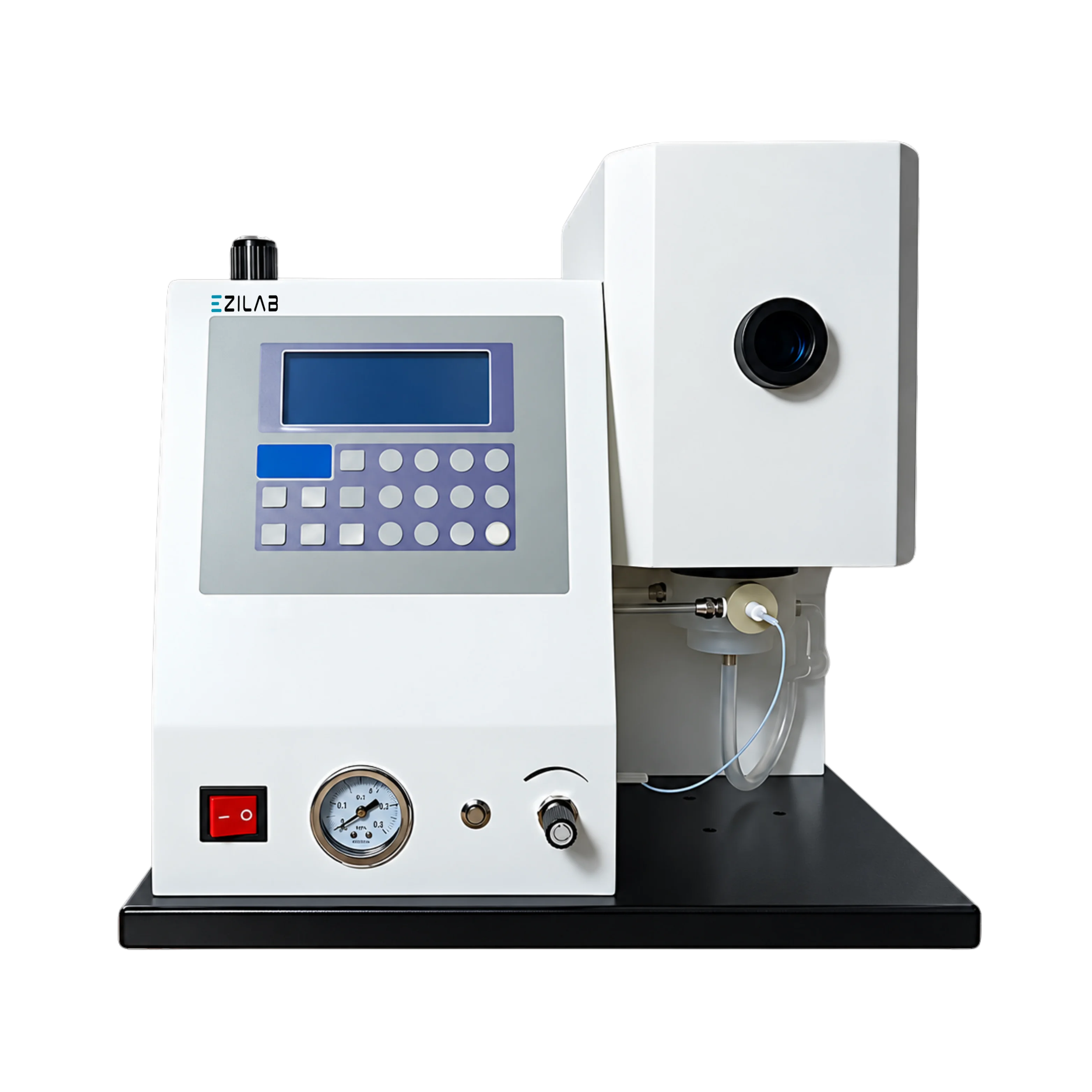
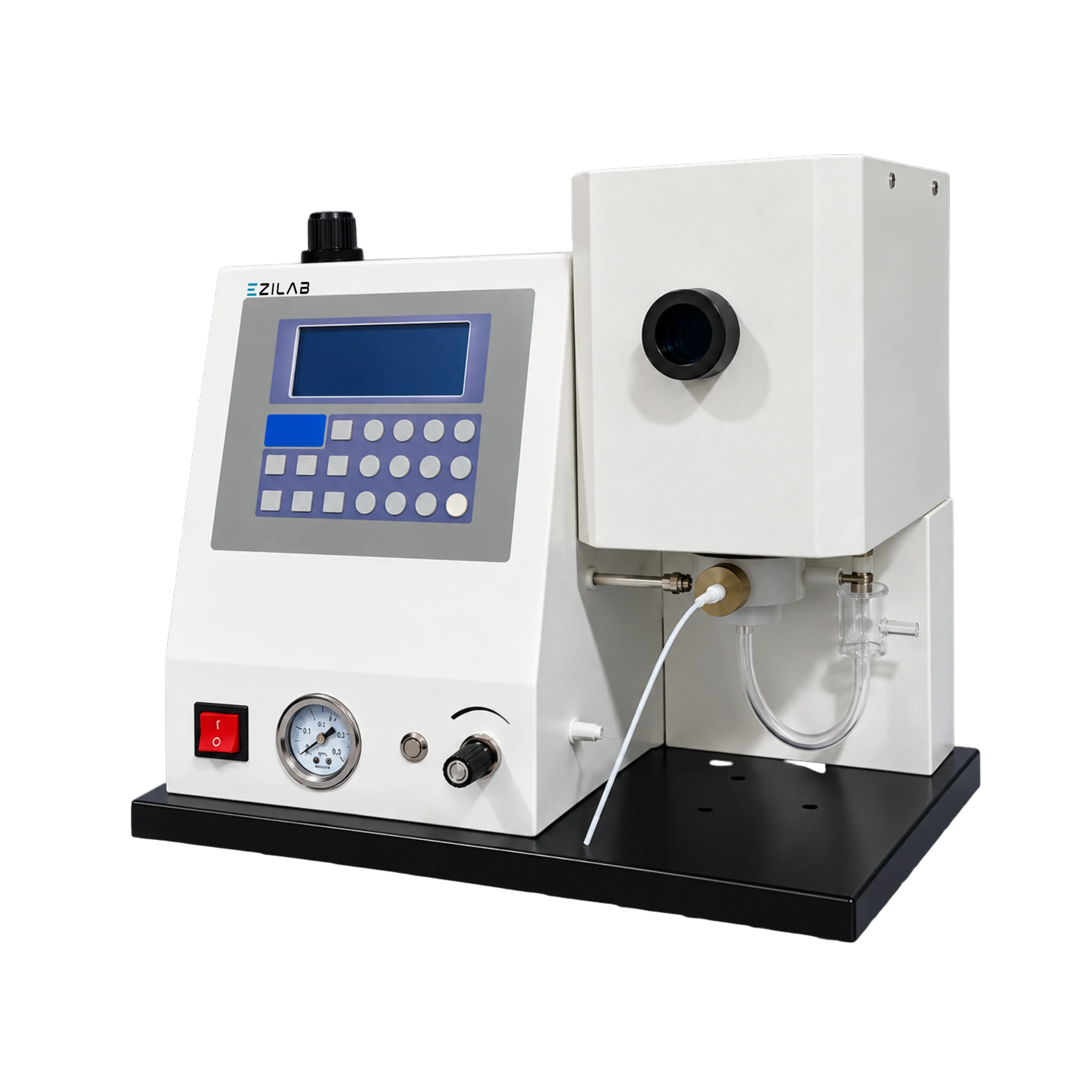
EziLab offers the Flame Photometer EZL-FP142, a 4-channel digital flame photometer that measures potassium, sodium, lithium, and calcium in one workflow. Choose it over the 3-channel clinical model when calcium matters, as agricultural labs require it for soil fertility and plant tissue analysis. Test ranges cover K from 0.15 to 100 ppm, Na from 0.18 to 100 ppm, Li from 0.1 to 30 ppm, and Ca from 0.1 to 1000 ppm, with detection limits of ≤0.156 ppm K, ≤0.184 ppm Na, ≤0.1035 ppm Li, and ≤2 ppm Ca. Reproducibility stays within 2%, readings arrive in 8 seconds, and the system draws 3 mL of sample per minute. An LPG flame, included air compressor, and pressure-reducing valve make setup complete out of the box. Safety alarms detect gas leakage, trigger automatic flameout protection, and shut off gas automatically. A touch-screen display with push-button ignition, multilingual interface, data storage, USB output, and built-in thermal printer support traceable reporting. Clinical laboratories monitor serum electrolytes and lithium therapy levels, agricultural labs test soil fertility and plant nutrient content, and food and beverage producers check mineral content for quality control and nutrition labeling. See the Flame Photometers and Flame Photometer EZL-FP142 pages for full specifications.
| Testing Elements | K, Na, Li, Ca |
|---|---|
| Channels | 4 |
| Test Range |
K:0.15 to 100 ppm Na: 0.18 to 100 ppm Li: 0.1 to 30 ppm Ca: 0.1 to 1000 ppm Li: 0.1 to 30 ppm |
| LOD |
K: Less than or equal to 0.156 ppm Na: Less than or equal to 0.184ppm Ca : Less than or equal to 2ppm Li: Less than or equal to 0.1035ppm |
| Linearity Error |
K: less than or equal to 0.195 ppm Na: less than or equal to 0.69 ppm Li: less than or equal to 0.1499 ppm Ca: less than or equal to 3ppm |
| Response Time | 8 s |
| Sample Uptake | 3ml/min |
| Stability | less than or equal to 3% drift within 15 s, less than equal to 15 % drift within 16 minutes |
| Reproducibility | less than or equal to 2% |
| Printer | Optional built in thermal printer |
| COM | USB |
| Fuel | LPG |
| Power | AC 220V/50Hz or AC 110V/60Hz |
| Package | 570 × 530 × 400 mm |
| Net Weight | 18Kg |
Multilingual Interface Support
Safety Alarm System
Printer Compatibility Option
Element Concentration Measurement
Data Storage Capacity
Standard Accessories:
LPG Reducing Valve | 1 piece |
Stainless steel bellows for LPG | 1 piece |
Silica gel tubing for waste liquid | 1 piece |
PU tubing for air | 1 piece |
Air Compressor | 1 piece |
1. | Built in thermal Printer |
2. | Software |
Flame Photometer EZL-FP142 is widely used for measuring sodium, potassium, calcium, and lithium in clinical, agricultural, and food testing. It provides fast and accurate results, making it valuable for both research and routine quality control.
The Flame Photometer EZL-FP142 is widely used for the measurement of sodium, potassium, calcium, and lithium in liquid samples. These analyses are vital in clinical laboratories for monitoring electrolyte balance in blood and serum. In agriculture, the instrument is used to assess soil fertility and fertilizer quality. It also finds application in the food and beverage industry for mineral content monitoring and nutritional labelling. It thus serves as a versatile solution for laboratories handling clinical, agricultural, industrial, and environmental testing.
Our Flame Photometer EZL-FP142 has been designed with simplicity and user comfort in mind. Its touch-screen display and push-button ignition make setup and operation straightforward, even for beginners. The interface supports clear data visualization and easy switching between stored test methods. Our instrument reduces training time for new users, allowing them to produce accurate results quickly. This user-friendly approach makes it ideal for both teaching and high throughput testing environments.
Ezilab’s Flame Photometer EZL-FP142 provides stable flame control and incorporates data storage functions to maintain reliability in testing. By supporting multiple calibration curves and standard sets, the system helps reduce variability between different runs. This is particularly important in clinical and pharmaceutical labs, where precision directly affects decision-making. Consistency in results also benefits agricultural and food quality control testing, ensuring dependable outcomes across large sample volumes.
The Flame Photometer EZL-FP142 is equipped with several safety mechanisms to protect users during operation. It includes a gas leakage alarm, automatic flameout protection, and automatic gas shut-off functions. These built-in safeguards reduce the risk of fire hazards and ensure safe working conditions in busy laboratory environments. Our system is designed to operate reliably even during unexpected interruptions, protecting both the user and the equipment.
The Flame Photometer EZL-FP142 is designed for long-lasting performance with minimal maintenance. Regular cleaning of the nebulizer and aspiration system prevents blockages that could interfere with results. Checking gas connections, monitoring the flame system, and following routine calibration recommendations help maintain consistent accuracy. Our advice is to operate the instrument in a clean, well-ventilated space to extend its service life. With these simple practices, laboratories can depend for years of reliable operation.