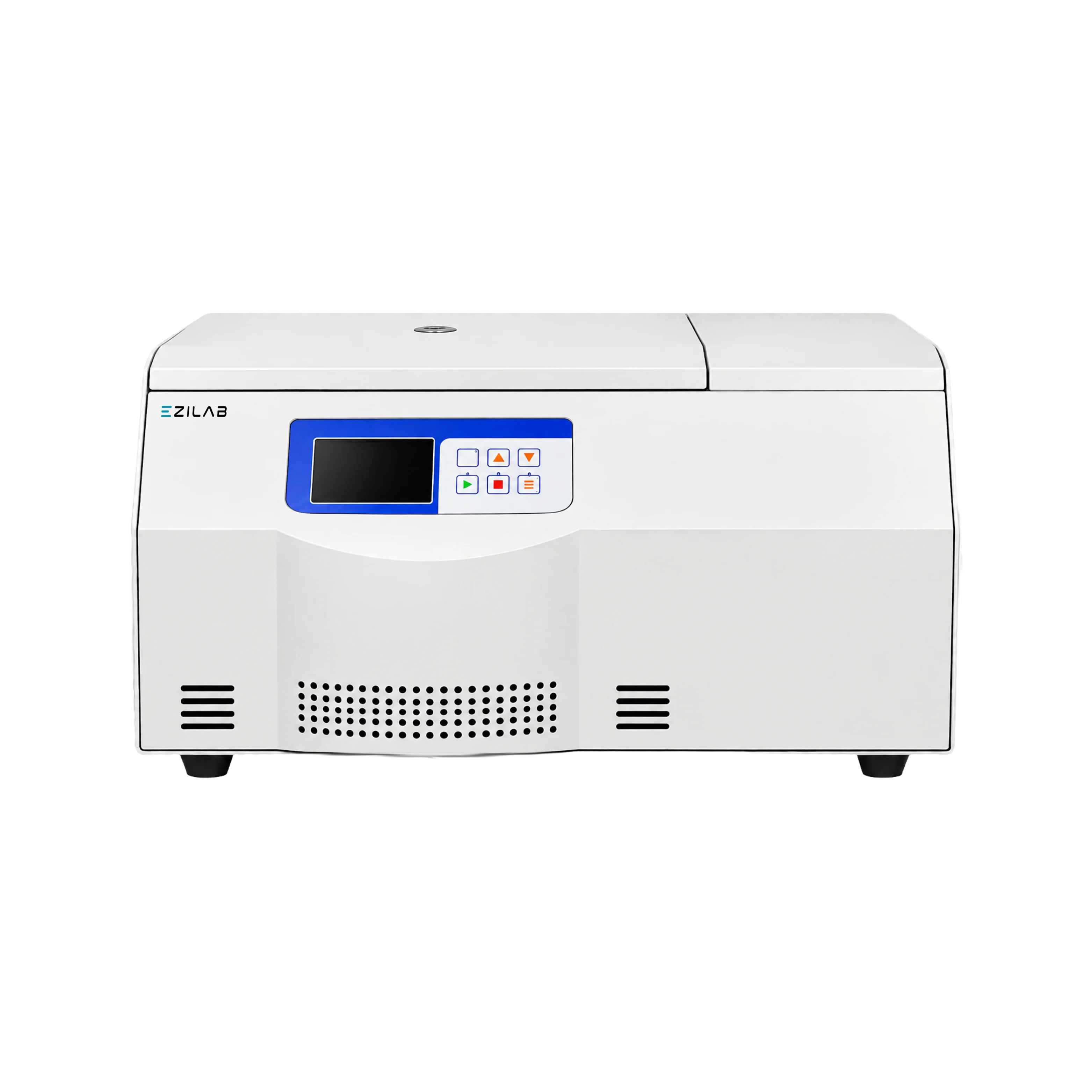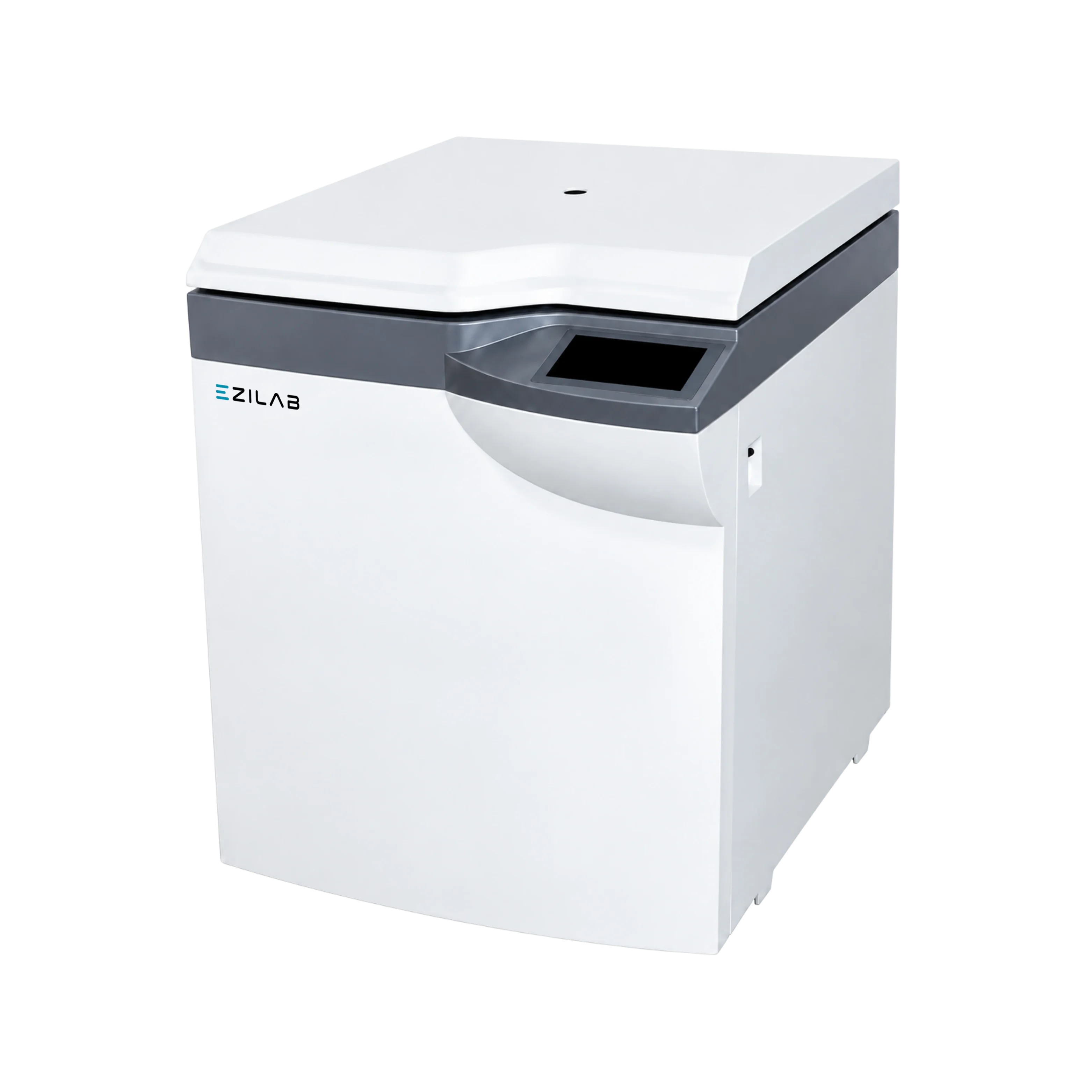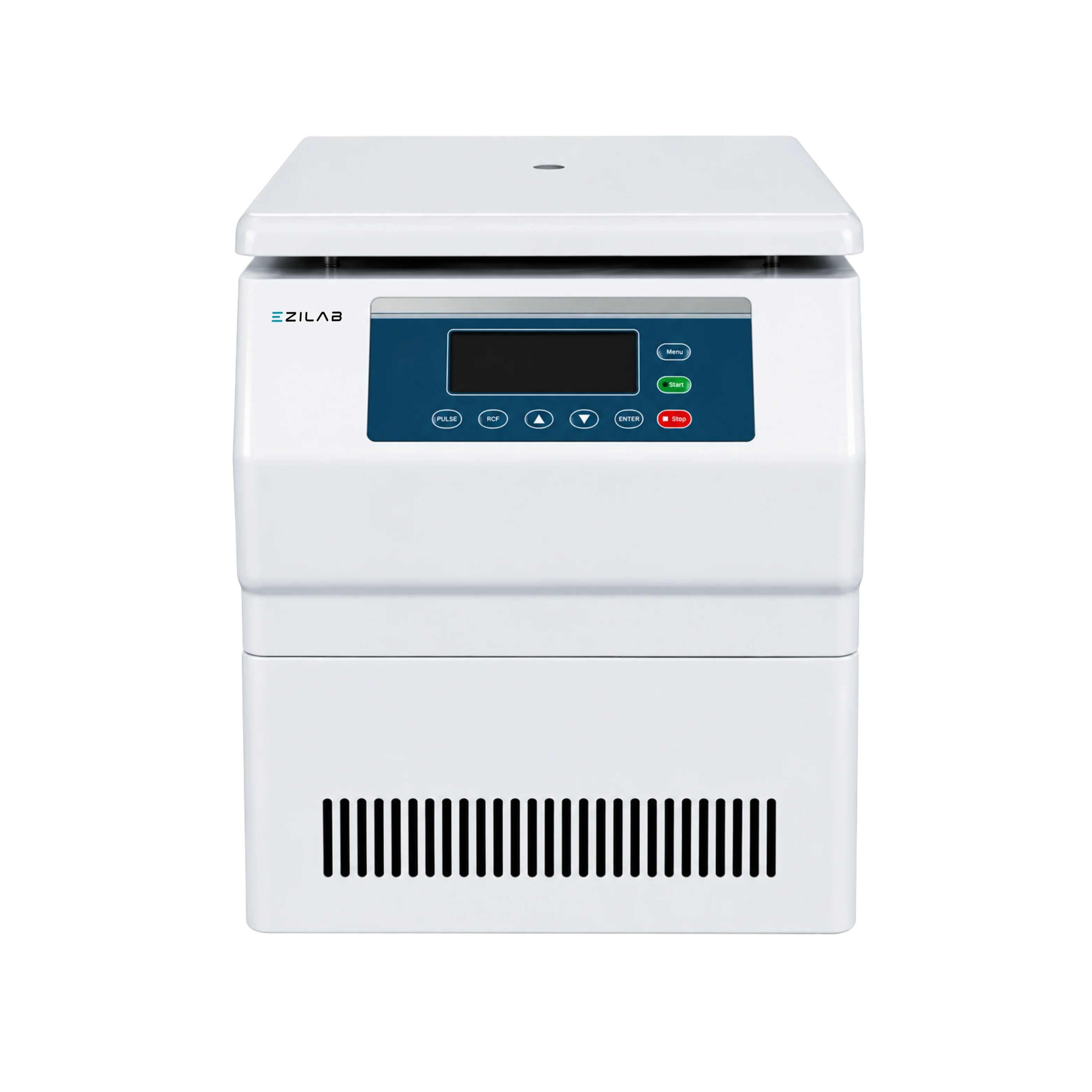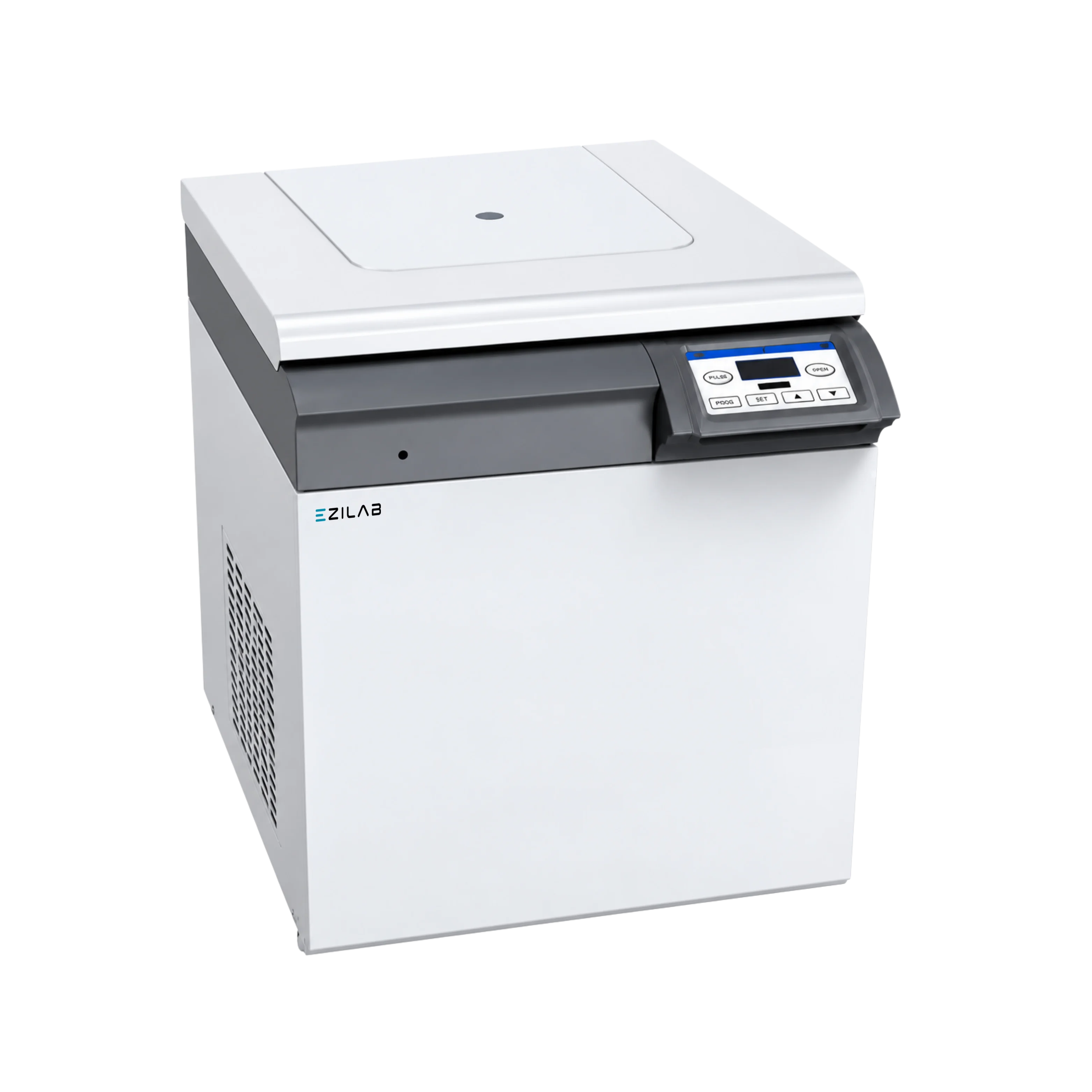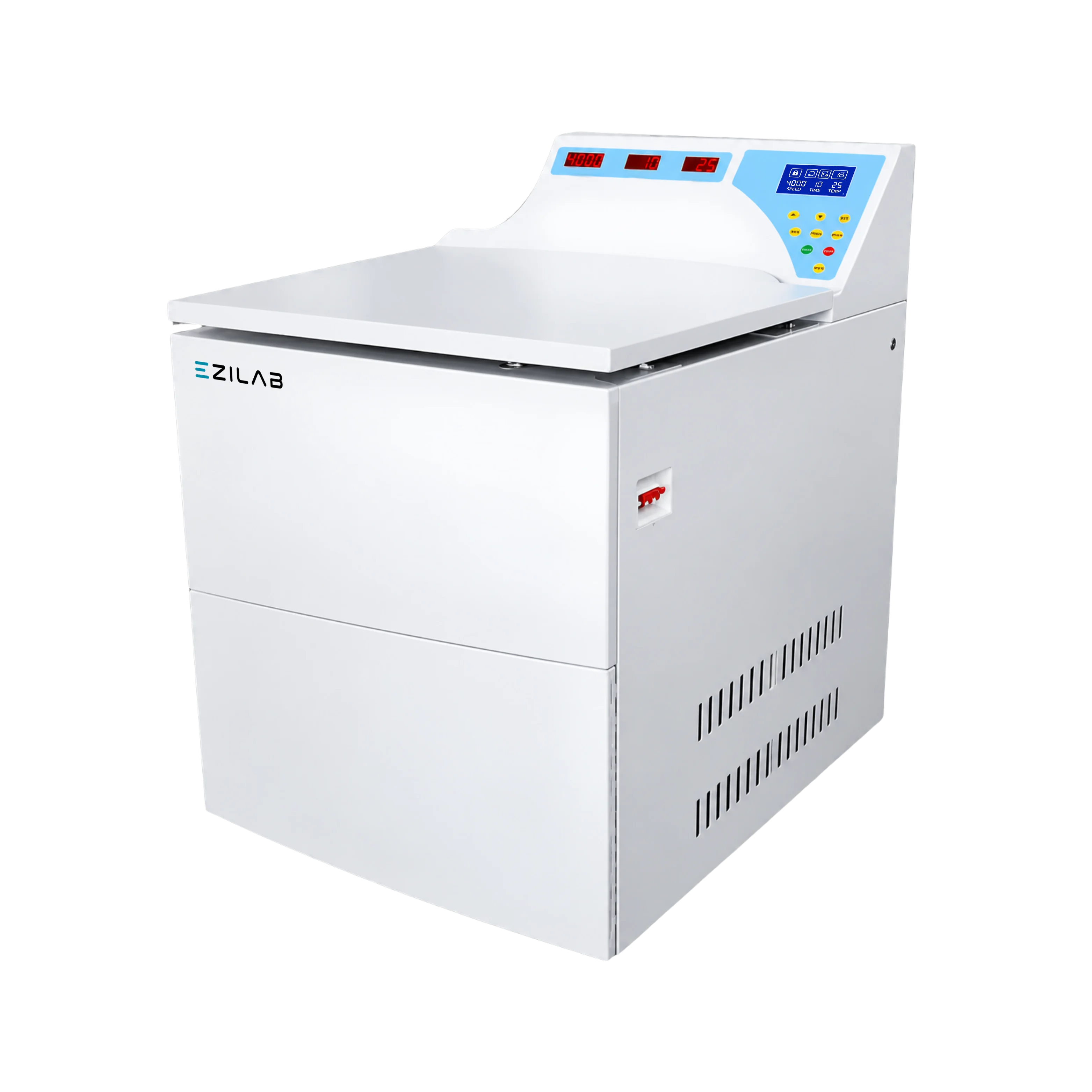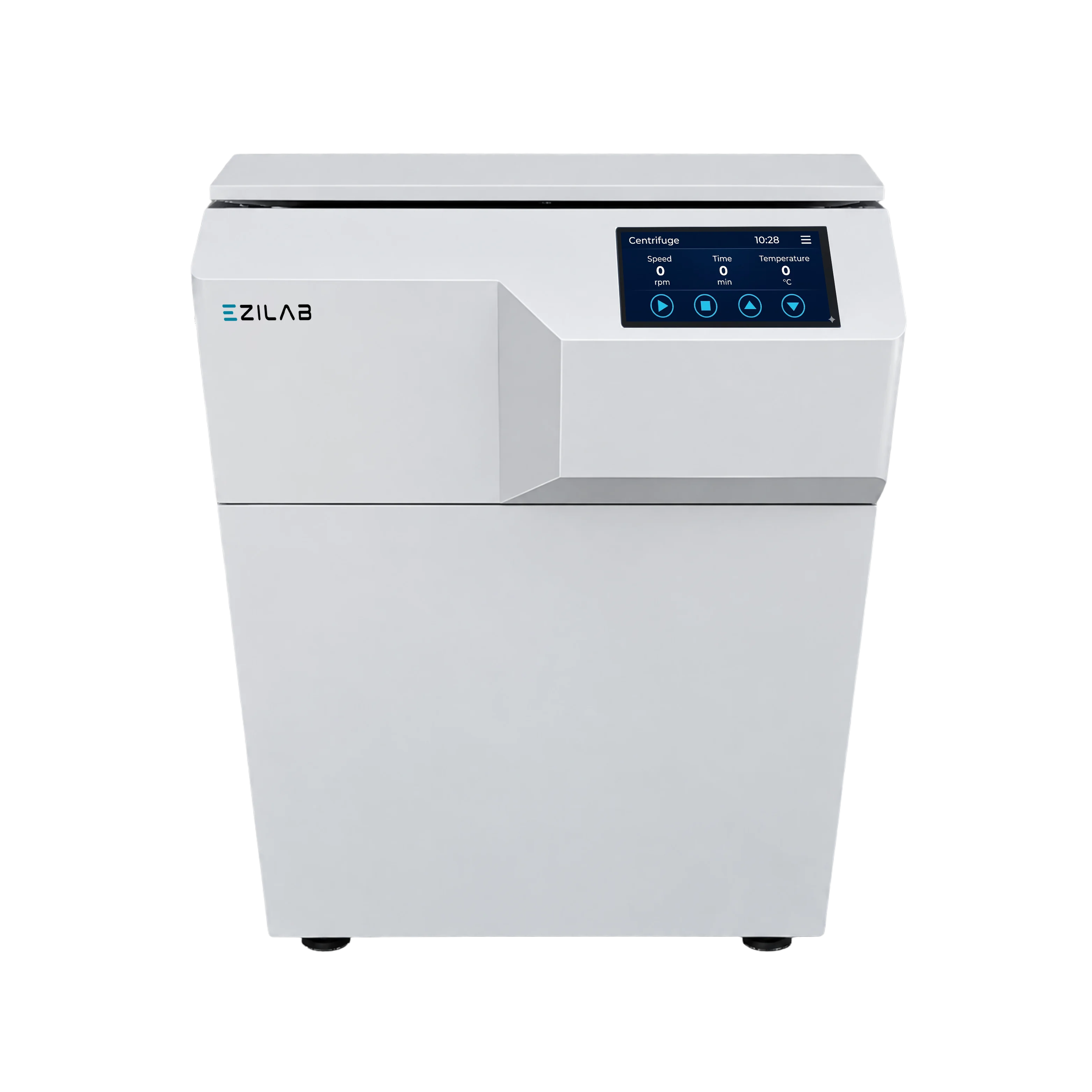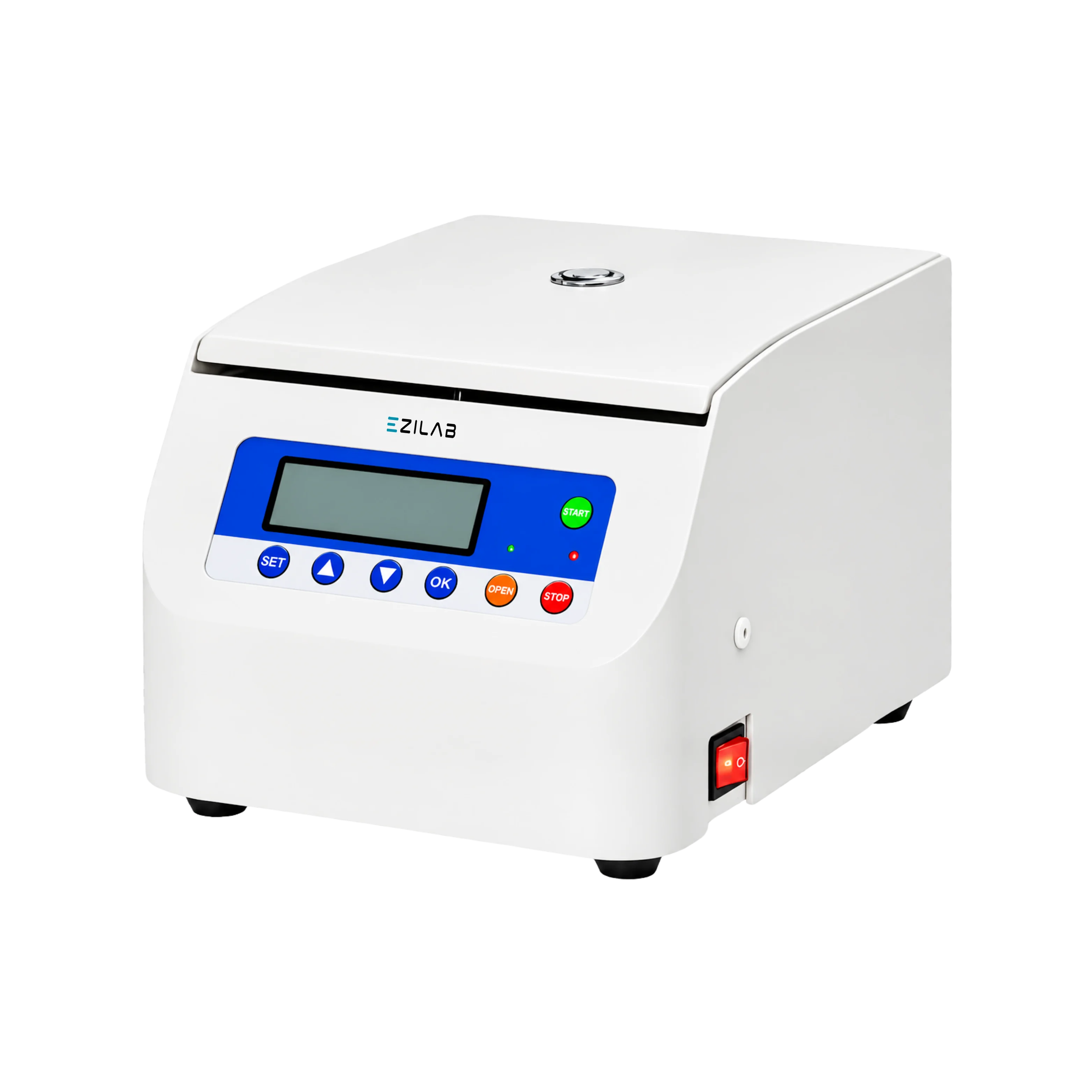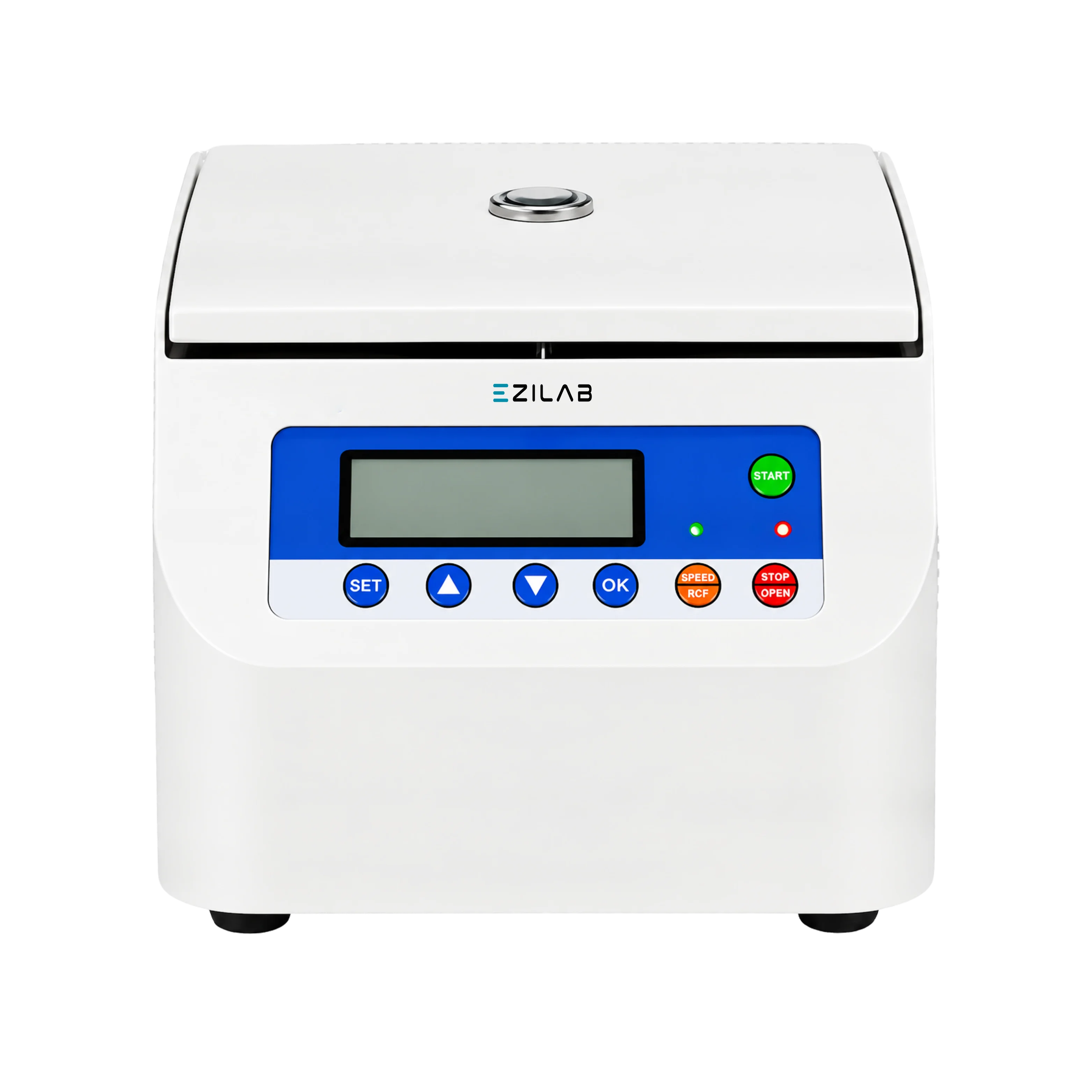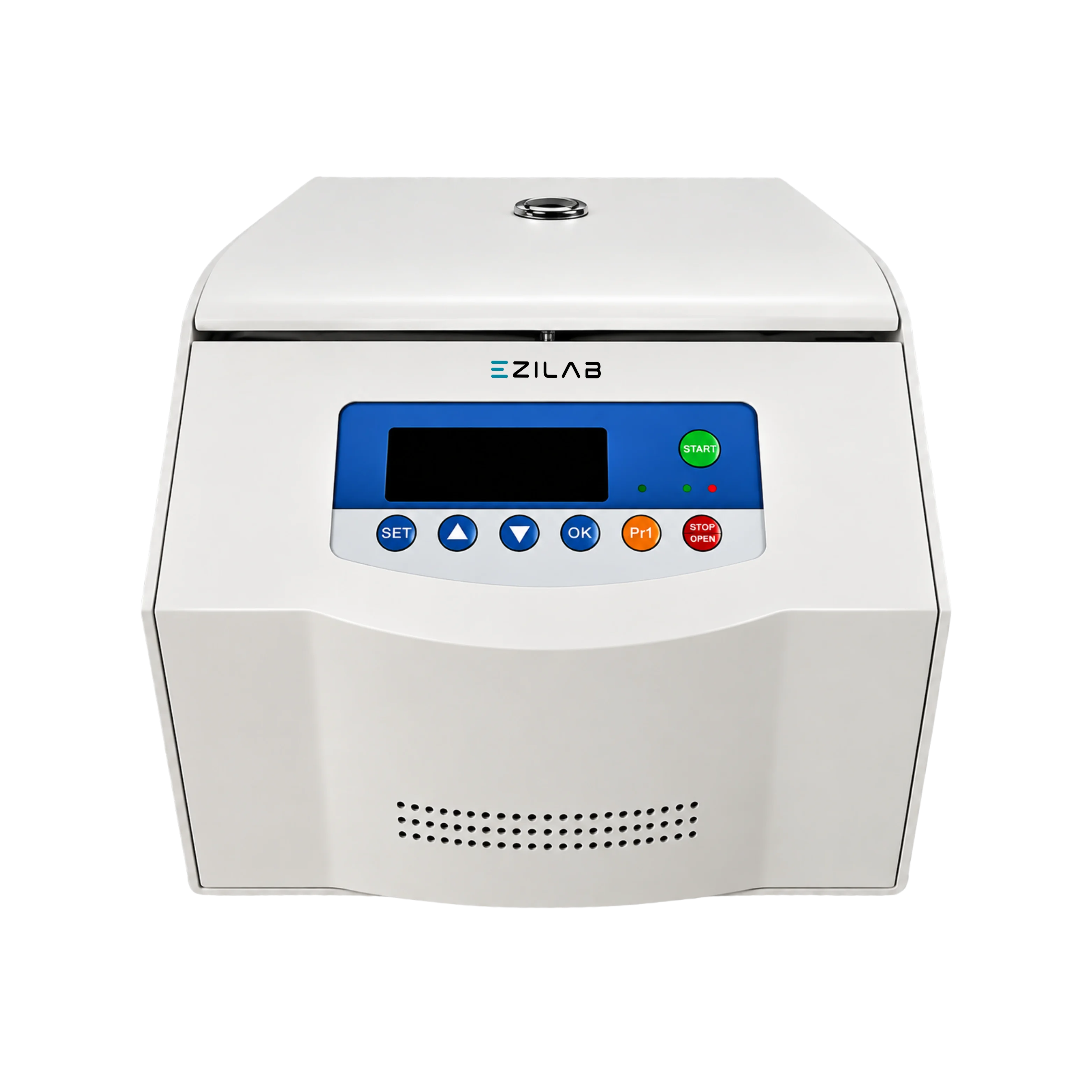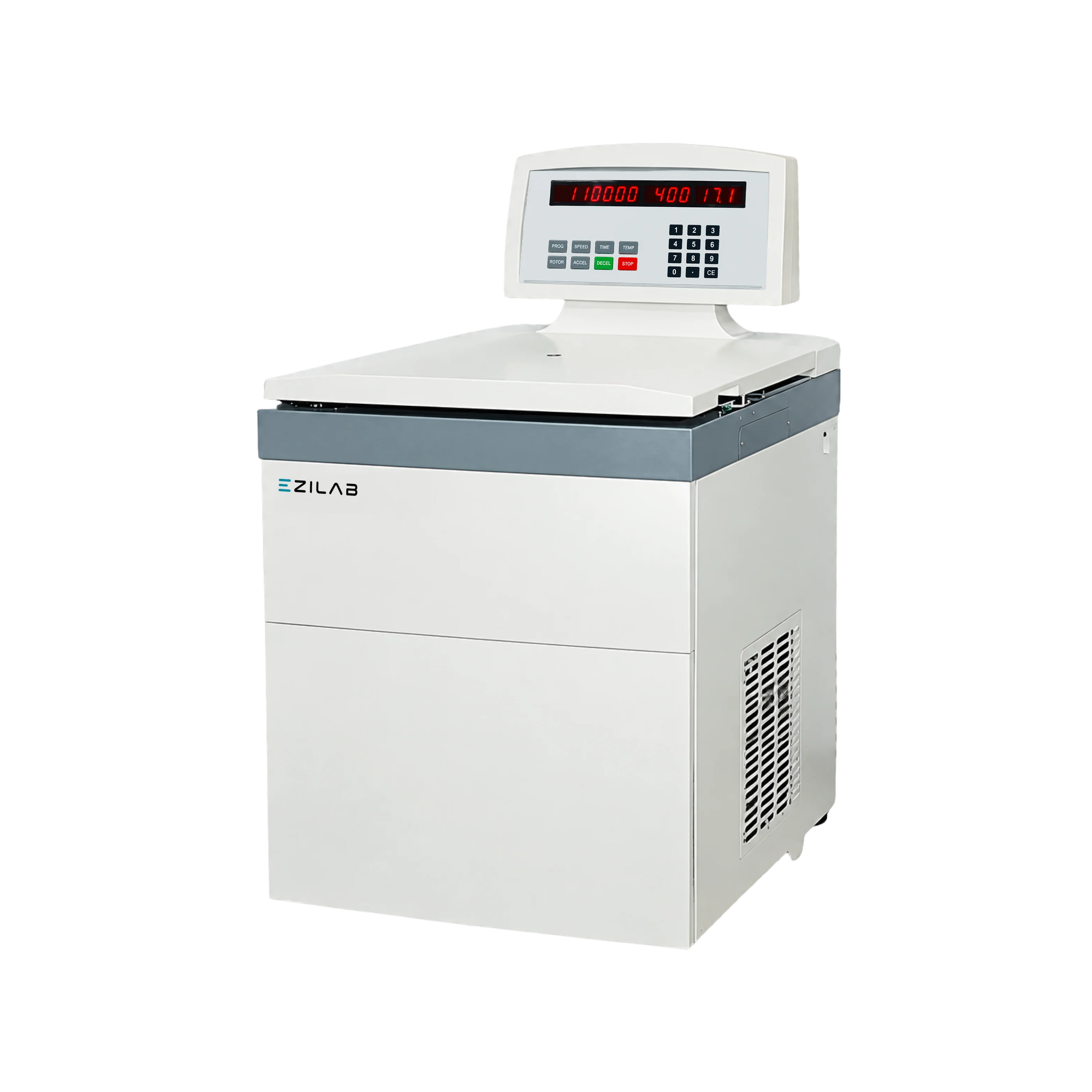
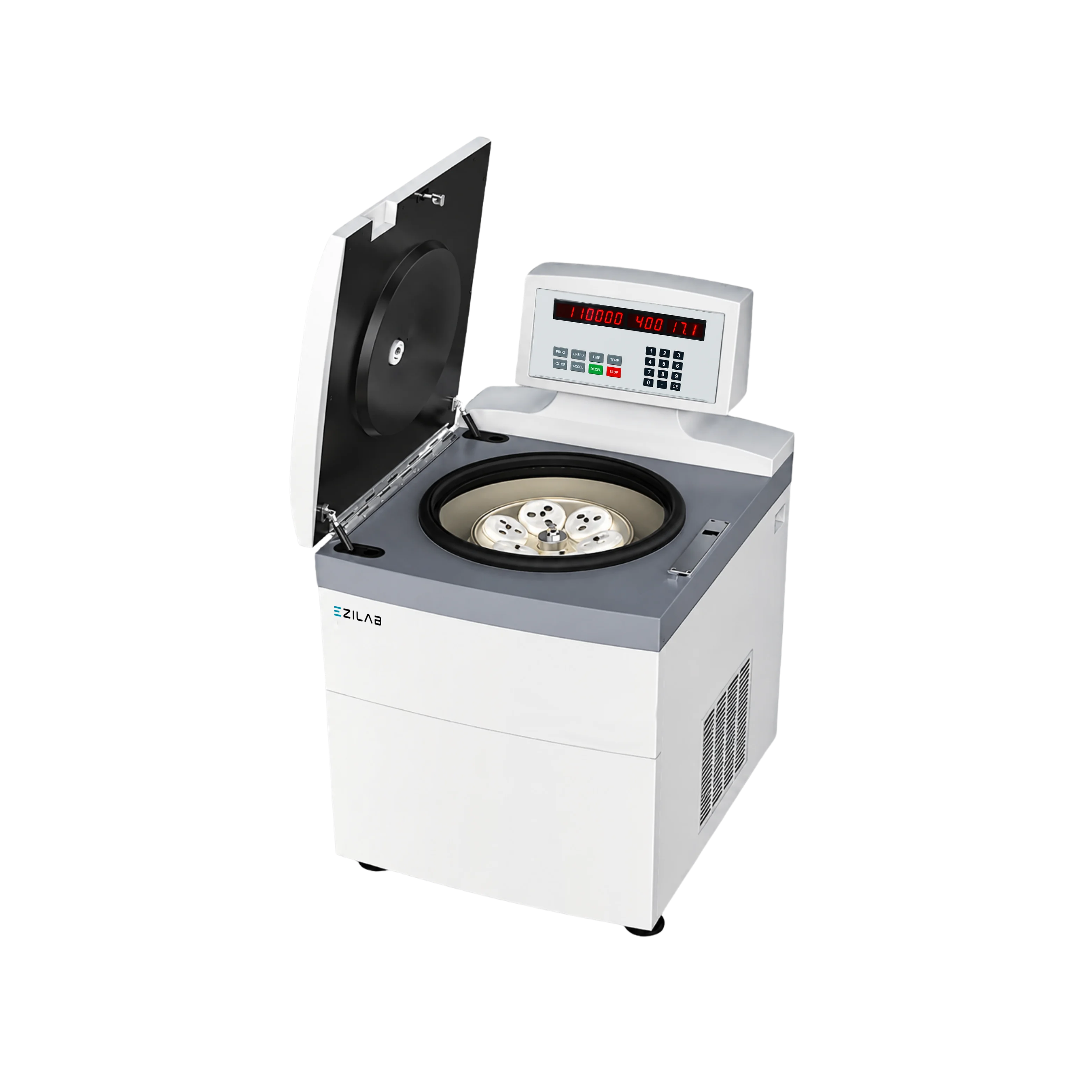
EziLab offers the High Speed Refrigerated Centrifuge EZL-HRC101, a floor standing bag centrifuge that develops 18,300 g RCF while refrigeration holds the chamber between -20 and 40 °C within ±2 °C. Rotors carry up to six 1,000 mL bottles, an AC brushless motor under microprocessor control holds speed to ±10 rpm, and the timer runs from 1 minute to 23 hours 59 minutes. Imbalance protection stops the drive on an uneven load, a door interlock keeps the lid shut until the rotor rests, and over-speed and over-temperature limits guard samples. Noise stays at or under 65 dB(A), and the 310 kg cabinet draws 5,500 W. Blood banks, plasma processing centers, transfusion services, clinical diagnostic laboratories, pharmaceutical research groups and biotechnology companies use this high speed refrigerated centrifuge for cold, large-volume work. Typical runs include blood component separation, plasma and platelet preparation, cell harvesting from culture, DNA and RNA pelleting from lysates and protein precipitate collection. Choose it over the 10,000 rpm sibling when a slightly higher g-force on liter bottles is required. Blood establishments validate each program; ask whether installation and operation qualification protocols come with the unit or must be written in-house. Laboratory Centrifuge is the wider category, and High Speed Refrigerated Centrifuge holds the chilled units to weigh against this one.
| Maximum Speed | 18300 × g |
|---|---|
| Maximum RCF | 6 × 1000 ml |
| Maximum Capacity | 1min to 23h59m |
| Timer Range | ±10 rpm |
| Speed Accuracy | -20°C to 40°C |
| Temperature Range | ±2°C |
| Temperature Accuracy | ≤65dB (A) |
| Noise Level | 5500 W |
| Power Consumption | 820 × 710 × 1200 mm |
| Dimensions (L × W × H) | 310 kg |
Imbalance protection
Includes a door interlock
Microprocessor controlled
Uses an AC- brush less motor
Protections for over speed and over-temperature
| • | Splits donated blood into its components for blood banks and plasma processing centers, loading up to six 1,000 mL bottles at forces reaching 18,300 × g. |
| • | Prepares plasma and platelets for transfusion services, with the chamber set between -20 °C and 40 °C and held within ±2 °C. |
| • | Harvests cells for biotech companies, running timers as long as 23 h 59 min for extended spins. |
| • | Pellets DNA and RNA from lysates for clinical diagnostic labs, with imbalance protection stopping the drive when a load sits unevenly. |
| • | Collects protein precipitates for pharmaceutical research groups, with the door interlock holding the lid shut until the rotor stops and over-speed and over-temperature protection active. |