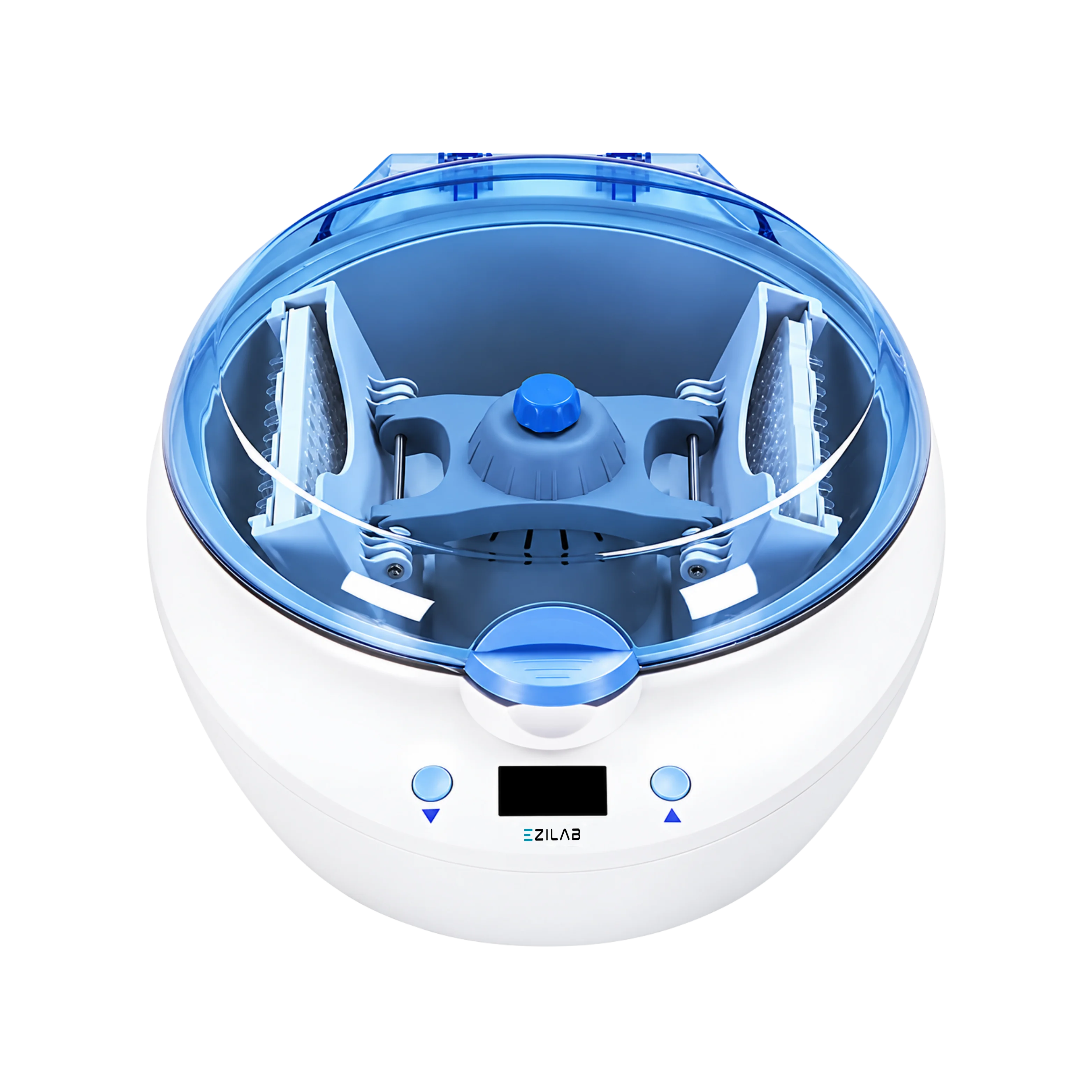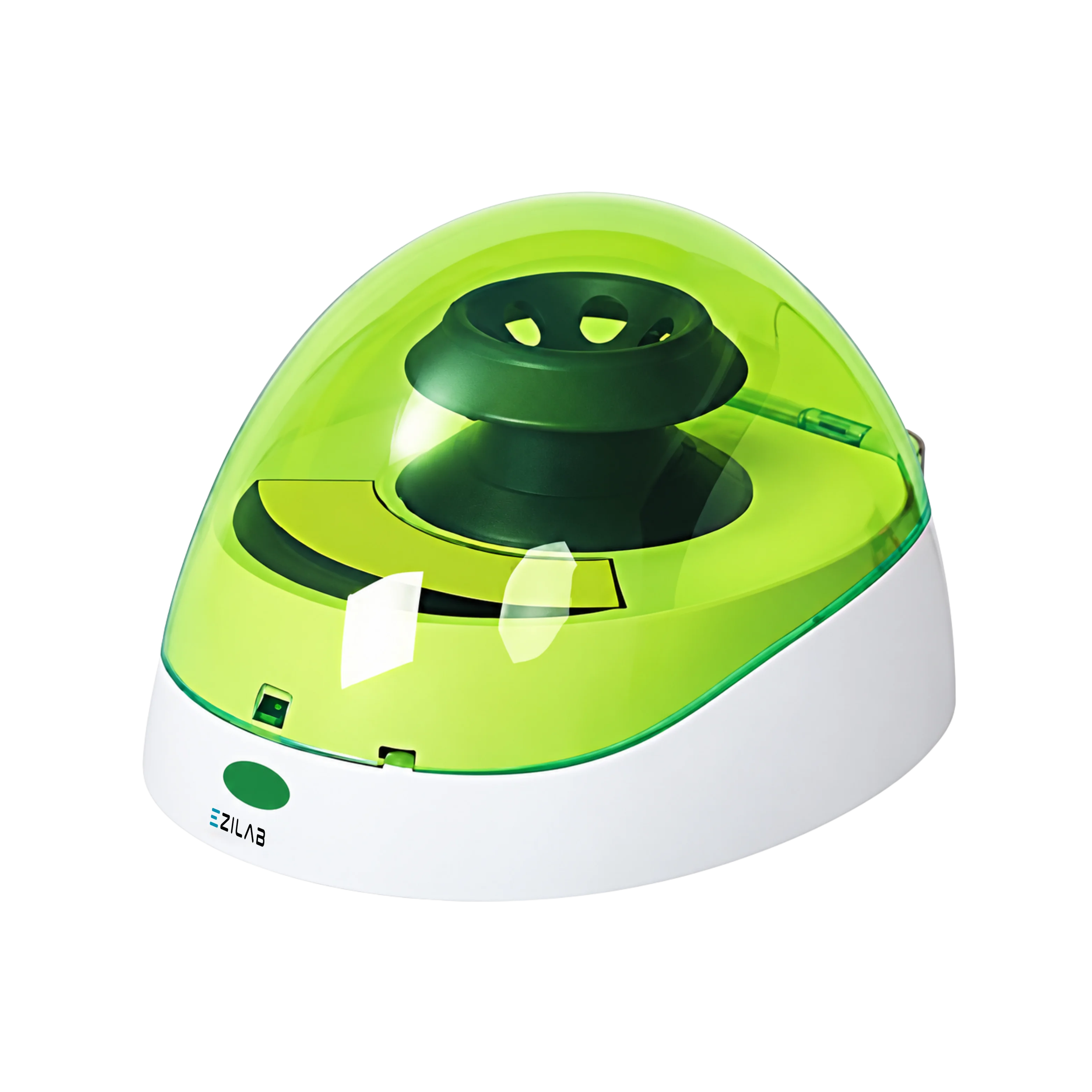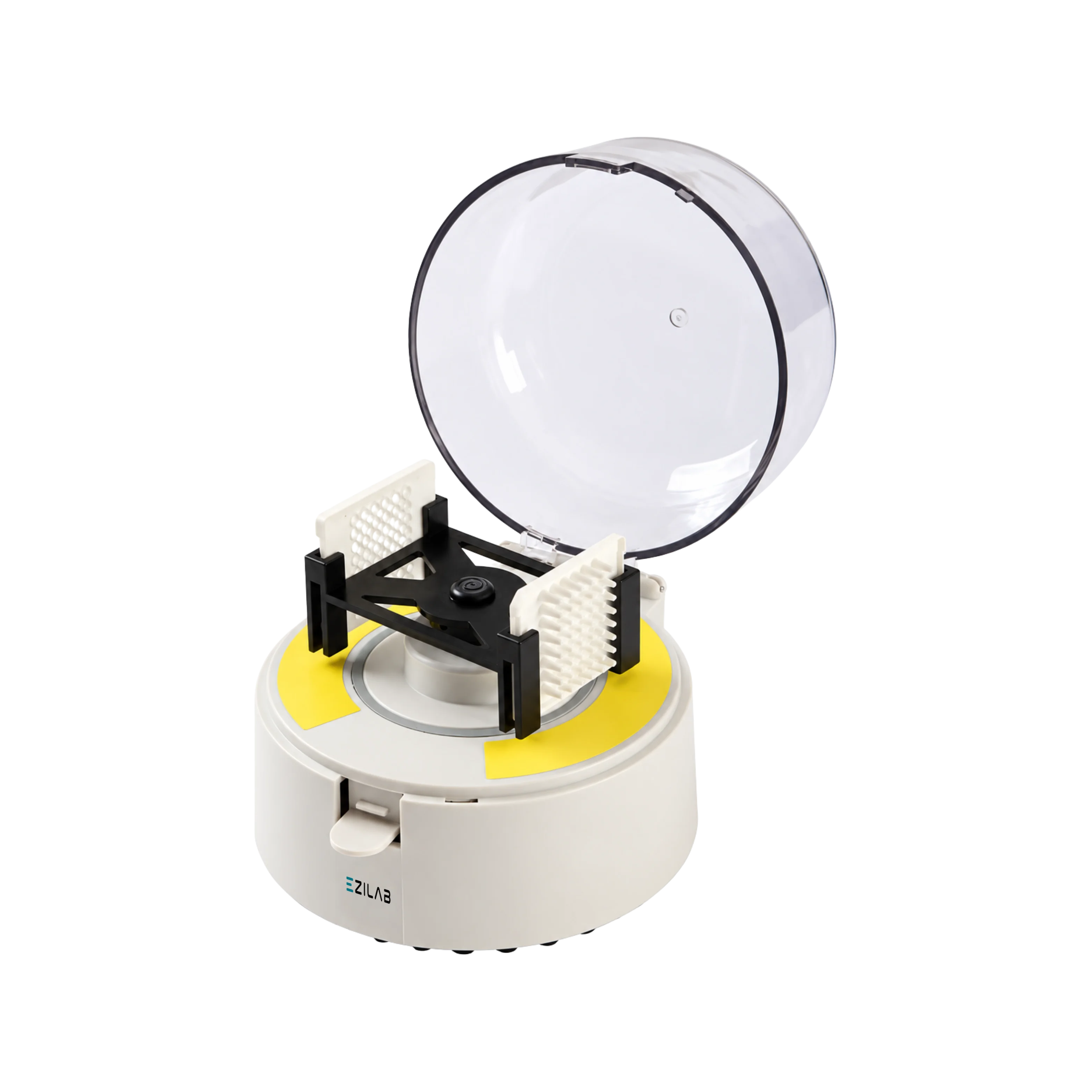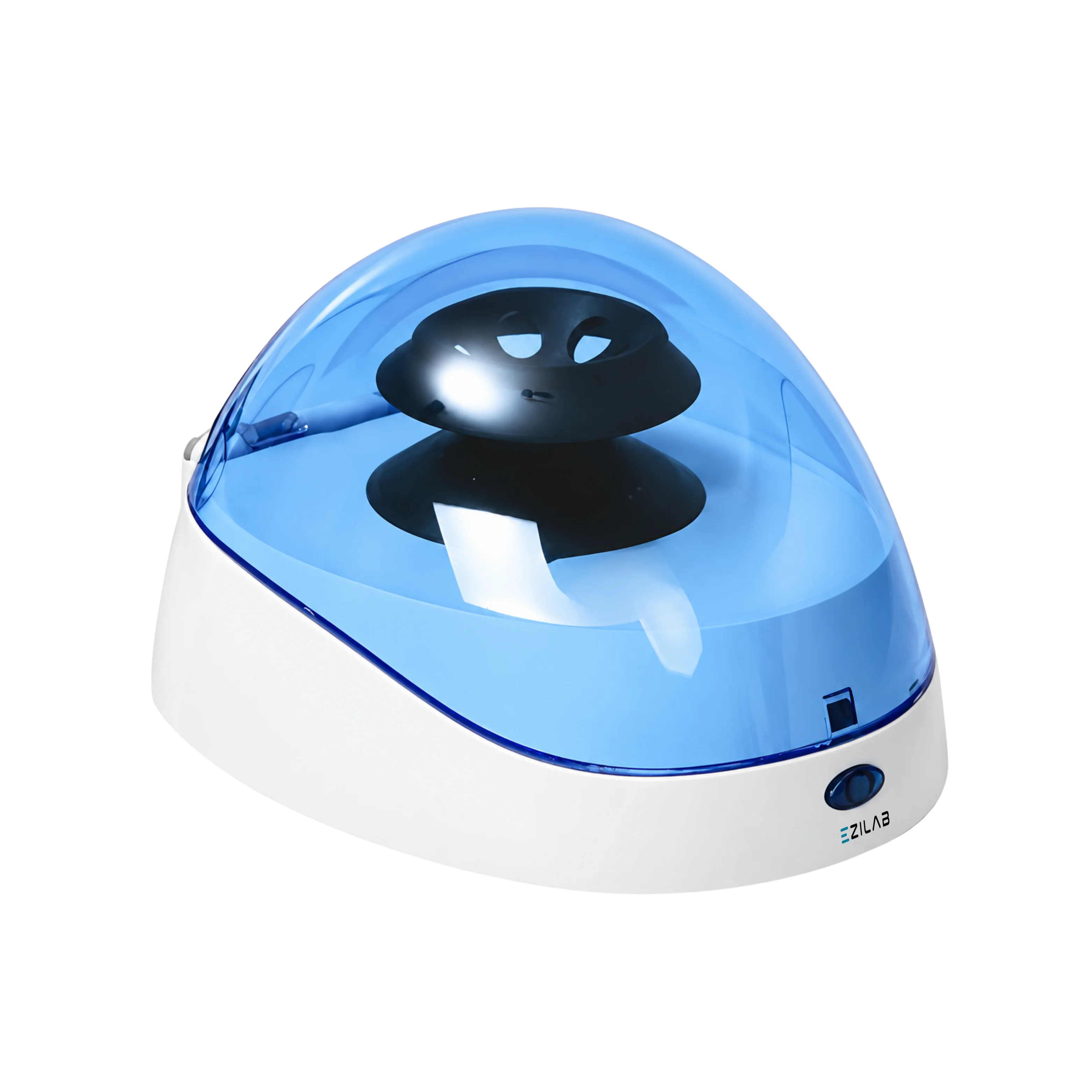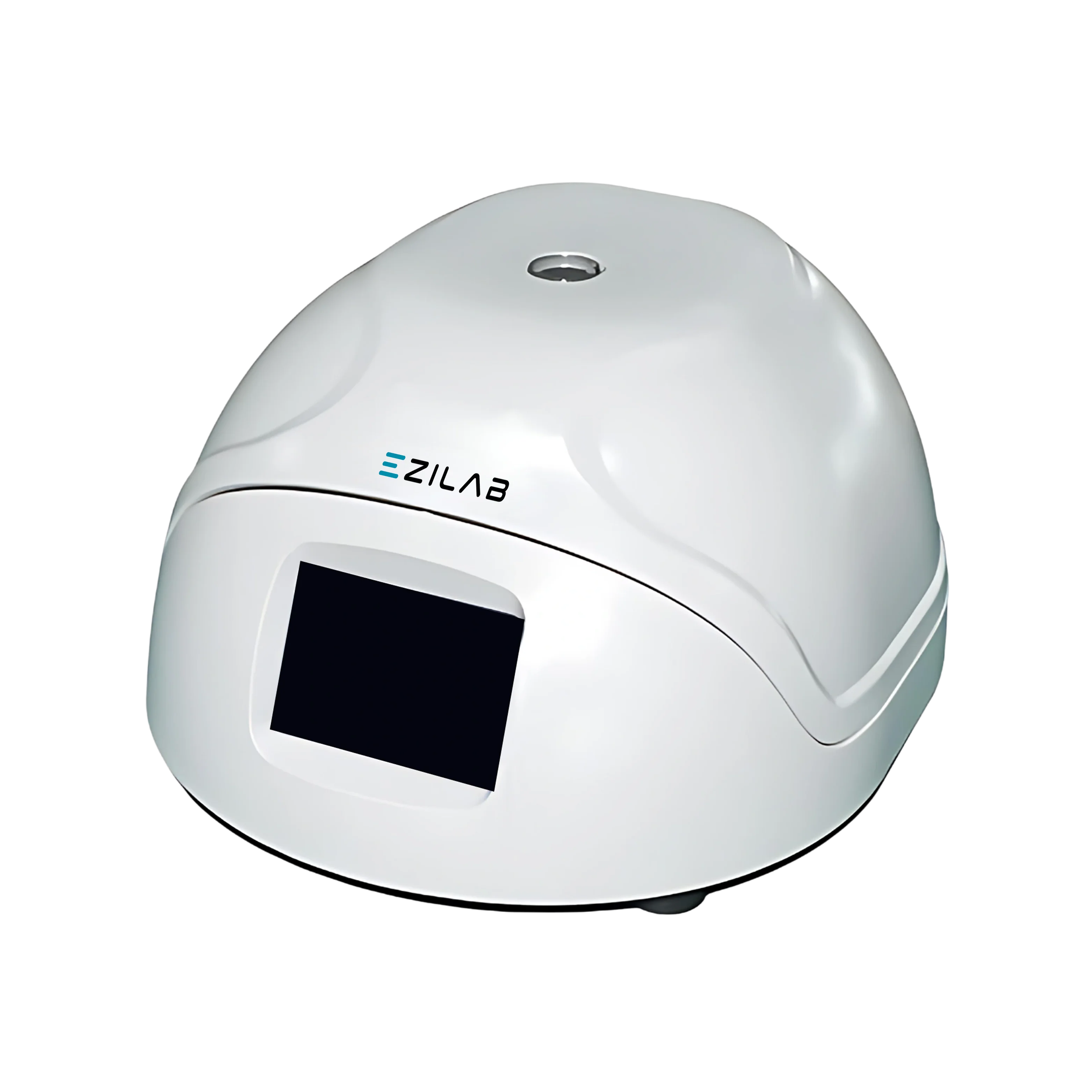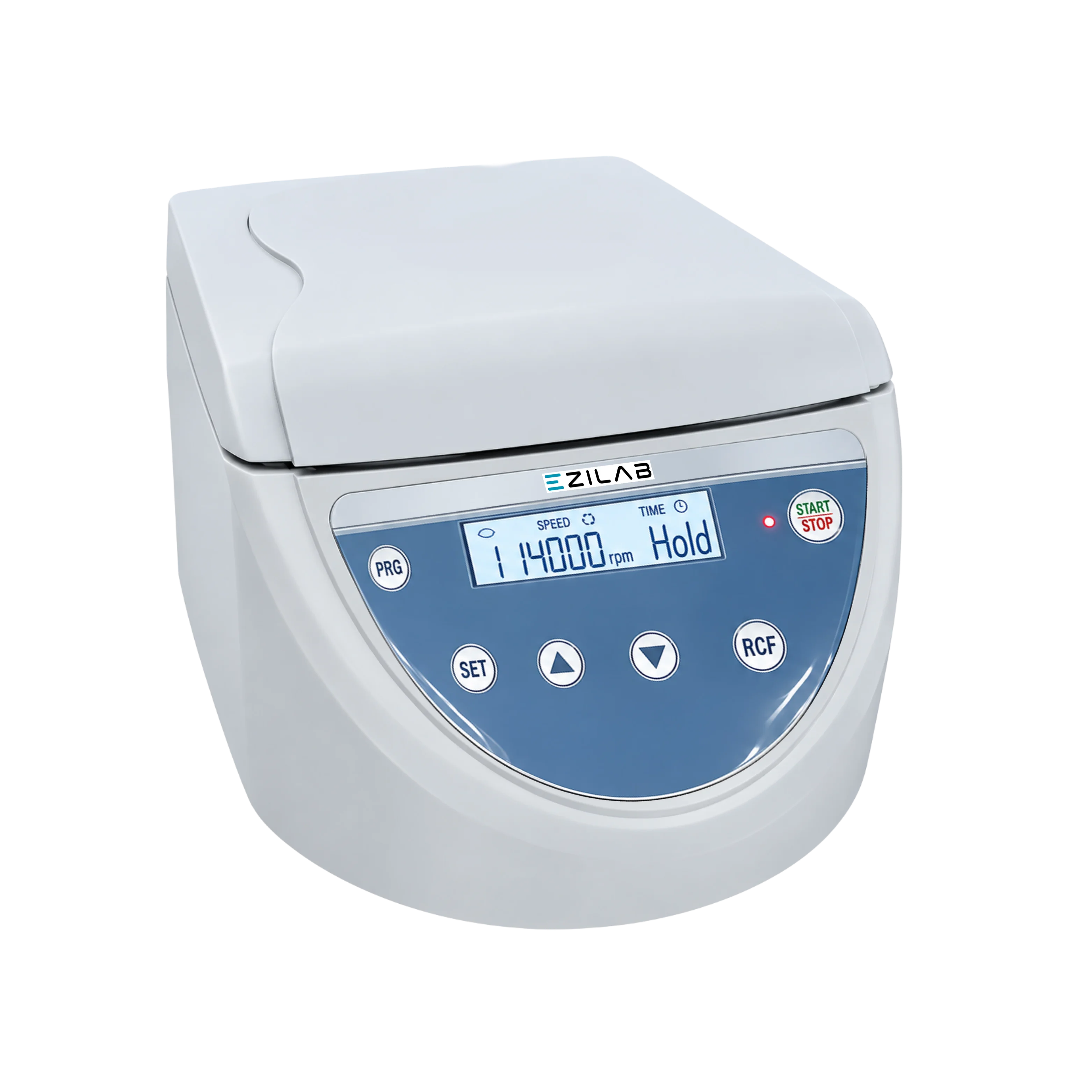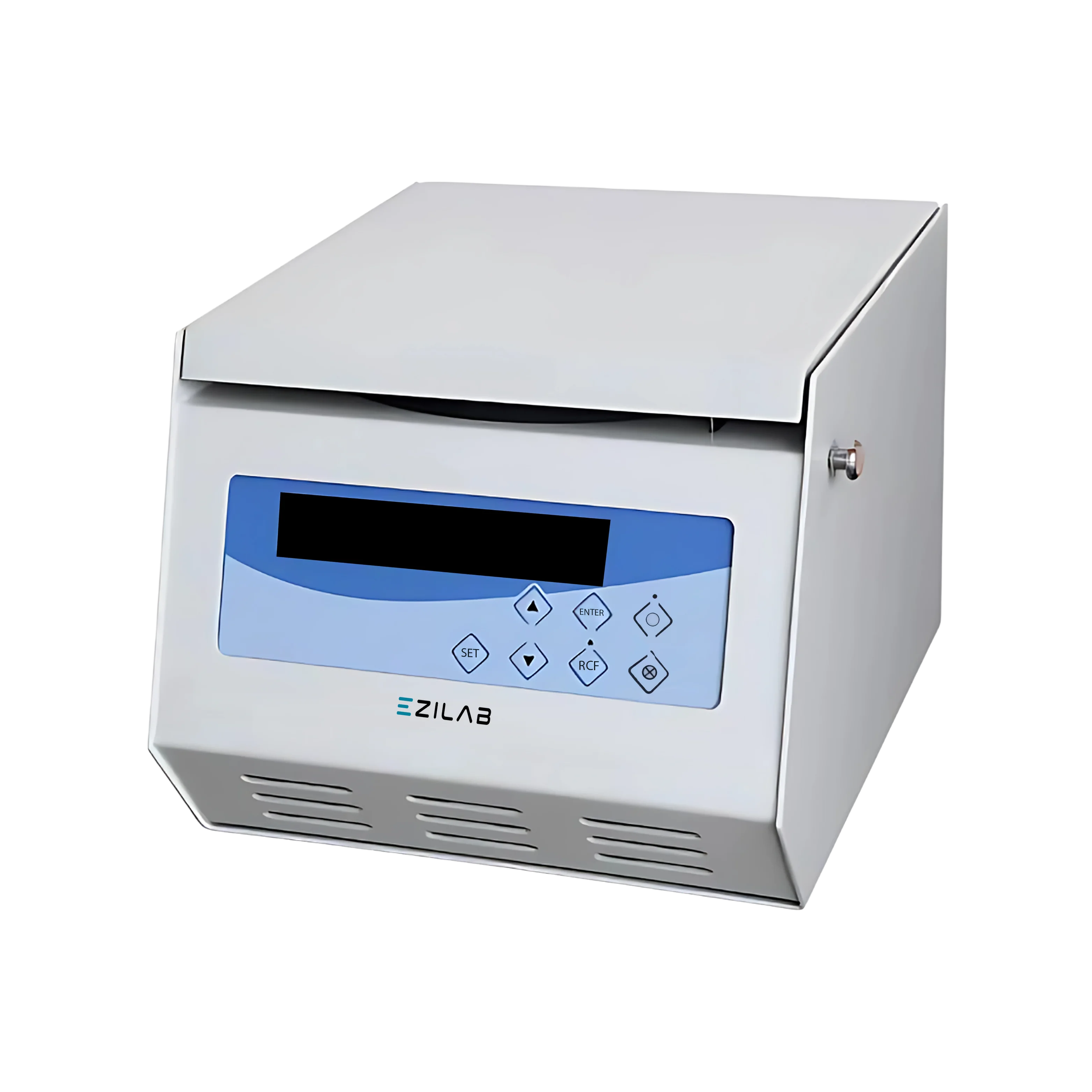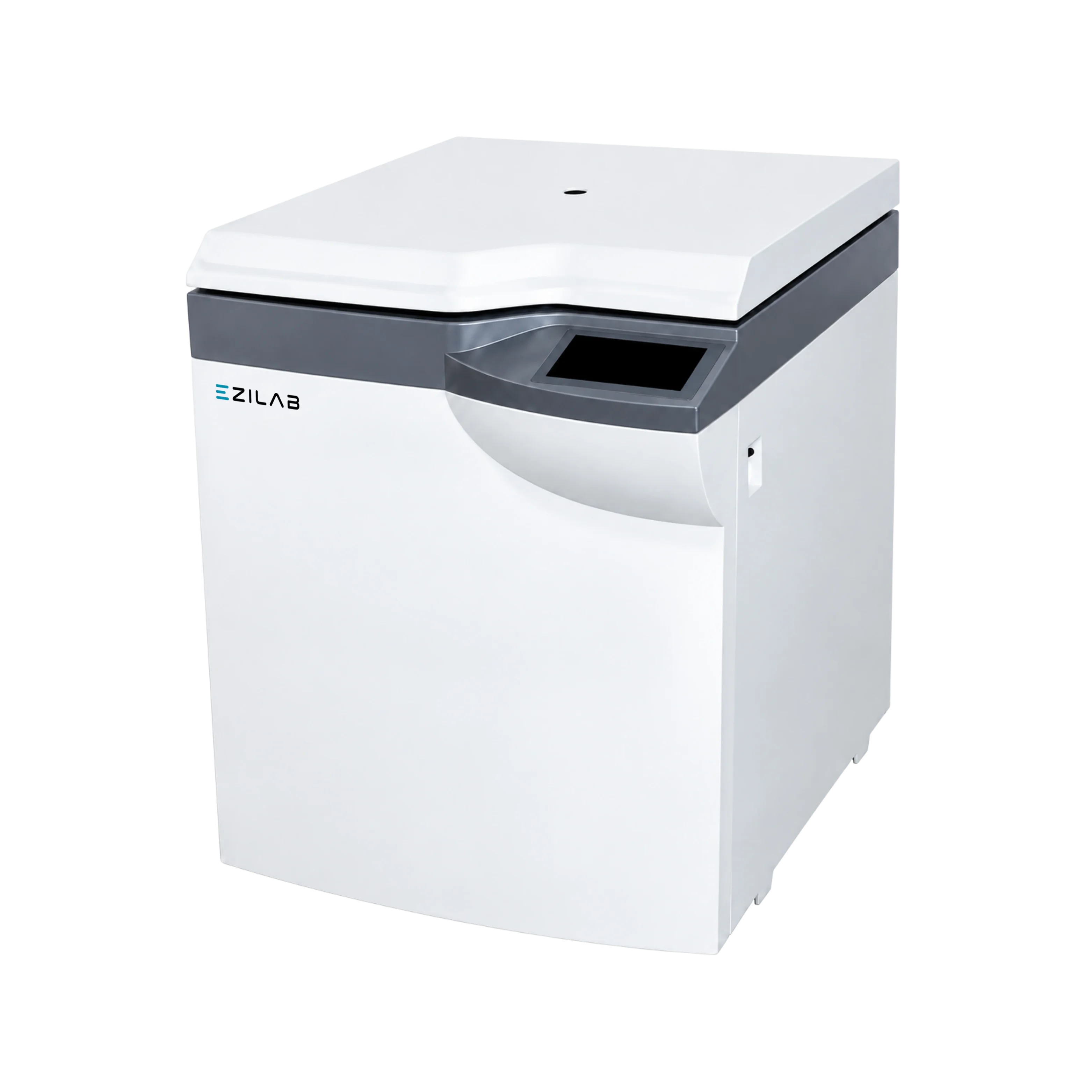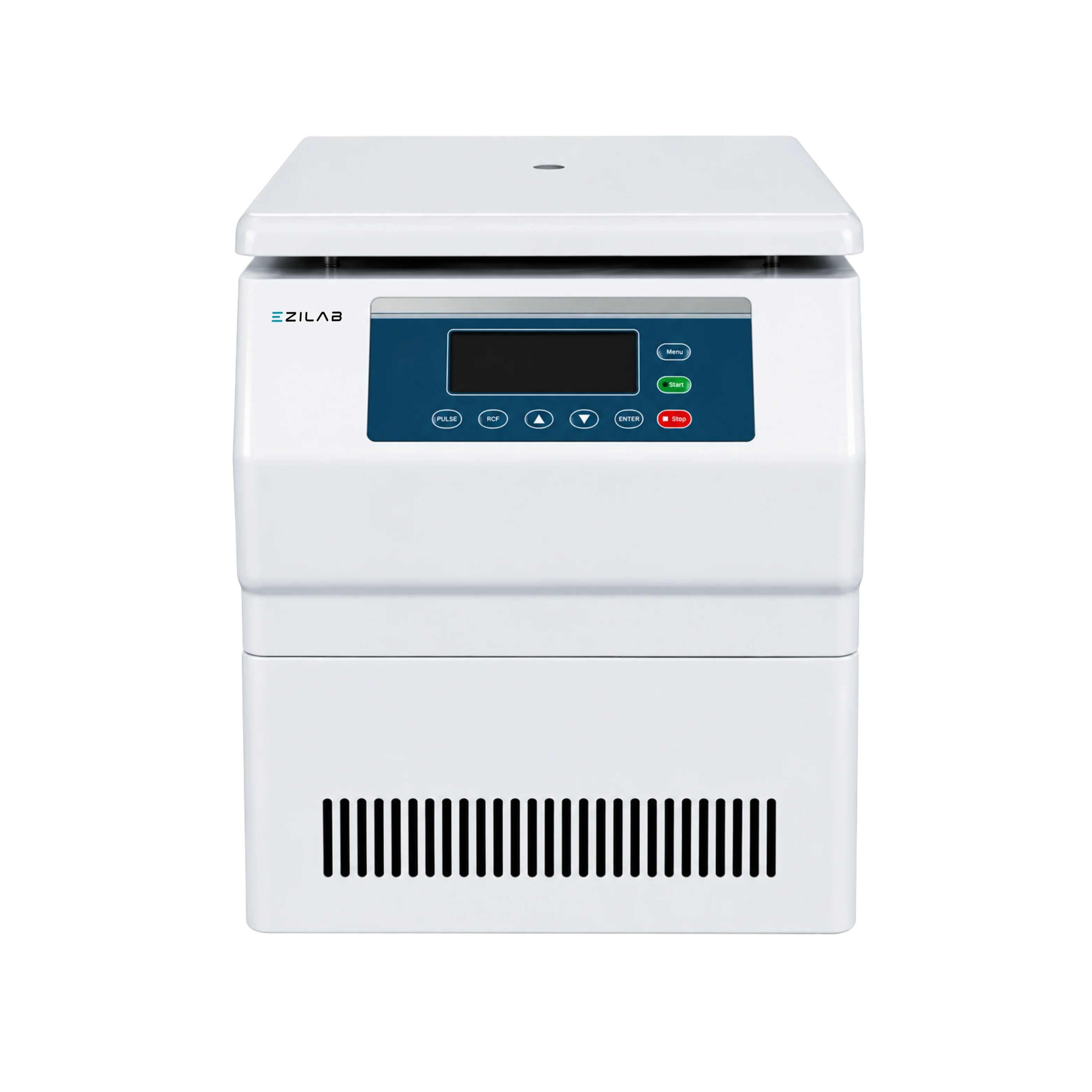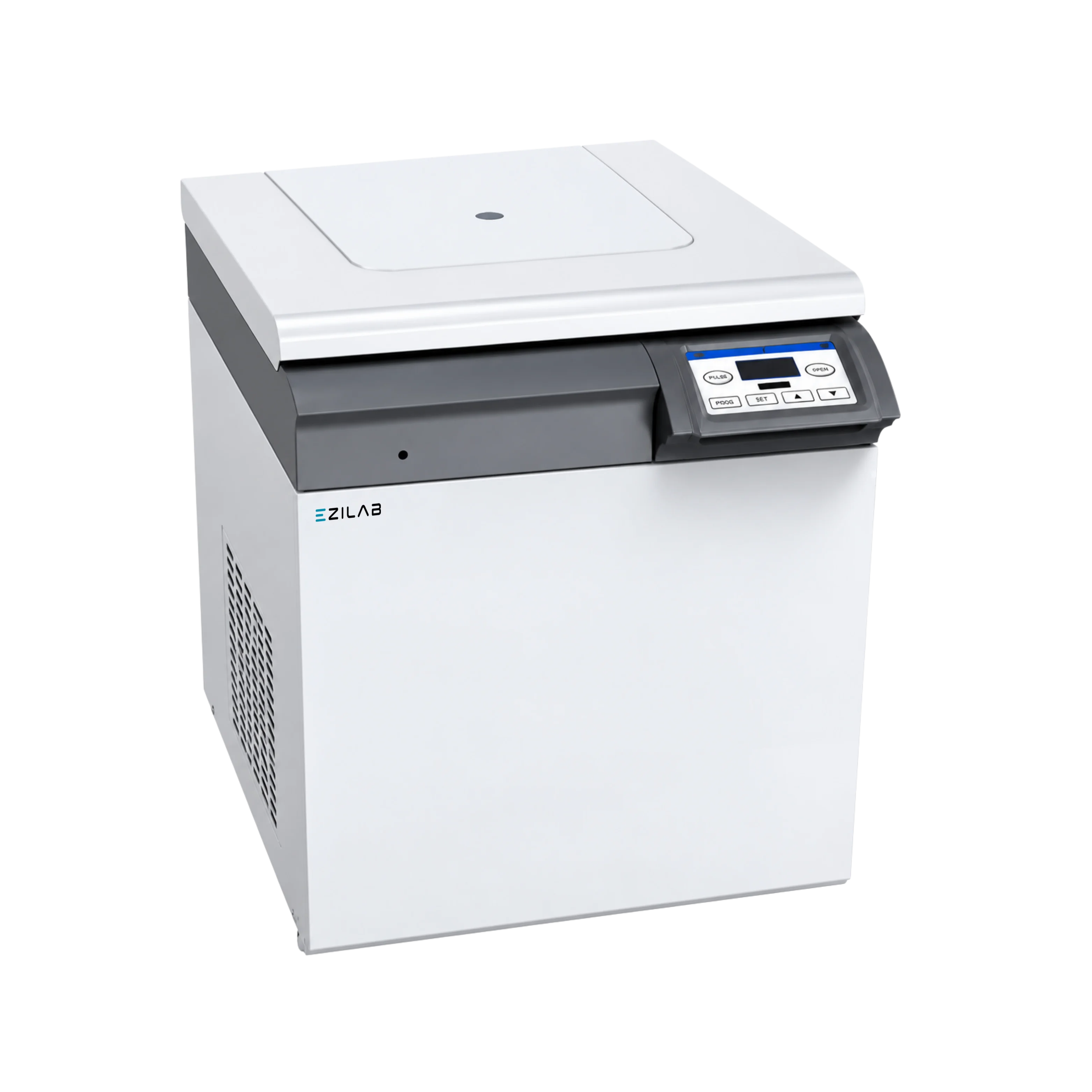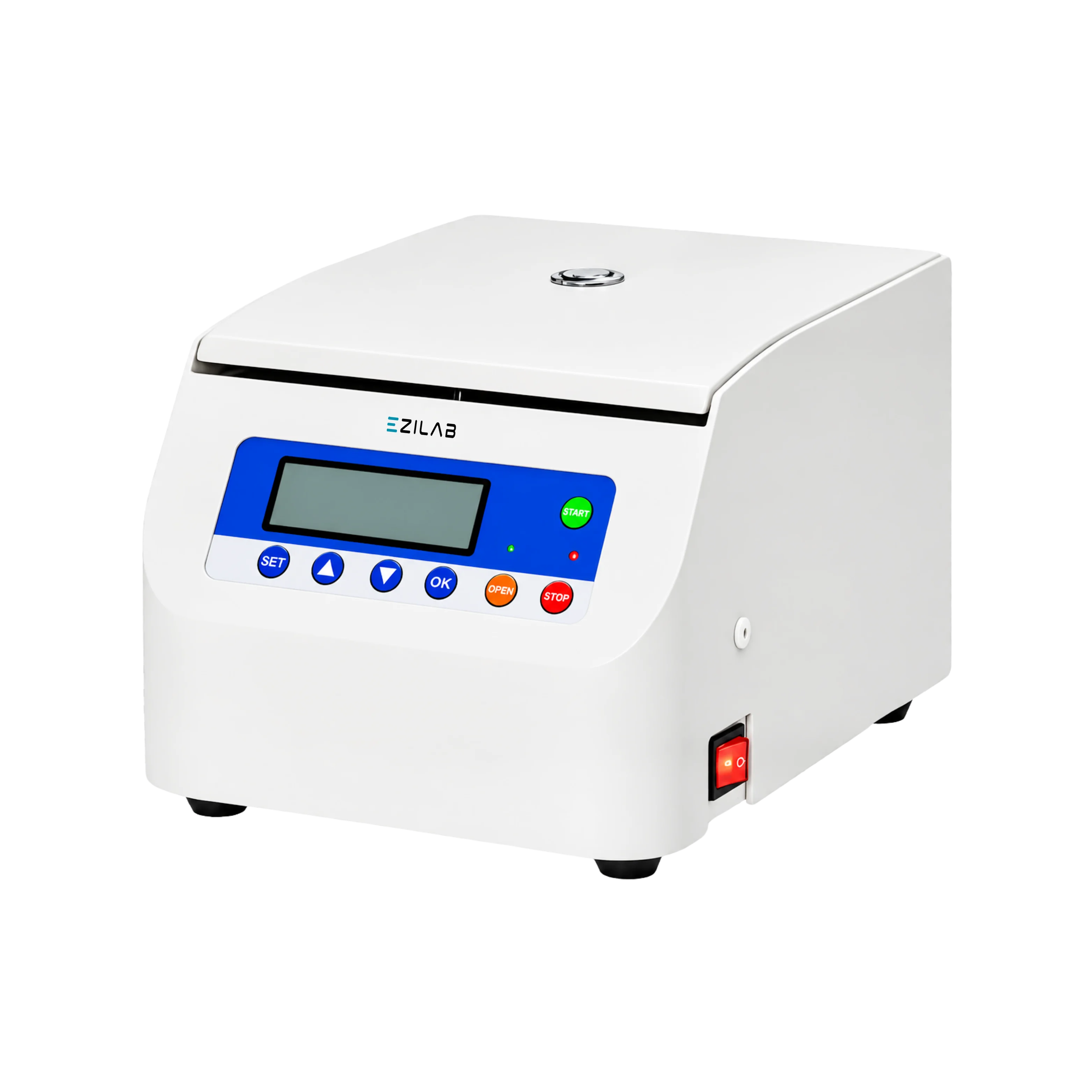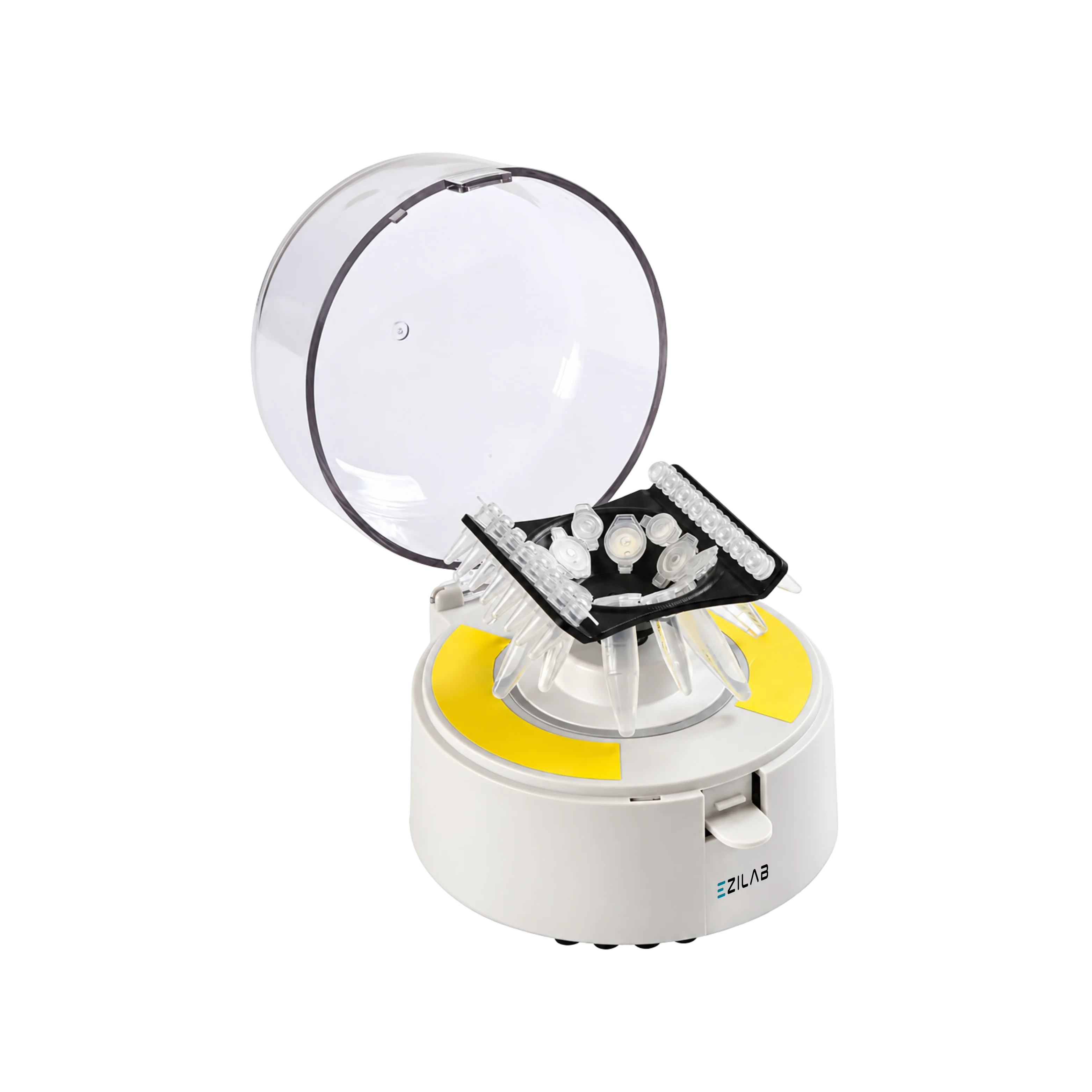
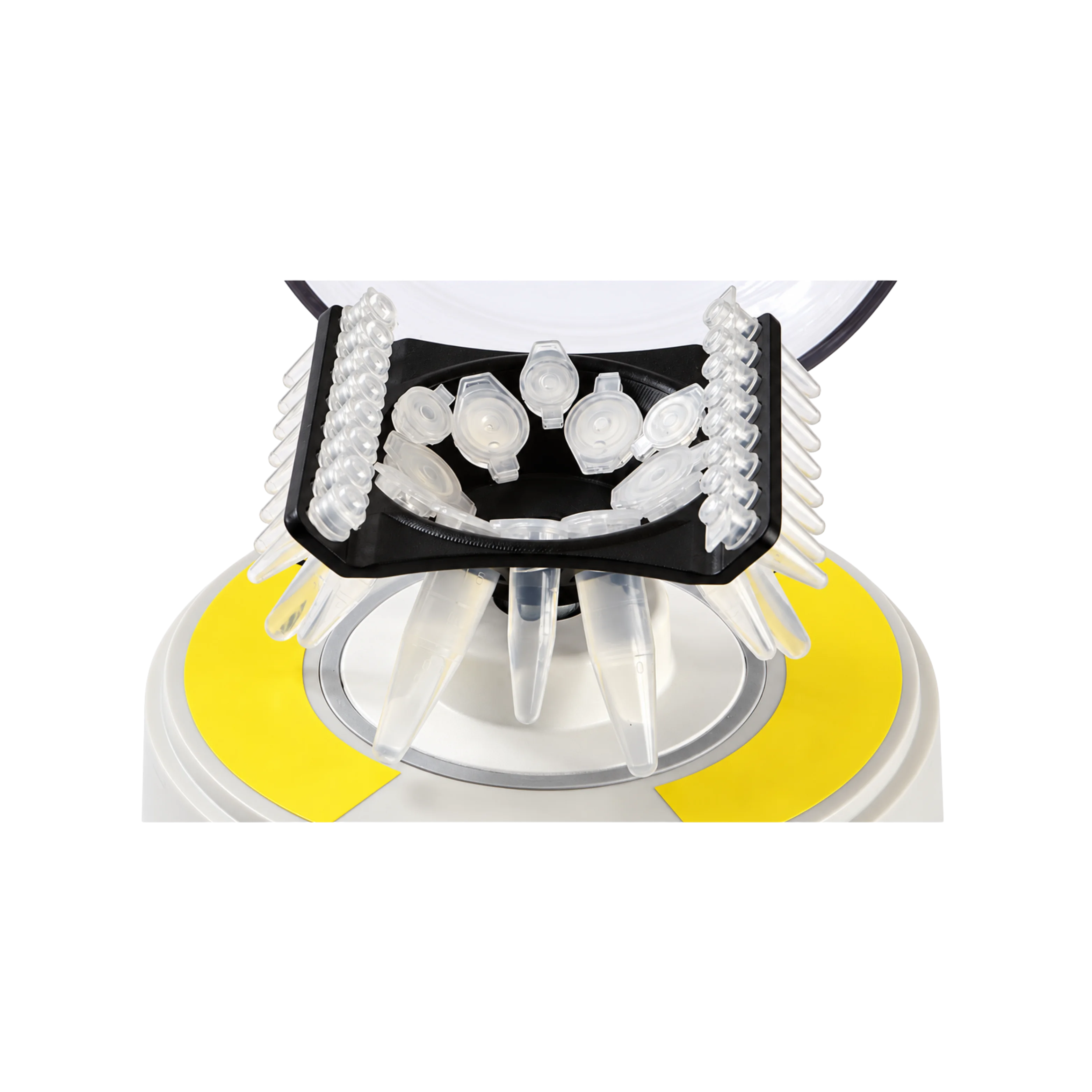
EziLab offers the Mini Centrifuge EZL-MC111, a benchtop personal microcentrifuge that spins eight 1.5 or 2.0 mL tubes or four PCR strips at the touch of a button. Two preset speeds deliver 1,200 g at 4,000 rpm and 2,000 g at 6,000 rpm, the timer covers 20 seconds to 99 minutes, and a brushless DC motor needs no maintenance. The tube rotor and strip rotor click on and off without tools, an electric lid lock releases automatically at the end of each run, and self-diagnosis recalls the last settings. Weighing about 2 kg in a rugged shell with a small footprint, it belongs beside each bench. Molecular biology labs, forensic DNA units, soil and environmental testing stations, clinical research groups, biotechnology start-ups and university practical classes use this mini centrifuge for quick spin-downs. Typical jobs include pulling droplets off tube walls before PCR, pelleting cell debris after lysis, settling bead suspensions, separating phases in small extractions and spinning strip tubes after thermal cycling. Choose it over the plate-rotor sibling when microtubes, not plates, are the daily format. At 2,000 g this is a spin-down tool, not a pelleting tool: column-based DNA kits typically call for around 10,000 g or more, which keeps a full-speed microcentrifuge on the shopping list. Laboratory Centrifuge holds the full-speed models, and Mini Centrifuge pages the personal ones.
| Capacity |
8×1.5/2.0 ml Tube rotor 4 place PCR strip rotor |
|---|---|
| Dual Speed Options | 4000 rpm & 6000 rpm |
| Maximum RCF |
1200×g (4000 rpm) 2000×g (6000 rpm) |
| Timer | 20 sec to 99 min |
| Packing Dimension (W×D×H) | 230×180×160 mm |
| Gross Weight | 2 Kg |
Easy programming to achieve high accuracy of speed control
Easy operation and intuitive menu and easy to read display
Maintenance free brushless DC motor
Click-on design or effortless interchangeable rotor
Compact, rugged design
Automatic self-diagnosis on startup showing accumulative running time and last running parameters
Lid with electric lock and automatic release function saves processing time and prevents sample over heating
Small foot print for efficient use of lab space
Quick release rotor exchange
| • | Pulls droplets down before PCR in molecular biology labs, with a 4-place PCR strip rotor. |
| • | Settles debris after lysis in forensic DNA labs, at 4,000 rpm (1,200 × g) or 6,000 rpm (2,000 × g). |
| • | Settles bead suspensions in clinical research labs, holding eight 1.5 or 2.0 mL tubes per spin. |
| • | Separates phases in small extractions in biotechnology labs, with a timer from 20 seconds to 99 minutes. |
| • | Supports soil analysis and environmental studies, with click-on rotor swapping and an electric lid lock that releases at the end of a run. |