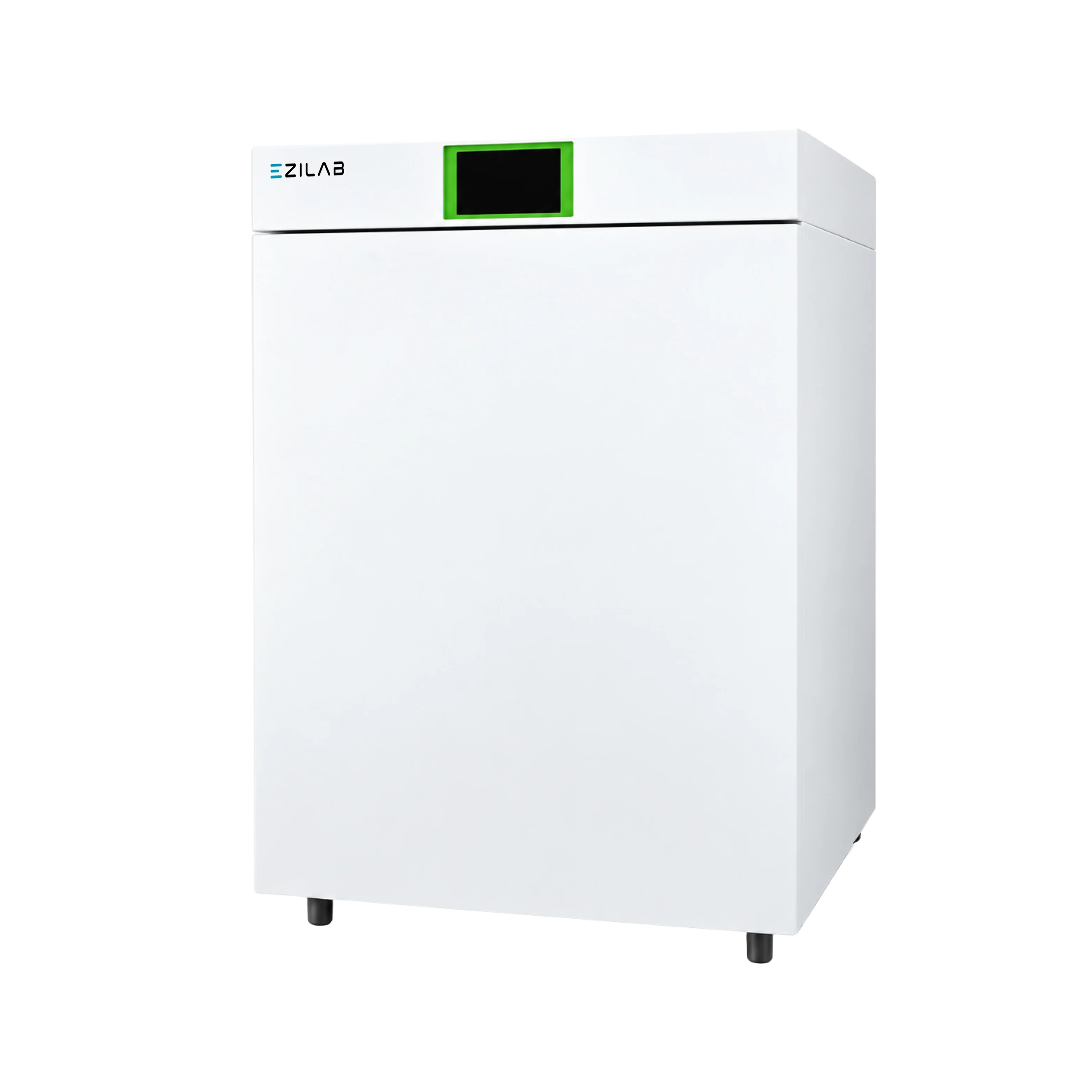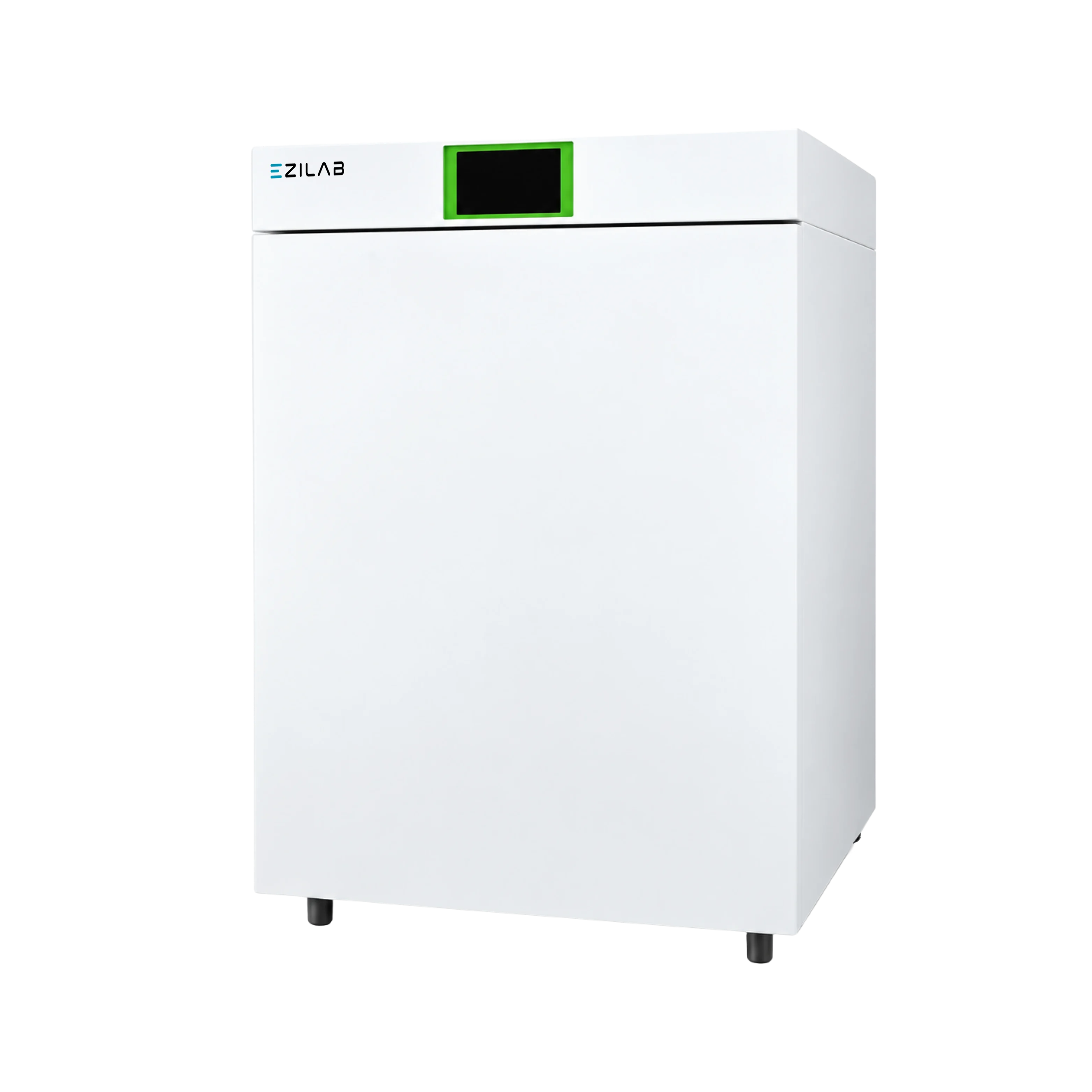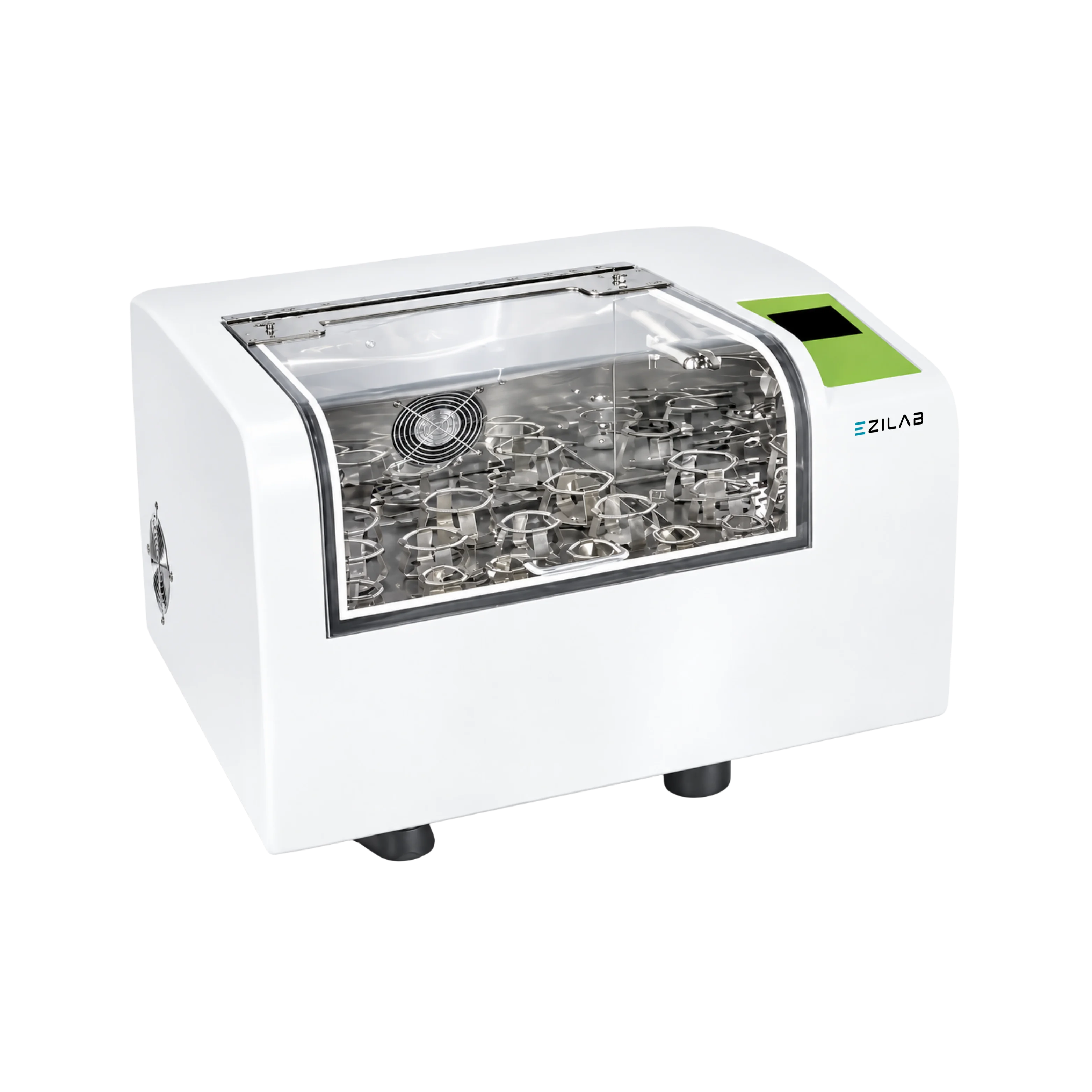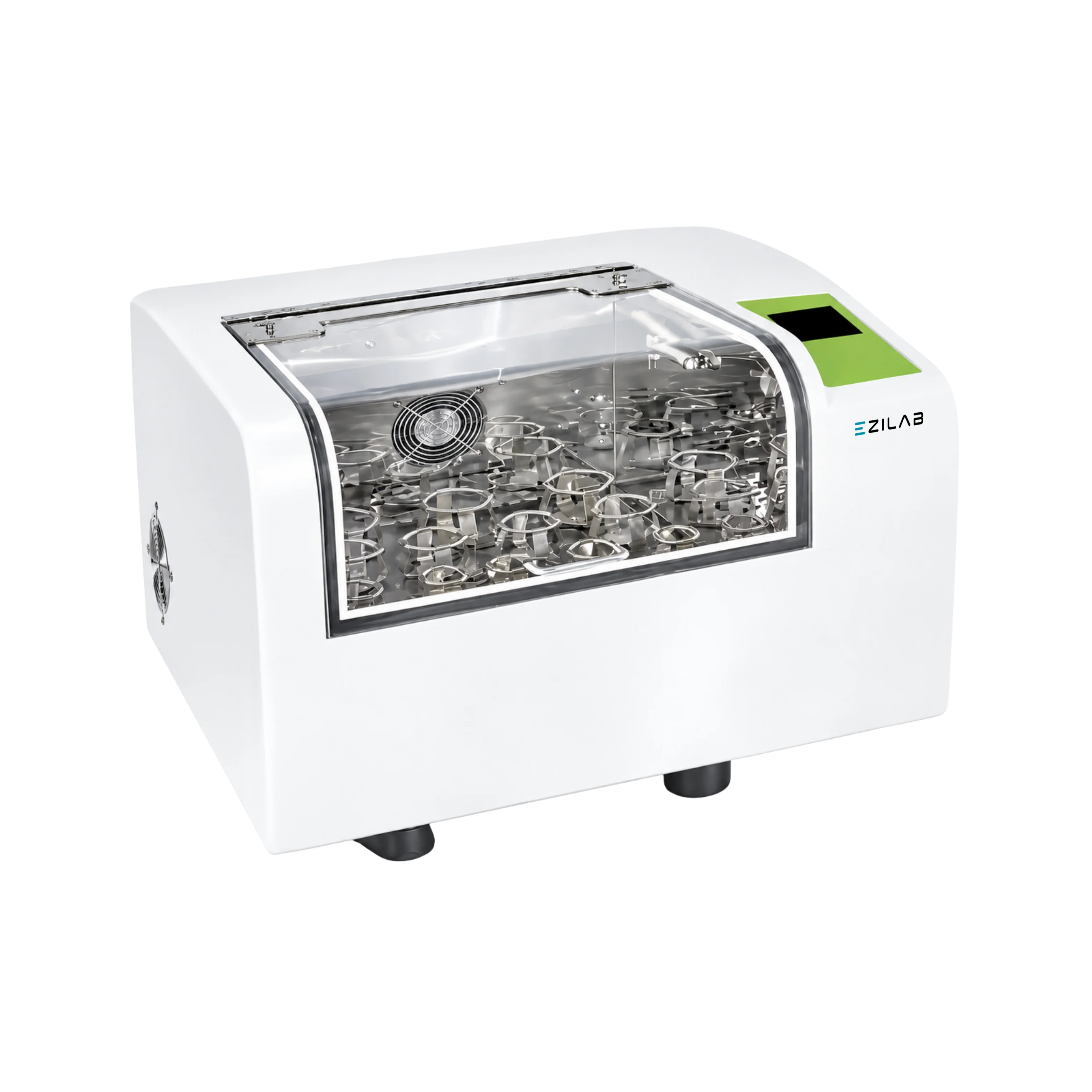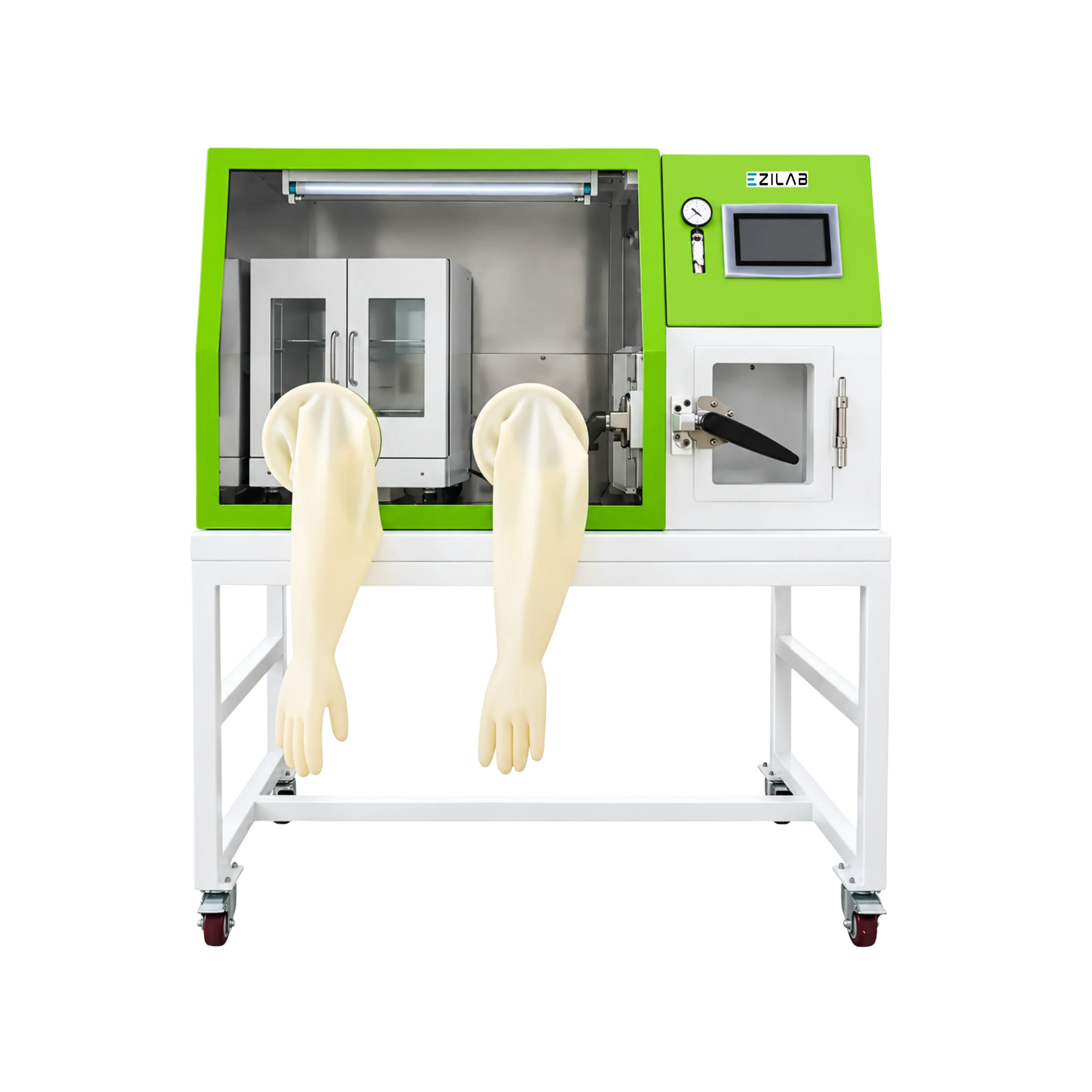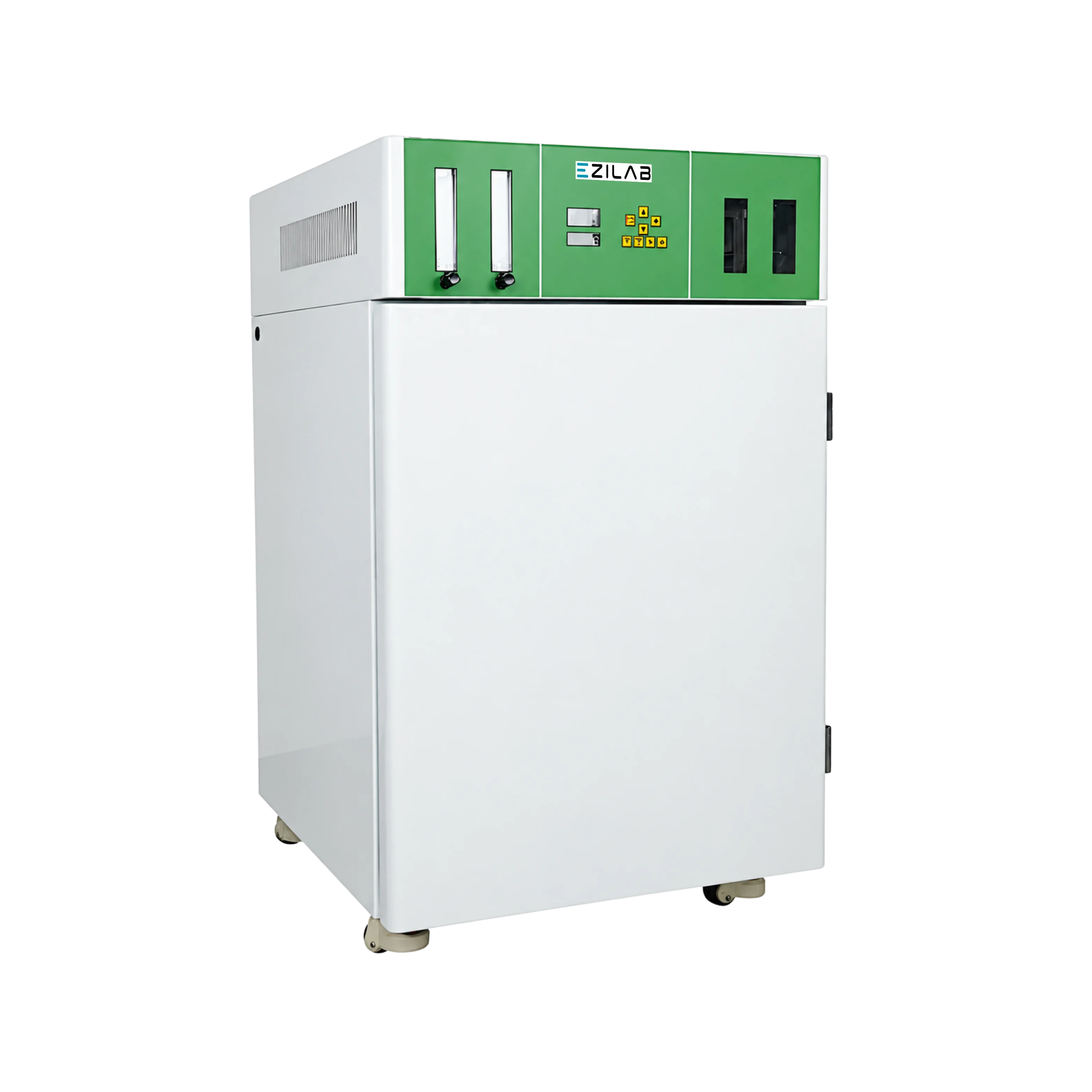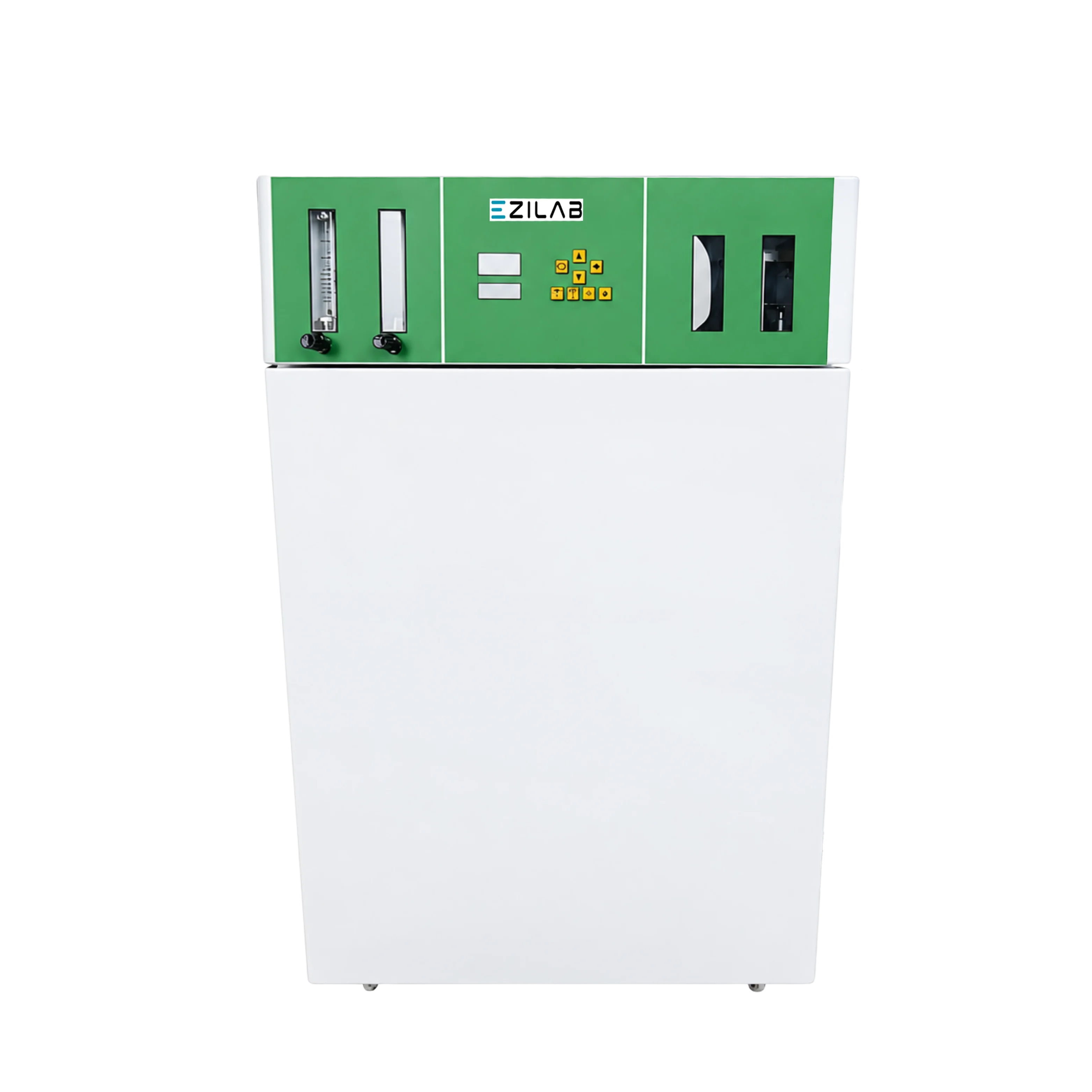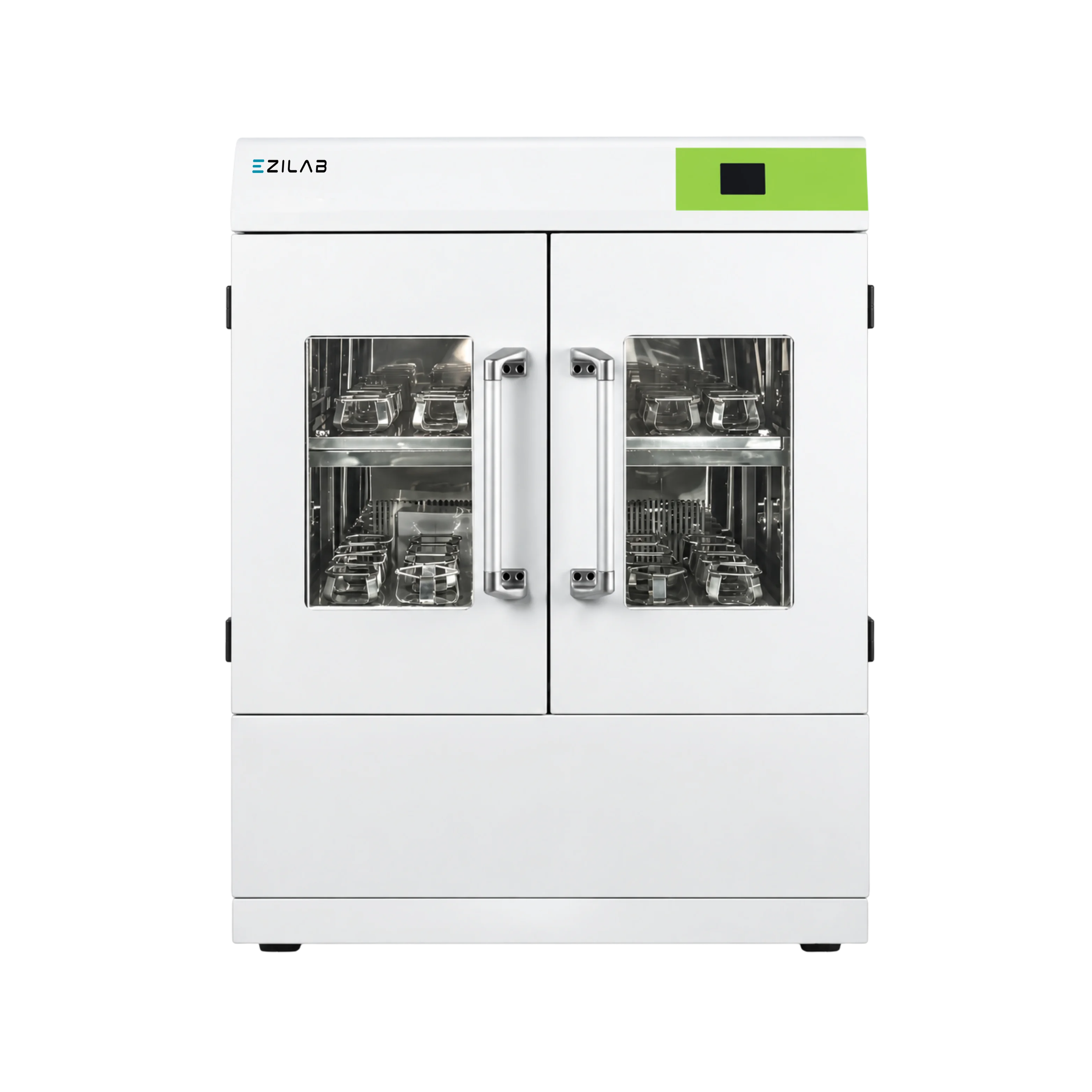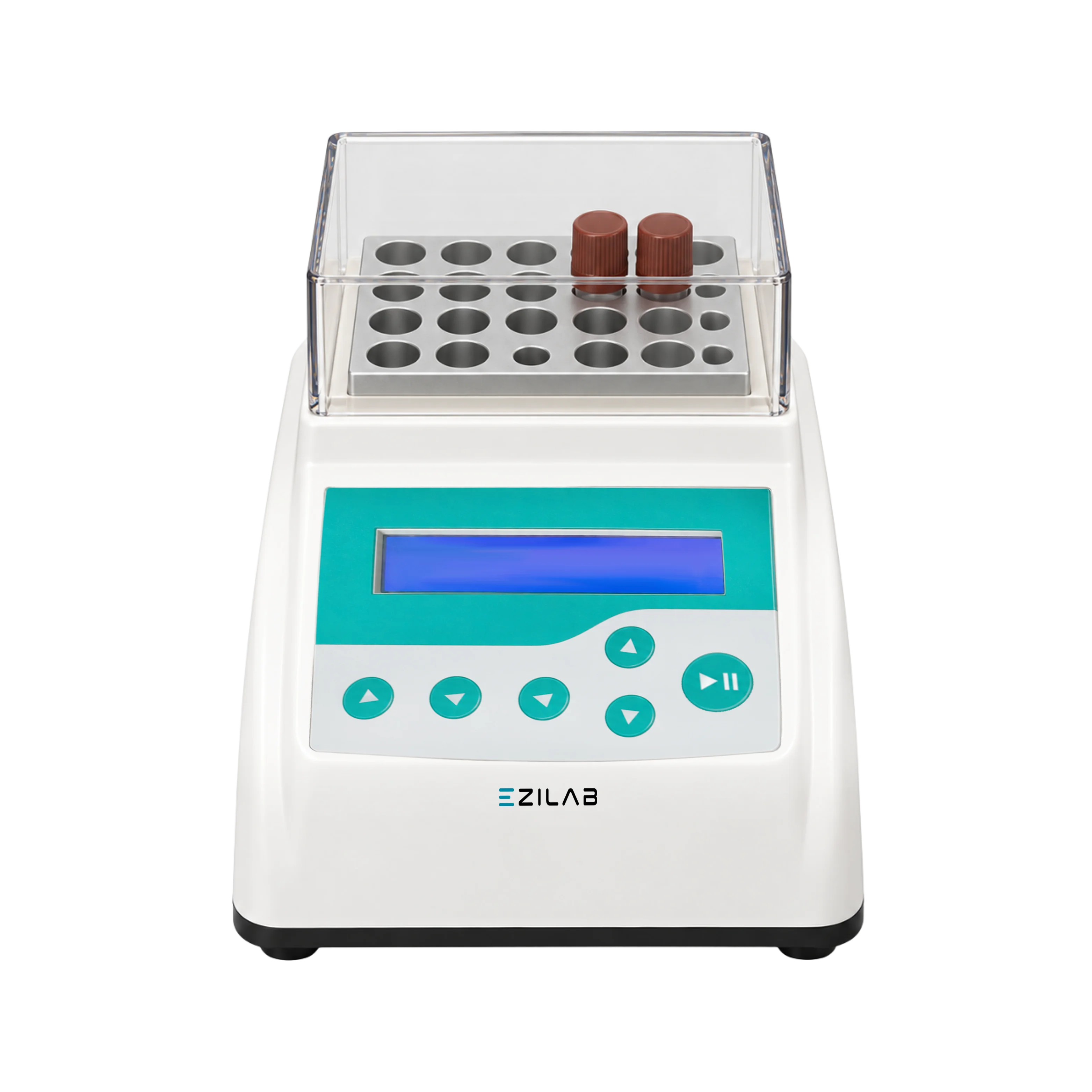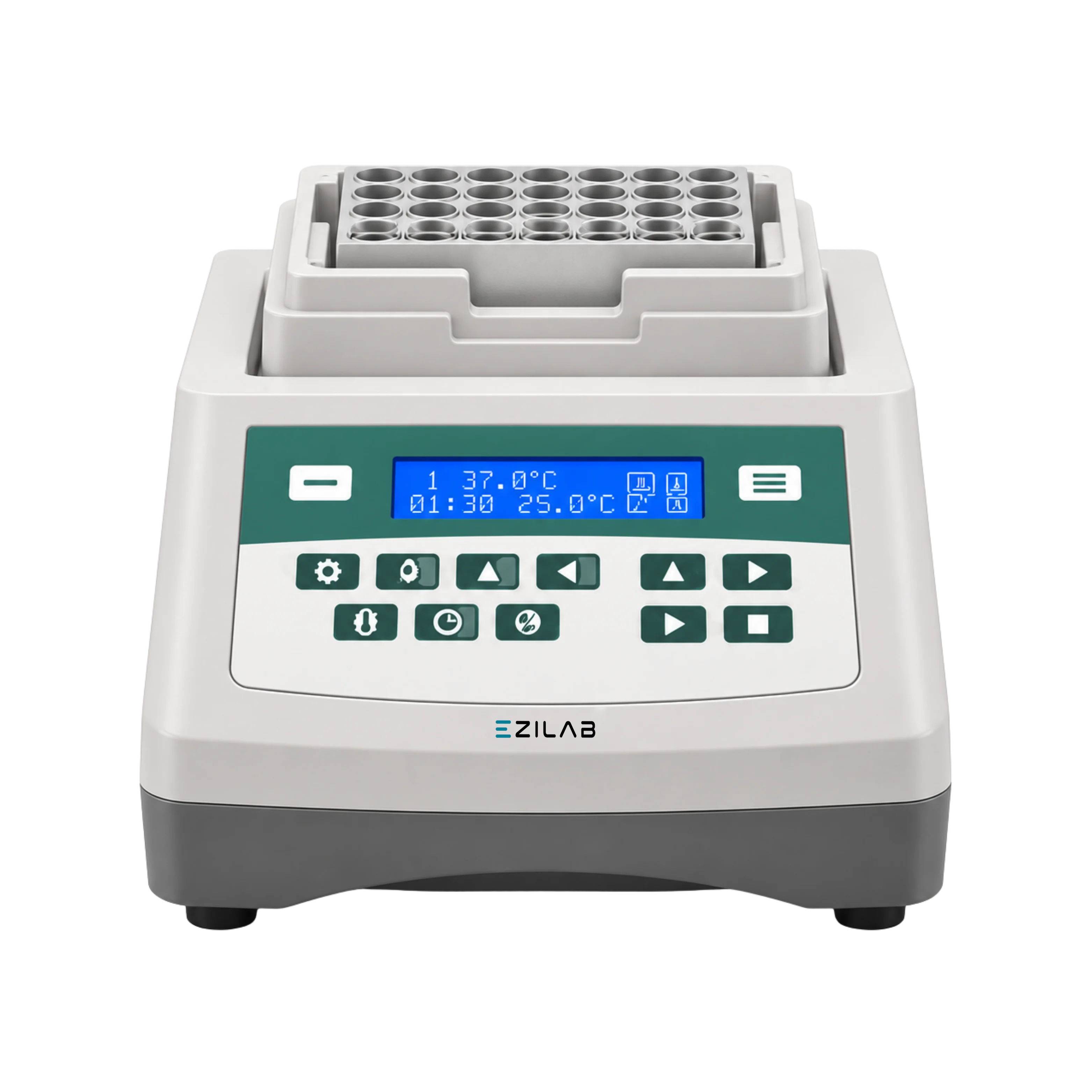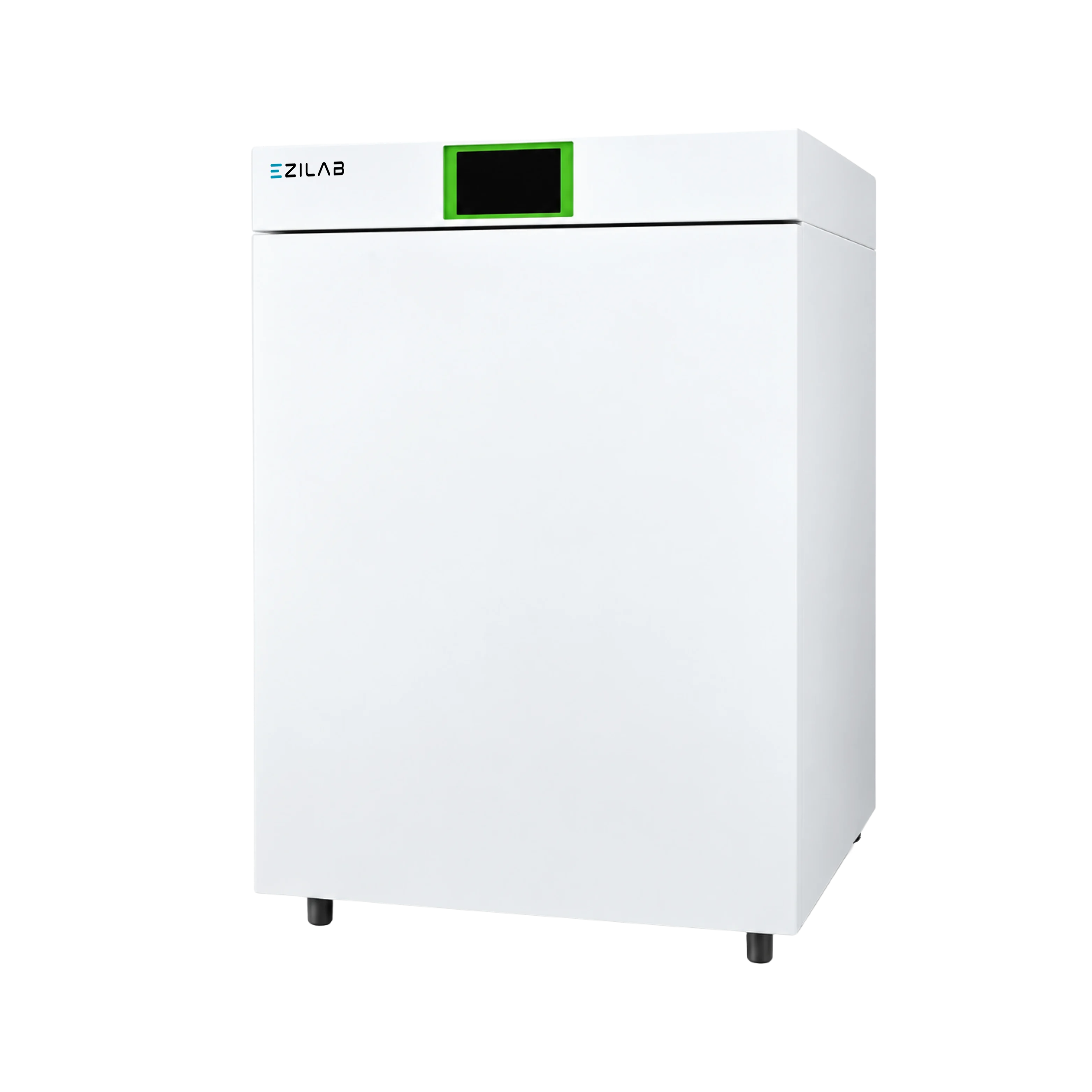
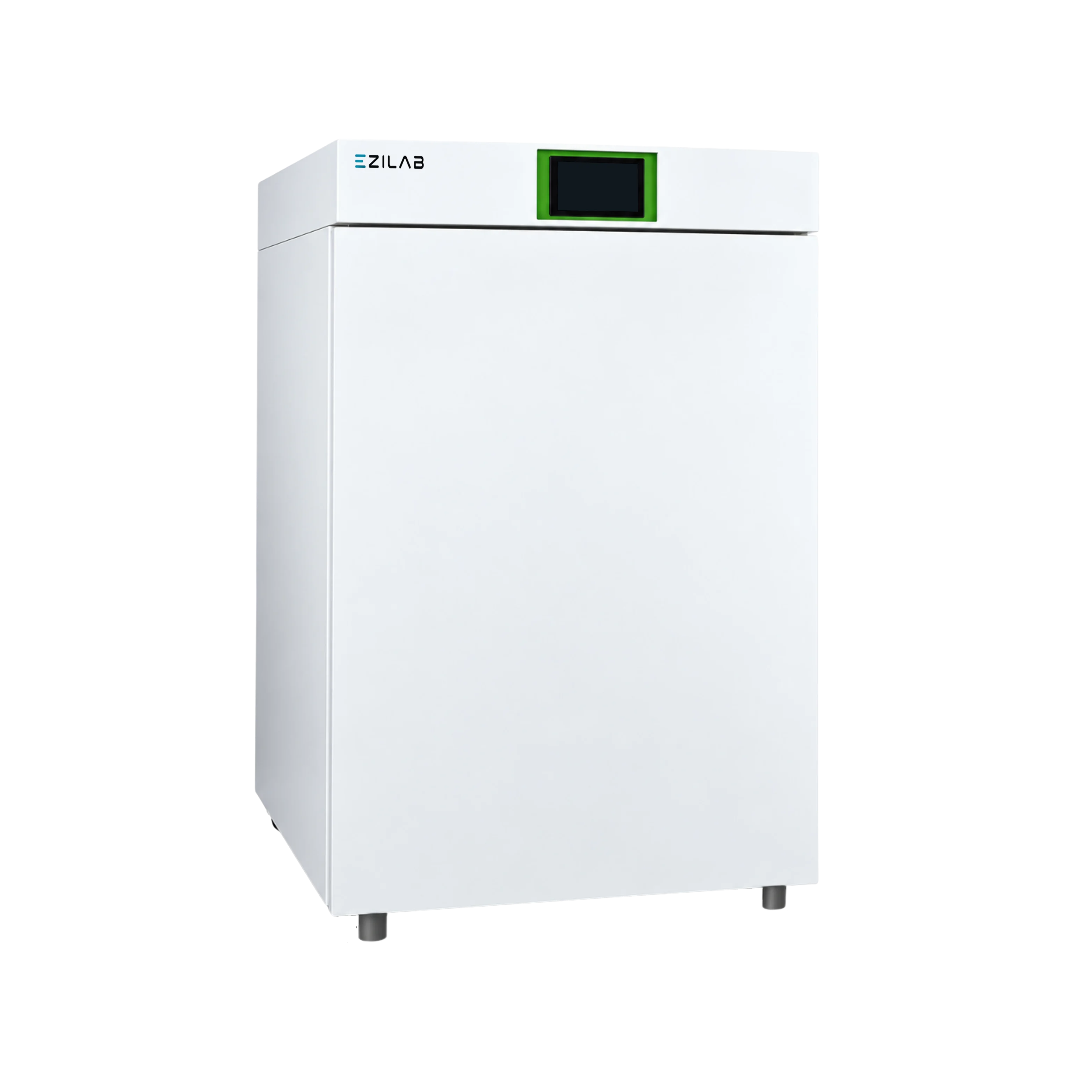
EziLab offers the Direct Heat CO2 Incubator EZL-CI85, a 160 L cell culture incubator that controls temperature from room temperature plus 5°C up to 60°C, with stability within 0.3°C and uniformity within 1°C. An imported sensor controls CO2 across 0 to 20% within 0.1%, and natural vaporization maintains chamber humidity. Three perforated shelves come standard, expandable to 13, with a 16 mm test port on the inner door. Direct heating brings the chamber back to setpoint quickly after door openings, which matters when several users feed cultures or change media. That makes this CO2 incubator for cell culture a fit for mammalian and other sensitive cell lines, while contamination prevention and automatic safety shutdown protect long runs. The inner door port lets staff verify temperature and CO2 with an external probe without exposure. Biotechnology companies and pharmaceutical labs run parallel cultures for drug screening and cell-based assays, while hospital labs keep patient-derived samples in this tissue culture incubator. University research groups share the 160 L chamber across projects, and its 900 W draw keeps running costs modest. Labs outgrowing 80 L units gain room. See the Direct Heat CO2 Incubators and Direct Heat CO2 Incubator pages for full specifications.
| Chamber Volume | 160 L |
|---|---|
| Temperature Range | RT+5 to 60℃ |
| Temperature Stability | < ± 0.3°C |
| Temperature Uniformity | < ± 1 °C |
| CO2 Range | 0 to 20 % |
| CO2 Control Accuracy | ±0.1% (imported sensor) |
| Humidity Method | Natural Vaporization |
| Testing hole on the inner door | Φ 16mm |
| Operating Temperature | +18 to 30℃ |
| Perforated shelf (Std/Max) | 3/13 |
| Power Rating | 900 W |
| Chamber Size (W×D×H) | 500 × 510 × 650 mm |
| Exterior Size((W×D×H) | 650 × 730 × 1050 mm |
Uniform temperature distribution
Contamination prevention design
User-friendly interface
Energy-efficient operation
Automatic safety shutdown
Direct Heat CO2 Incubator EZL-CI85 is used for growing and maintaining cell cultures under controlled temperature and CO₂ conditions. It is ideal for research laboratories, hospitals, and biotechnology facilities working with sensitive cell lines.