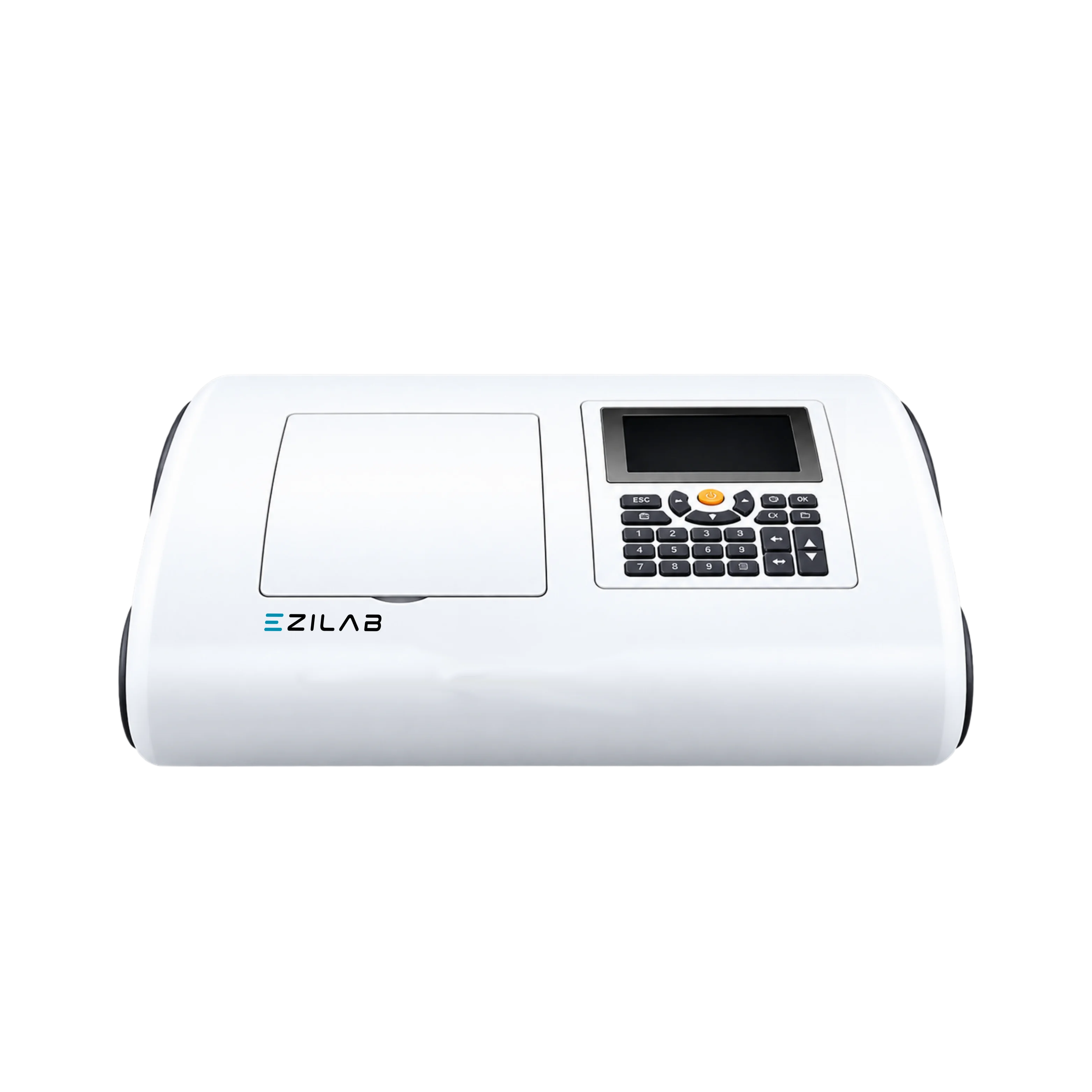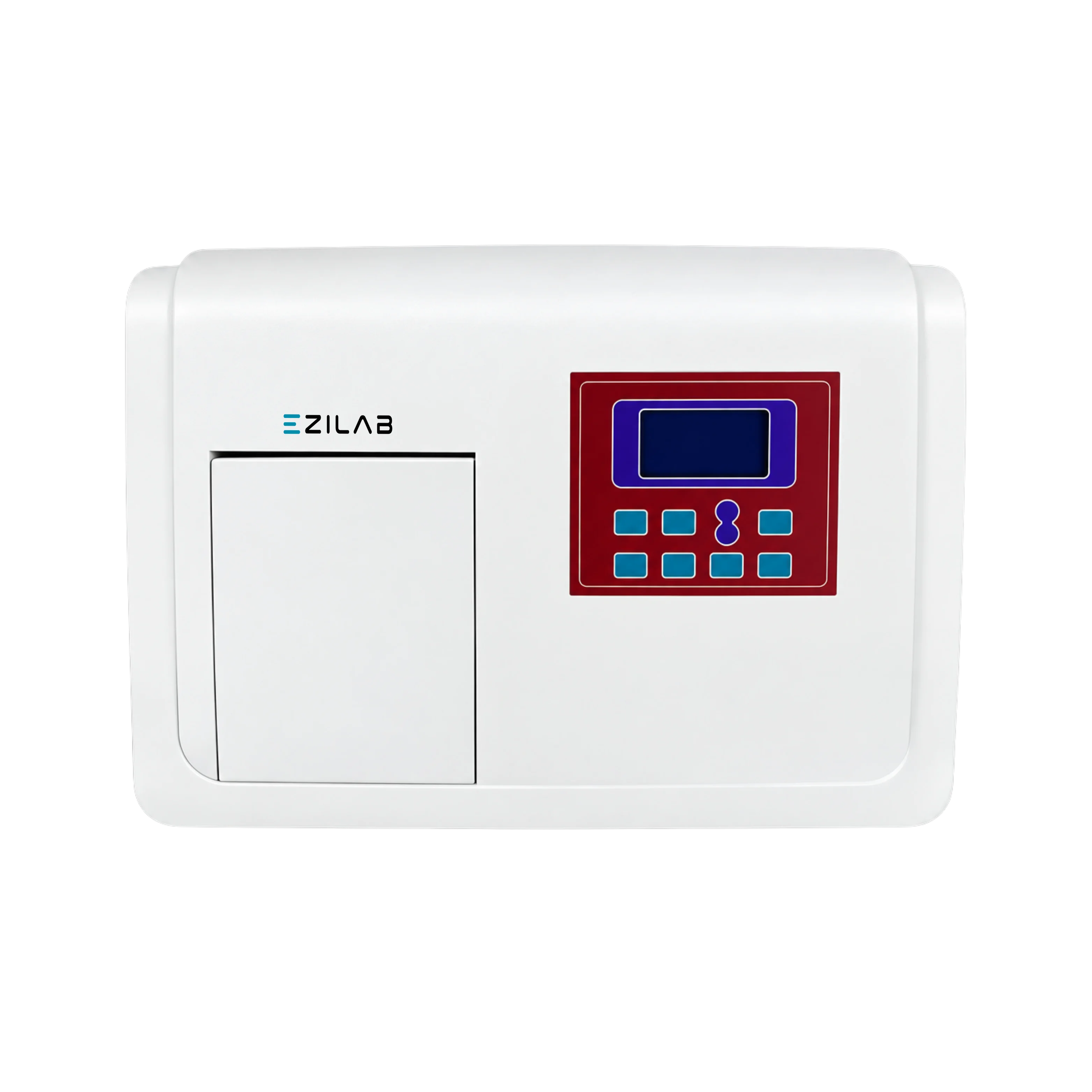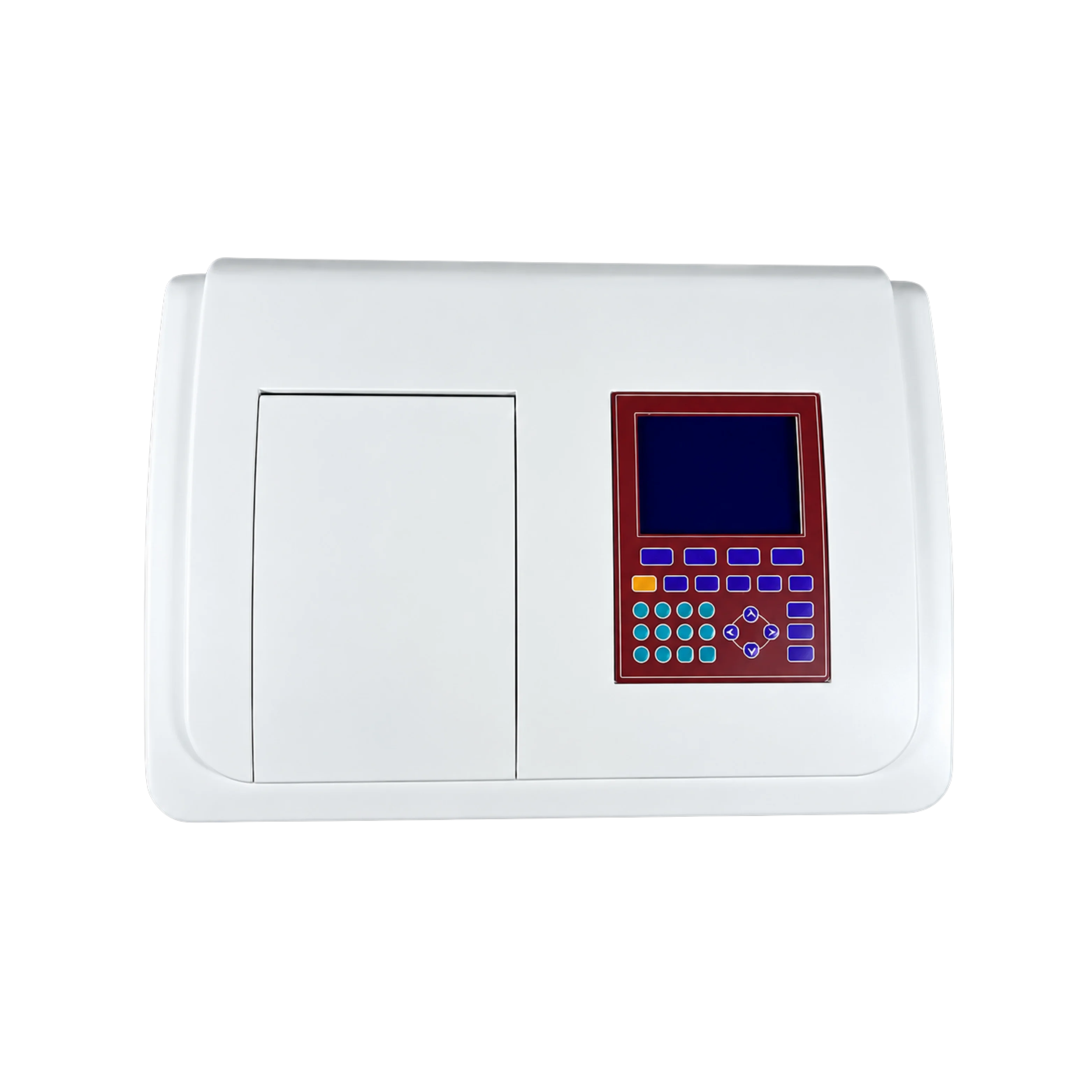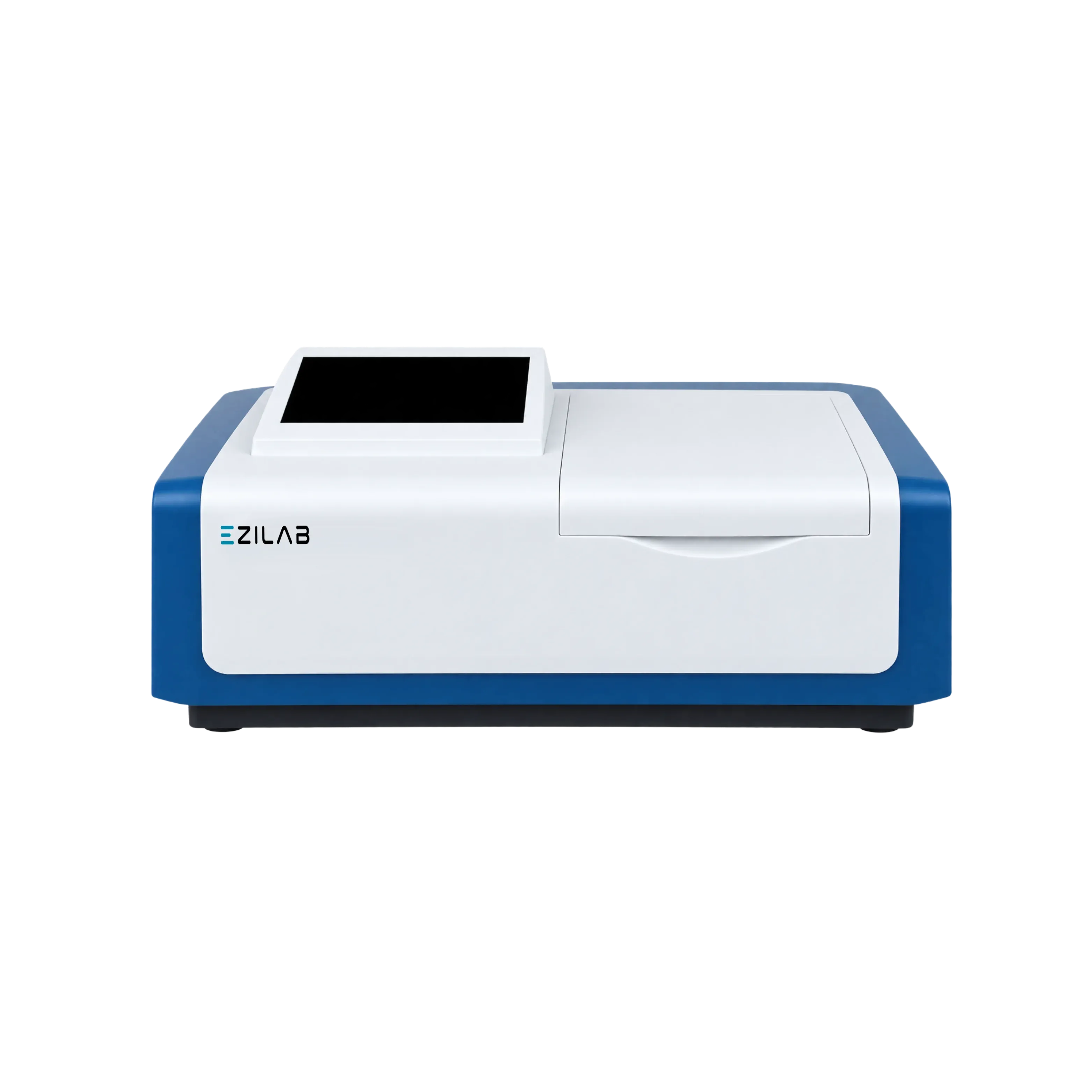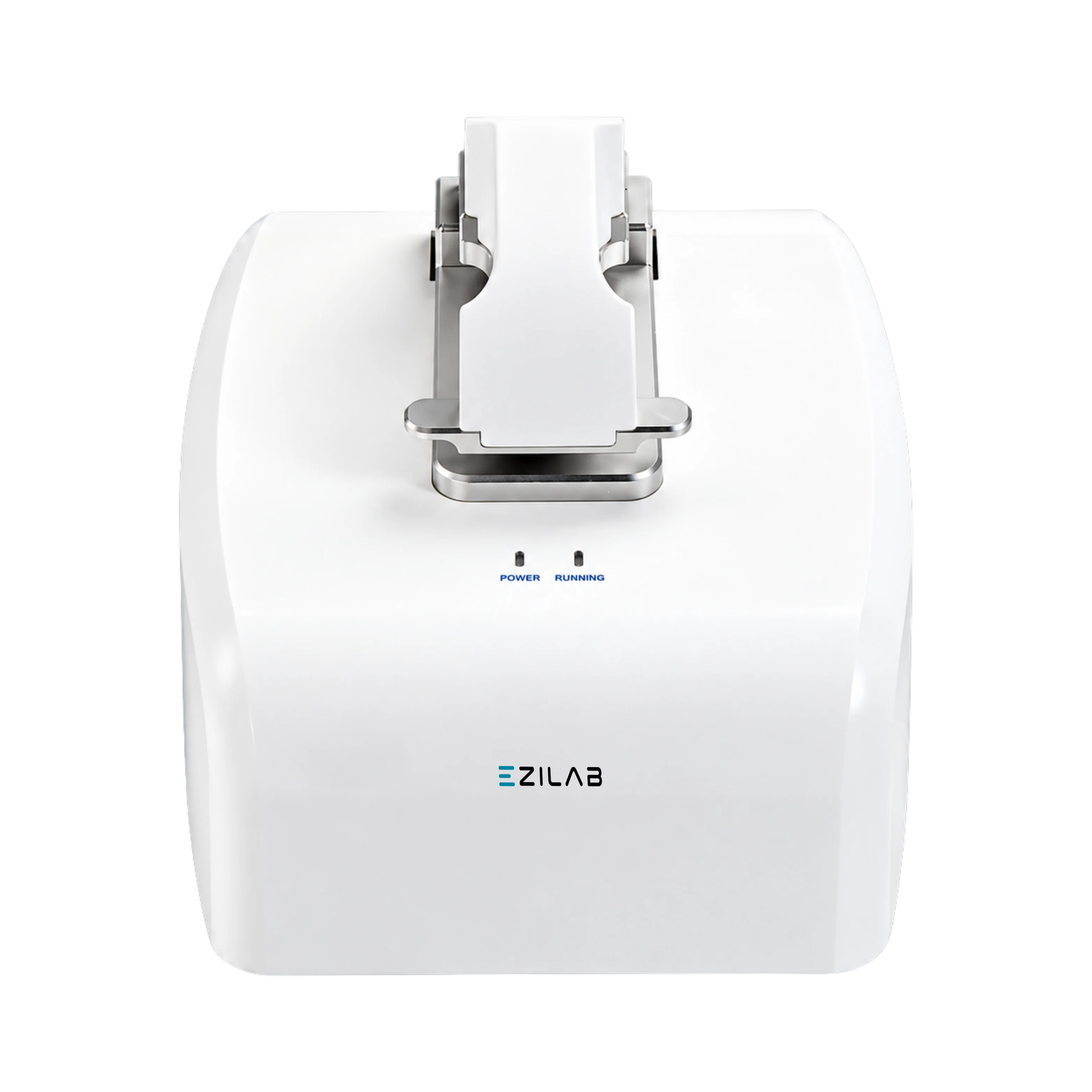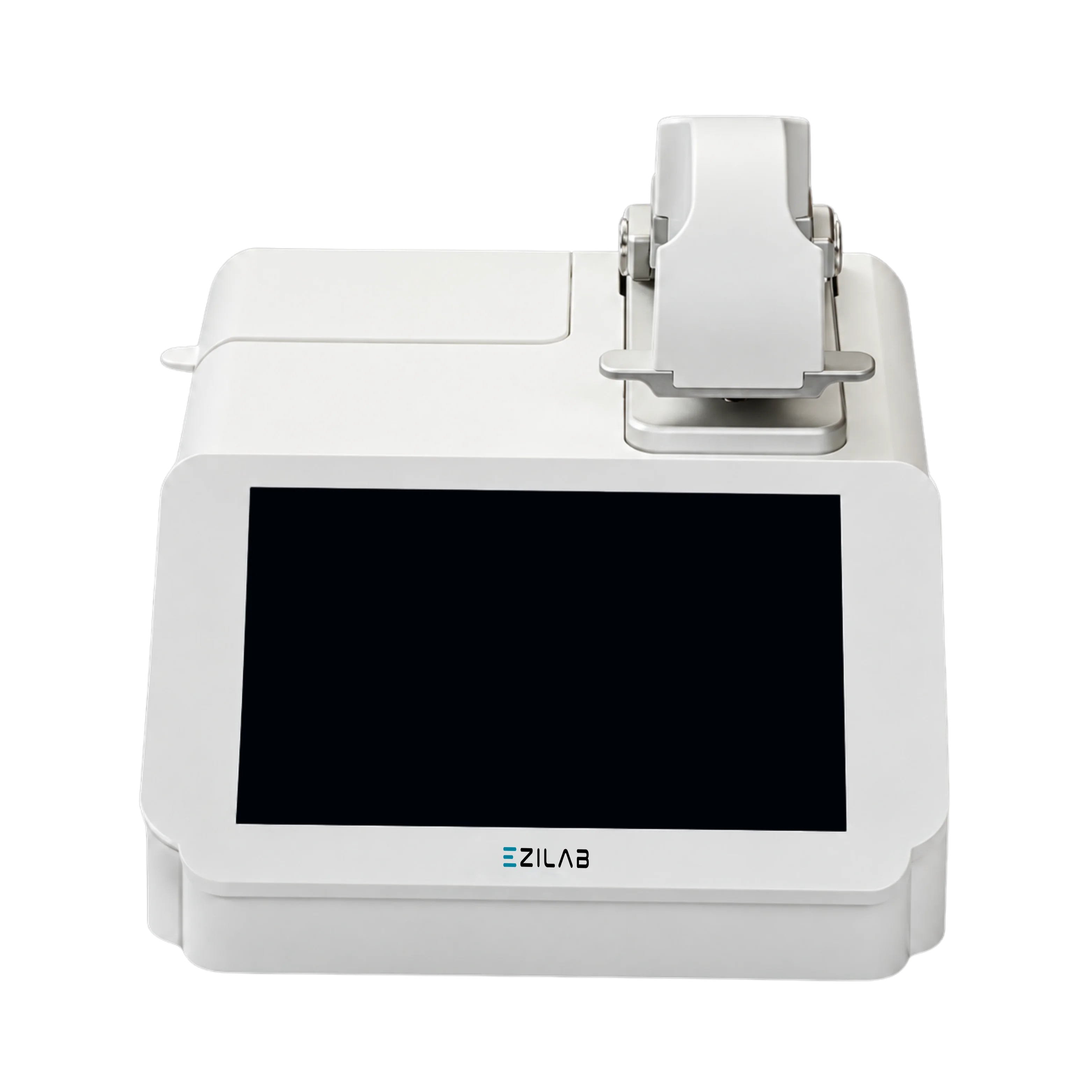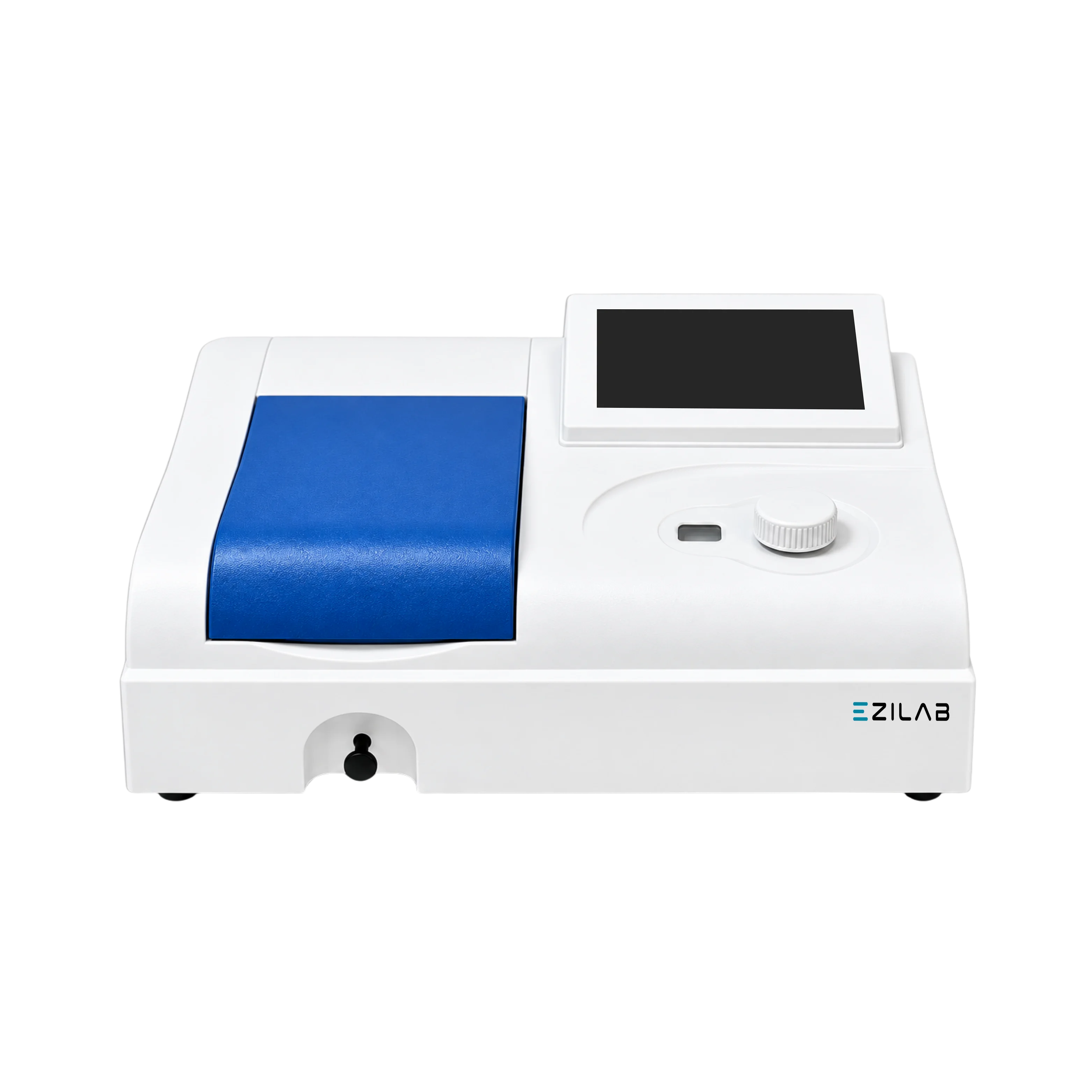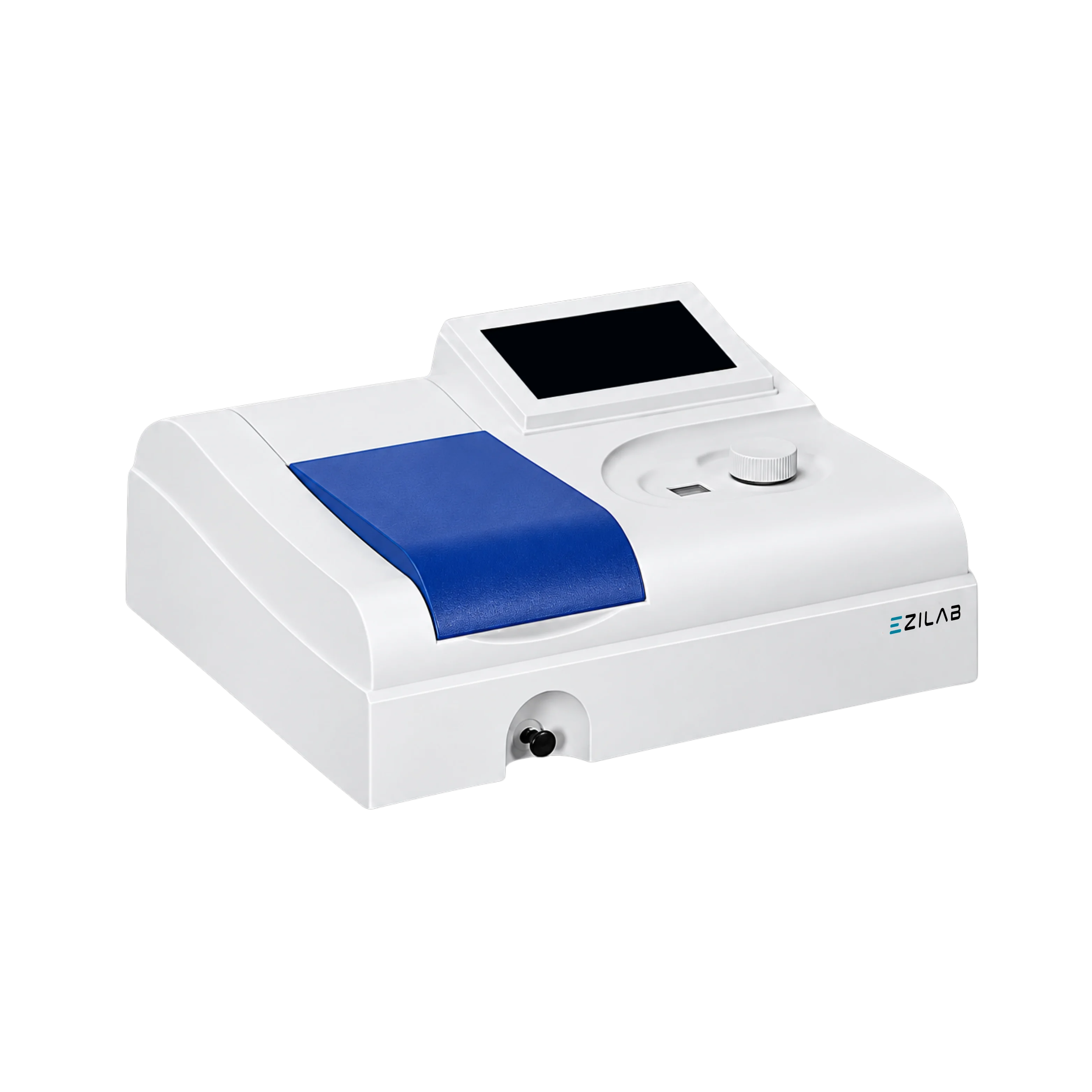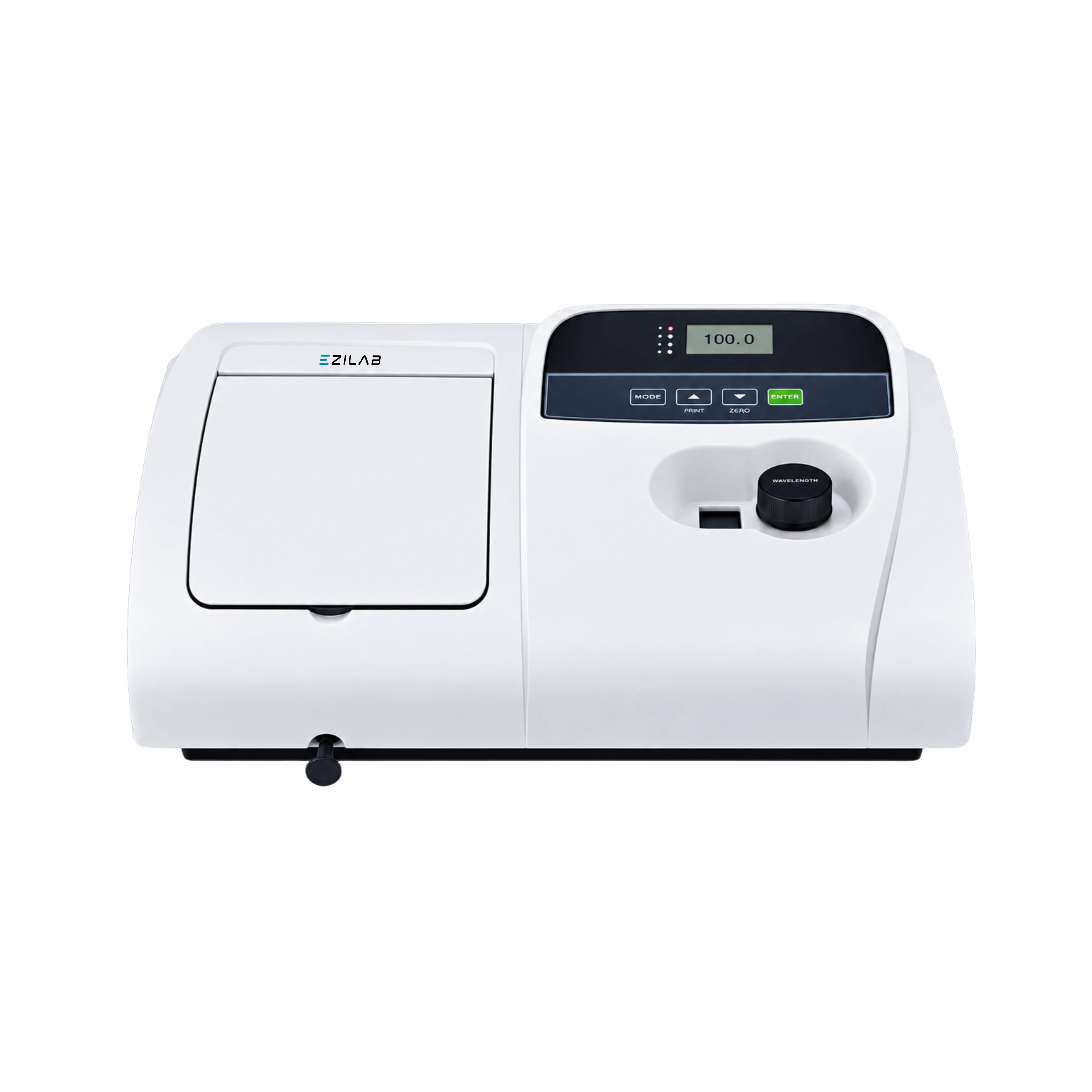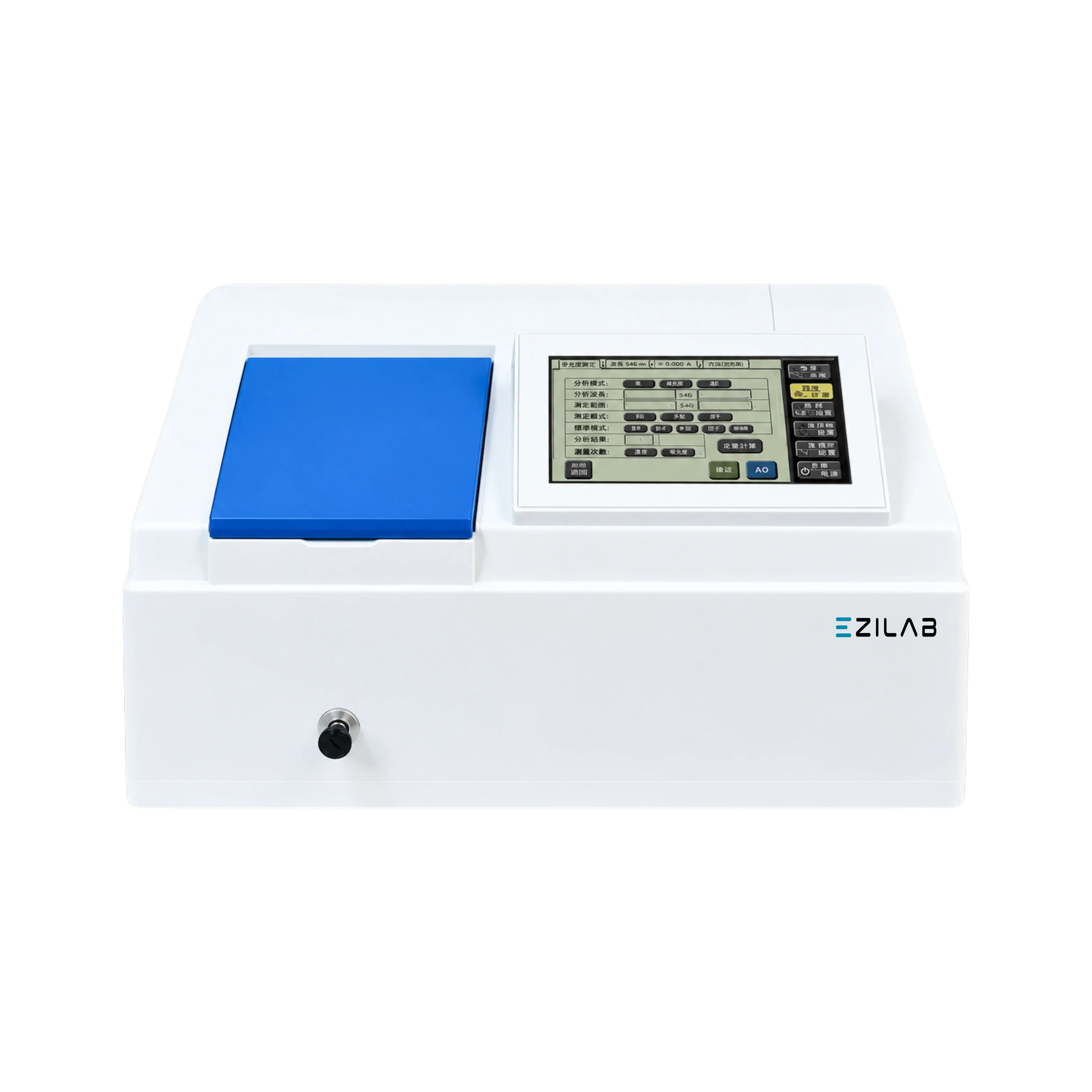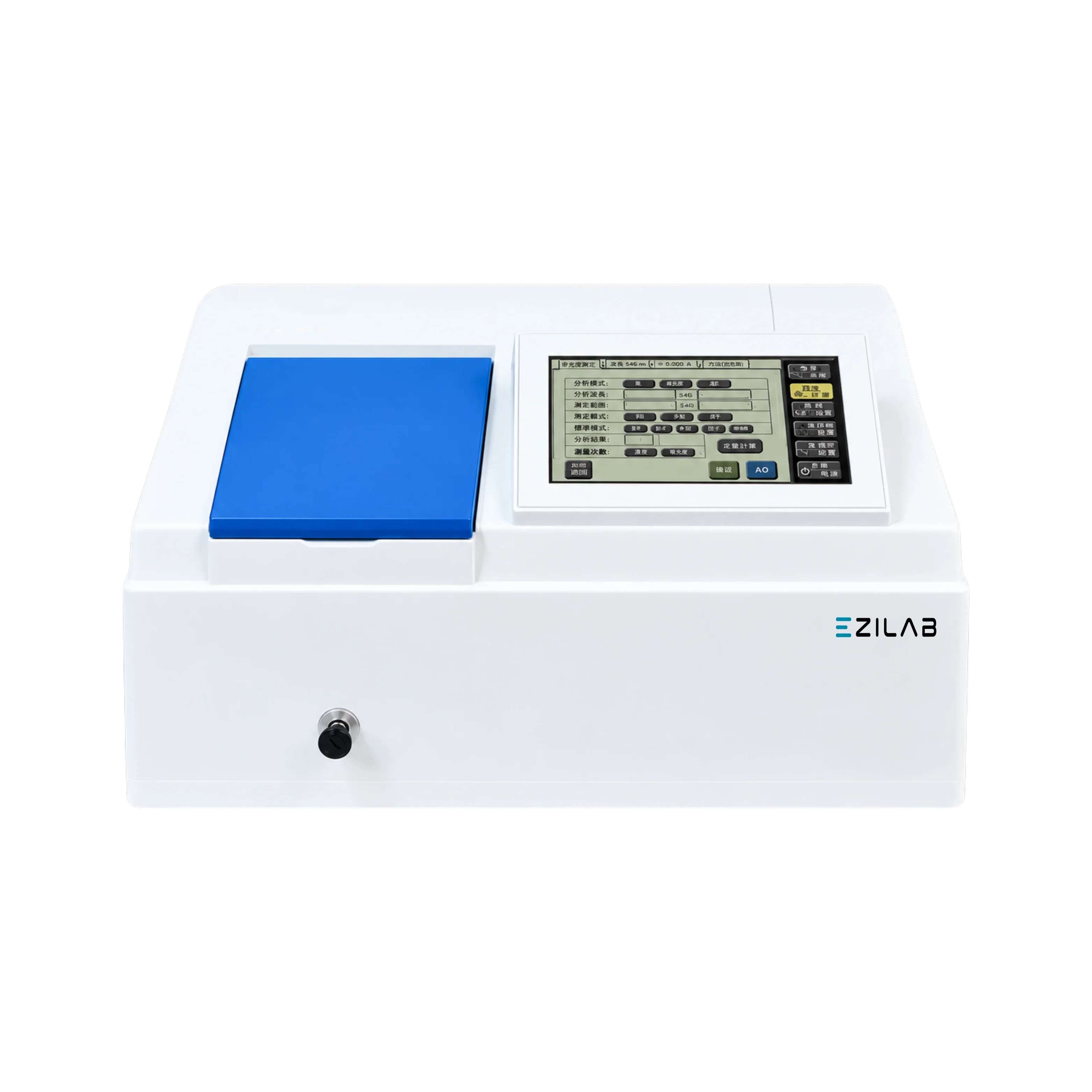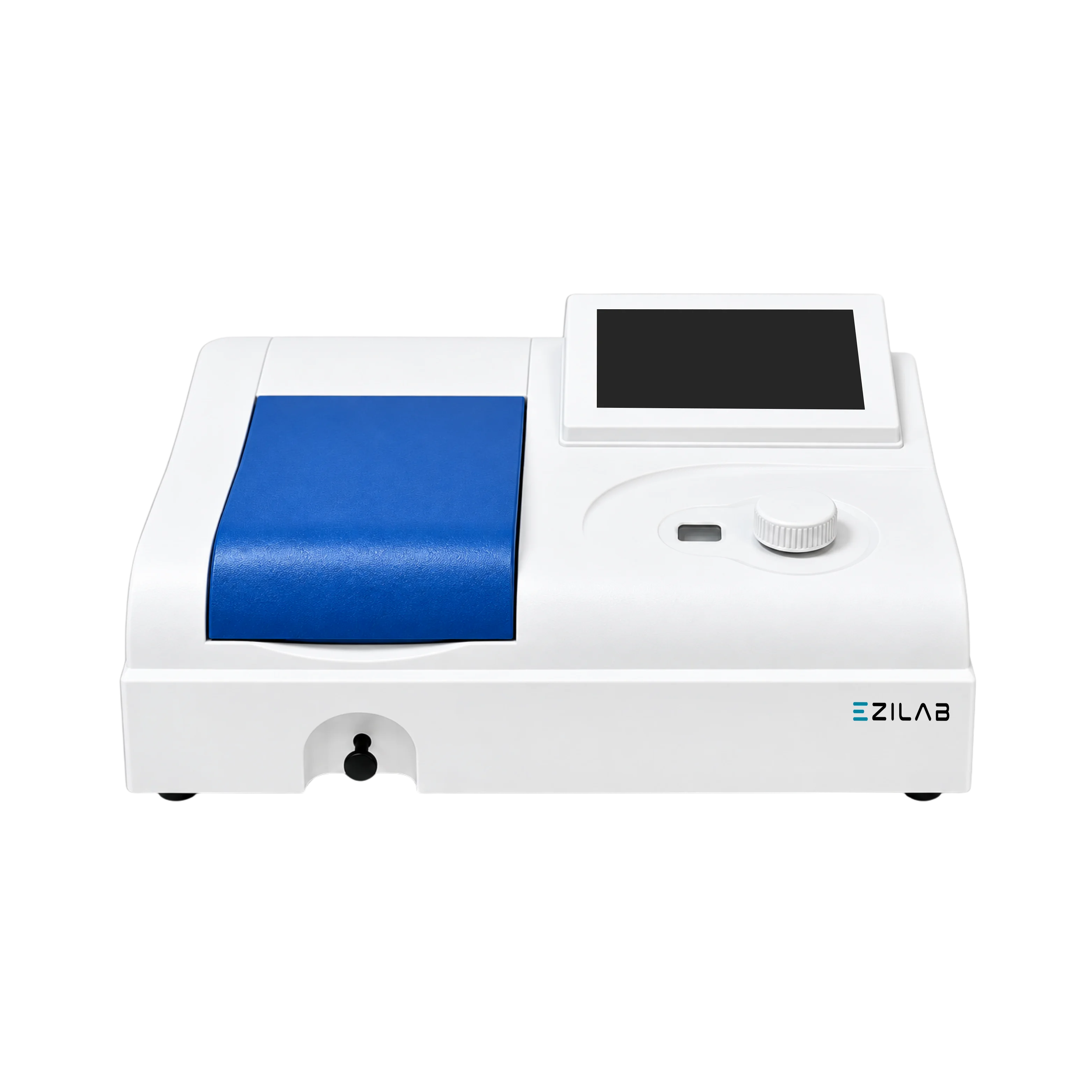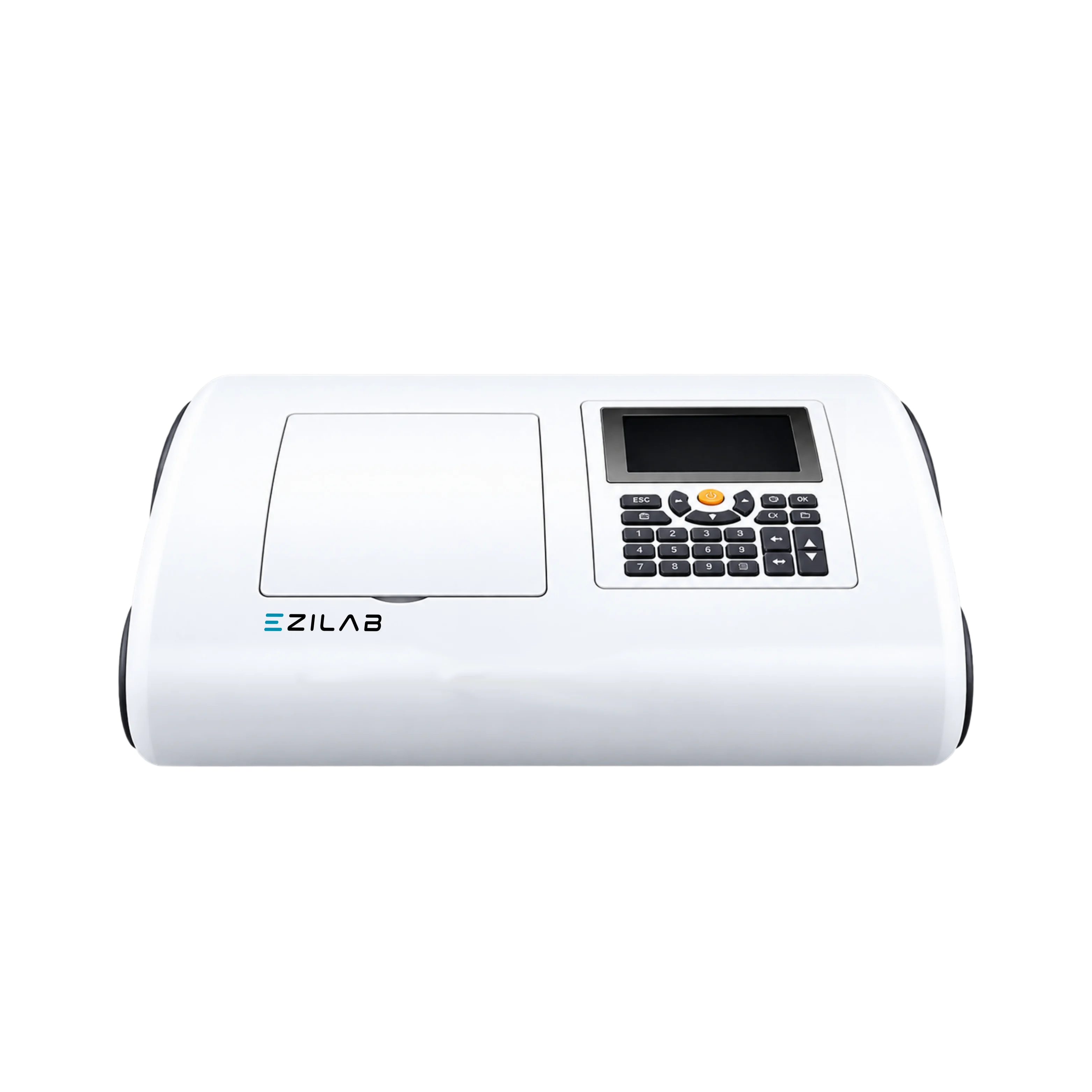
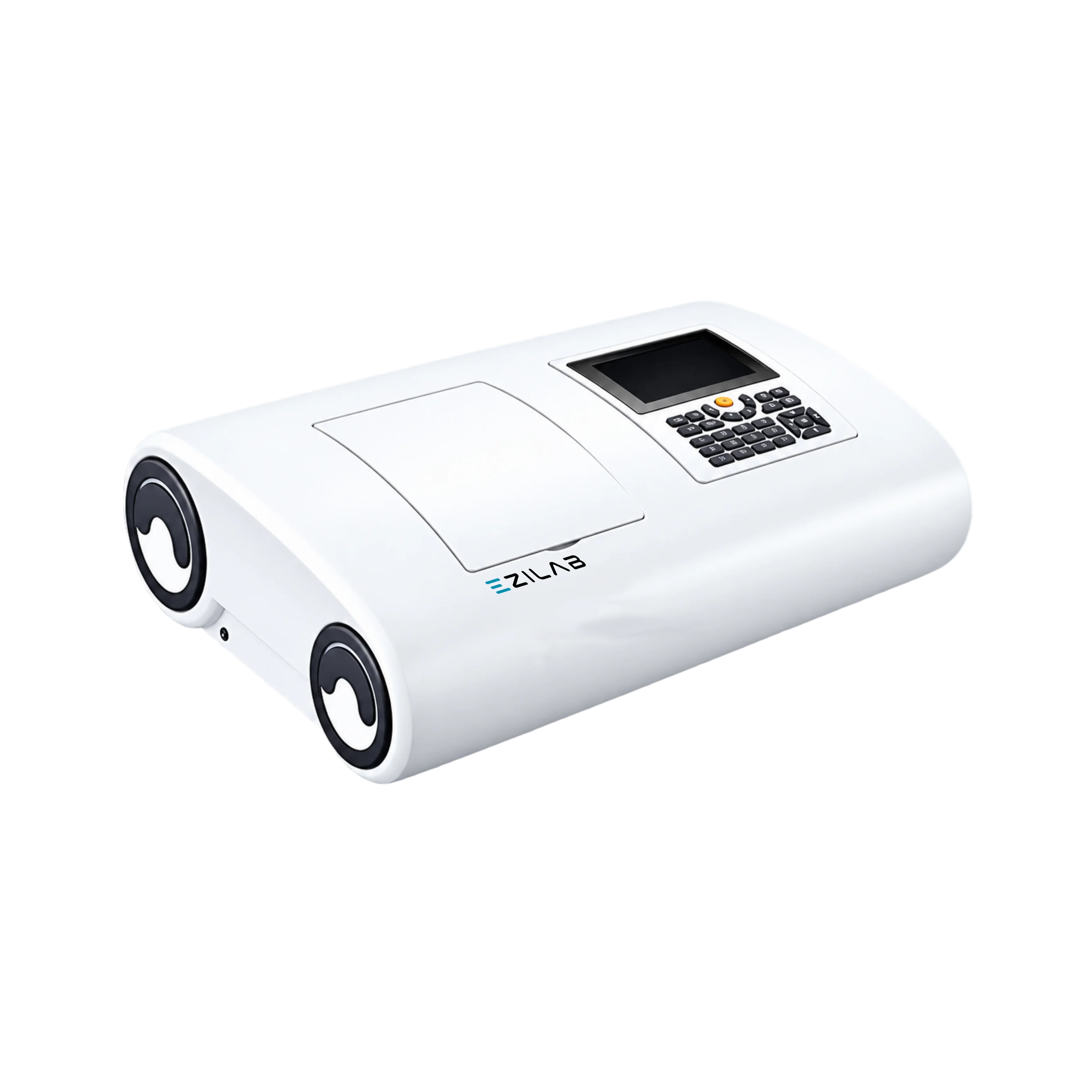
EziLab offers the Double Beam UV-Vis Spectrophotometer EZL-DBS102, a double beam spectrophotometer with a 1200 lines per mm grating and tungsten and deuterium lamps that scans 190 to 1100 nm at 0.5, 1, 2, or 4 nm bandwidth. Wavelength accuracy is ±0.1 nm or ±0.3 nm with 0.1 nm repeatability, photometric accuracy stays within ±0.2 %T, stray light stays at or below 0.03 %T at 220 nm and 360 nm, and absorbance reads from -0.3 to 3 A. Stability is 0.0005 A per hour, a 320 by 240 dot LCD shows results, automatic calibration runs on start, and USB and parallel ports export result data. The package measures 840 by 640 by 440 mm at 32 kg net. Choose it over the fixed 1 nm and 1.8 nm siblings when bandwidth must switch between four settings. Pharmaceutical, environmental, food, and biochemical laboratories need low stray light and steady wavelength repeatability, because both set confidence in each absorbance reading. Typical uses include pharmaceutical raw material testing, drug purity checks across batches, food colorimetry, enzyme activity monitoring, nucleic acid quantification, and environmental sample analysis. Bandwidth flexibility is the deciding spec, so compare siblings on the Spectrophotometer and Double Beam UV-Visible Spectrophotometer pages.
| Wavelength Range | 190 to 1100 nm |
|---|---|
| Bandwidth | 0.5 / 1 / 2 / 4 nm |
| Wavelength Accuracy | ± 0.1 nm, ± 0.3 nm |
| Wavelength Repeatability | 0.1 nm |
| Photometric Accuracy | ± 0.2% T (0 to 100% T) |
| Photometric Repeatability | Less than or equal to 0.1% T (0 to 100% T) |
| Photometric Range | - 0.3 to 3 (Absorbance), 0 to 200 % (Transmittance), 0 to 9999 (Concentration) |
| Stray Light | Less than or equal to 0.03 % T at 220 nm, 360 nm |
| Stability | Less than or equal to 0.0005 A / h at 250 nm, 500 nm |
| Optical System | Double Beam, 1200 Lines/mm Grating |
| Display | 320 × 240 Dots LCD |
| Light Source | Tungsten Lamp & Deuterium Lamp |
| Output | USB Port & Parallel Port |
| Power Requirements | AC 110 / 220 V, 50 / 60 Hz |
| Net Weight | 32 Kg |
| Gross Weight | 37 Kg |
| Packaging Dimension | 840 × 640 × 440 mm |
| Feature Area | Description |
| Optics | Double beam optical system with a 1200 lines/mm grating. |
| Wavelength | 190 to 1100 nm range with selectable bandwidth of 0.5, 1, 2 or 4 nm. |
| Light Source | Tungsten lamp and deuterium lamp. |
| Photometry | Photometric range of -0.3 to 3 A and 0 to 200% T; stray light of 0.03% T or below at 220 nm and 360 nm. |
| Display and Output | 320 × 240 dot LCD with USB port and parallel port output. |
Spectrophotometer | 1 unit |
PC Software | 1 set |
1cm Glass Cuvette | 4 pieces |
1cm Quartz Cuvette | 2 pieces |
Power Cord | 1 piece |
User’s Manual | 1 piece |
Dust Cover | 1 piece |
1 | Cell Holders |
2 | Control Units |
3 | Lamps |
4 | Glass Cuvette with Lid |
5 | Quartz Cuvette with Lid |
6 | Micro Cuvette |
7 | PC Software |
The Double Beam UV-Vis Spectrophotometer EZL-DBS102 stands out with its variable bandwidth options of 0.5, 1, 2, and 4 nm, allowing users to customize resolution based on sample needs. This flexibility enhances accuracy when analyzing samples with closely spaced peaks or low absorbance. Like other models, it uses a double-beam system for stability, but the variable bandwidth makes it ideal for advanced applications in research, pharmaceuticals, and high-precision environments requiring detailed spectral analysis.
Our Double Beam UV-Vis Spectrophotometer EZL-DBS102 adapts the slit width to match the characteristics of the sample. A narrower bandwidth of 0.5 nm improves resolution and is ideal for distinguishing closely spaced absorption peaks. Wider bandwidths of 2 or 4 nm allow more light through, improving signal strength for turbid or low-absorbance samples. This flexibility enhances signal-to-noise ratio and analytical precision, making it suitable for both high-resolution and routine applications.
Ezilab’s Double Beam UV-Vis Spectrophotometer EZL-DBS102 is ideal for pharmaceutical research, chemical analysis, environmental monitoring, and life sciences, where high resolution and data reliability are essential. Its adjustable bandwidth supports diverse sample types from highly concentrated to low-absorbance substances. It can perform wavelength scanning, kinetic studies, and multi-wavelength analysis, making it suitable for tasks like enzyme activity monitoring, nucleic acid quantification, and drug quality control, especially where precision and flexibility are key.
Our Double Beam UV-Vis Spectrophotometer EZL-DBS102 DBS102 is well-suited for regulated labs such as those following GLP, GMP, or ISO standards. With excellent photometric accuracy (±0.2%T), wavelength accuracy (±0.1 nm at D2 656.1 nm), and long-term stability (?0.0005A/h), it ensures reliable and traceable results. Its advanced software supports data integrity, calibration history, and method storage, all of which help in regulatory documentation and audits. This makes it ideal for pharmaceutical quality control, environmental testing, and research compliance.
Ezilab’s Double Beam UV-Vis Spectrophotometer EZL-DBS102 comes with a 6-inch high-definition LCD screen that clearly displays spectra, numerical results, and settings in real time. The user interface is designed to be intuitive, allowing quick access to various functions including scanning, kinetics, and calibration. Users can operate it without a computer, thanks to its powerful standalone system, while still benefiting from easy data export via USB or parallel port. This makes it highly efficient and user-friendly in busy lab environments.
The Double Beam UV-Vis Spectrophotometer EZL-DBS102 is built with a stable optical design and robust internal components that minimize drift and maintain performance over time. Its durable construction ensures resistance to external vibrations and temperature fluctuations, which is crucial for consistent operation in high-throughput laboratories. The system also includes automatic wavelength calibration and self-diagnostic features, reducing maintenance needs and ensuring reliable data output. This makes it a dependable tool for continuous use in quality control, research, and regulated testing environments.